What is a Gym Floor Made Of? Stop Ruining Your Concrete
Dropping a heavy barbell on a bare concrete floor is a mistake you only make once. The deafening crash, the chipped foundation, and the damaged bumper plates are a quick lesson in home gym economics: your flooring is just as important as your power rack.
If you are planning out your training space, you are probably asking: what is a gym floor made of? The answer dictates not just the aesthetics of your room, but the safety of your joints, the noise level in your house, and the lifespan of your equipment. Let's break down the core materials used in modern fitness spaces so you can build a solid foundation that actually lasts.
Key Takeaways
- Recycled Rubber: The undisputed king of home and commercial gyms, offering maximum impact absorption and durability.
- EVA Foam: A budget-friendly, lightweight option best reserved for yoga, stretching, and light bodyweight exercises.
- Turf: Ideal for sled pushes and agility work, usually made from woven polyethylene or nylon.
- Thickness Matters: Material alone isn't enough; you need at least 3/8-inch to 3/4-inch thickness for heavy barbell training.
The Core Materials: What Are Gym Floors Made Of?
When you step into a commercial facility or a high-end garage setup, you are usually walking on one of three primary materials. Understanding these will help you match your flooring to your specific training style.
Recycled Vulcanized Rubber
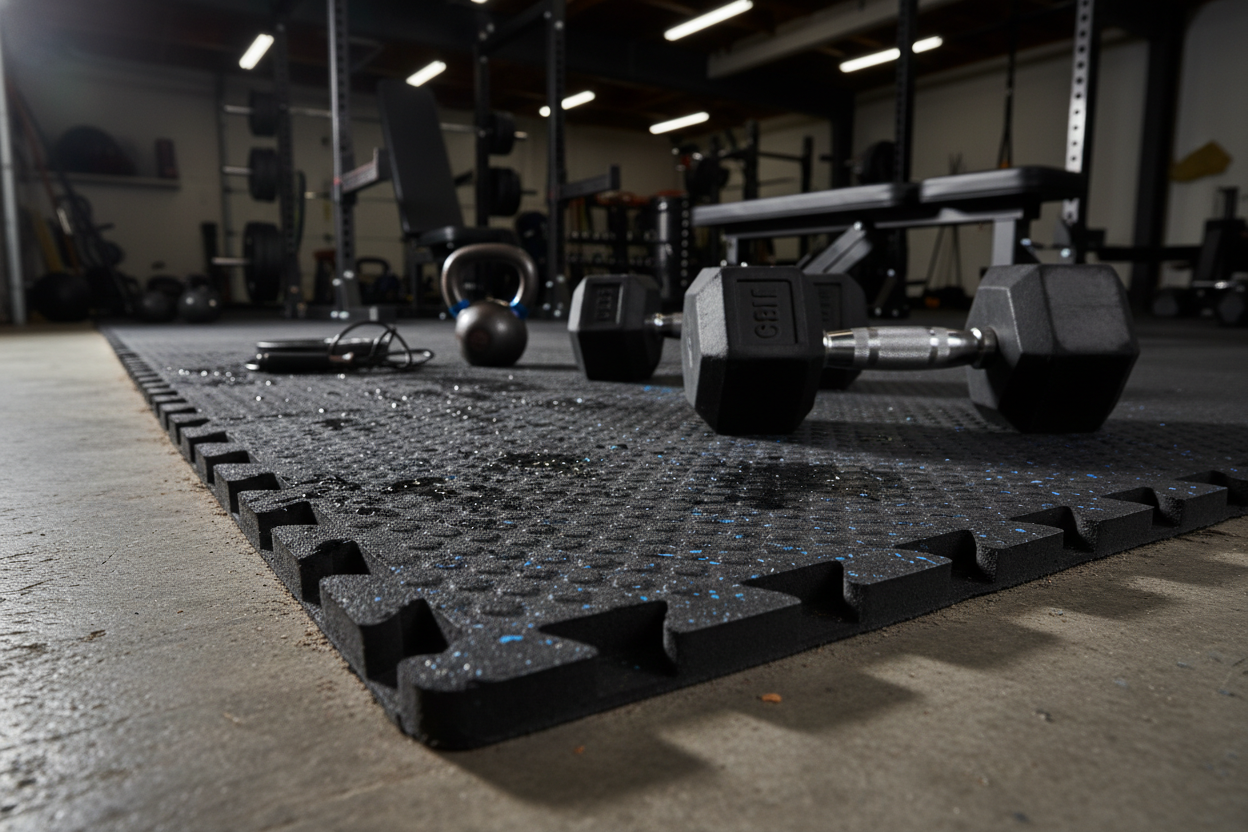
If you want the ultimate gym mat material, this is it. High-density recycled rubber is created by grinding up old car tires and binding the crumb rubber together under extreme heat and pressure. This process creates a non-porous, incredibly dense surface that can withstand thousands of pounds of dropped weight. It repels water, resists bacterial growth, and provides excellent traction even when you are sweating through a heavy circuit.
High-Density EVA Foam
People building a budget space often wonder what are gym mats made of when they see those cheap, interlocking puzzle pieces online. Those are made of Ethylene-Vinyl Acetate (EVA) foam. While EVA foam is soft, comfortable for floor work, and highly affordable, it lacks the density required for strength training. Heavy racks will sink into it, and dropped dumbbells will easily puncture the surface.
Artificial Turf and PVC Vinyl
For functional fitness spaces, artificial turf made of woven polyethylene fibers provides a durable surface for sleds and sprints. Alternatively, group fitness studios often use PVC vinyl or specialized hardwood suspended over a foam underlayment to provide a slight 'give' for dance and aerobics, protecting the joints from repetitive impact.
Matching Material to Your Space
Your environment dictates your flooring choice almost as much as your workout routine.
Garage and Basement Setups
Garages and basements are prone to moisture and temperature swings. Vulcanized rubber is the clear winner here because it won't warp or harbor mold. If your floor has slight imperfections, a thicker 3/4-inch rubber stall mat will bridge minor gaps better than thin rolled rubber.
Spare Bedrooms and Apartments
If you are training on a second floor, noise and vibration are your biggest enemies. You will want a layered approach: a high-density rubber base topped with a dedicated weightlifting platform. Keep in mind that heavy rubber mats can stain light-colored carpets or vinyl plank flooring underneath, so always use a protective barrier sheet first.
From Our Gym: Honest Take
When I first built my garage gym in 2018, I tried to save money by covering the floor in cheap EVA foam puzzle mats. Big mistake. A 315-pound deadlift compressed the foam straight to the concrete, chipping my floor and leaving permanent craters in the mat.
I eventually upgraded to 3/4-inch vulcanized rubber stall mats from a local farm supply store. They are indestructible, but here is a caveat most product pages won't tell you: fresh recycled rubber off-gasses. My garage smelled like a tire shop for three weeks. If you go this route, mop them with a mild degreaser and leave your garage door open for a few days to let them breathe. The peace of mind of a heavy barbell landing safely on thick rubber makes the initial hassle 100% worth it.
Frequently Asked Questions
What is gym floor made of when it comes to commercial facilities?
Most commercial gyms use virgin or recycled rubber rolls that are glued down to the subfloor. These rolls are typically 3/8-inch thick and feature colored EPDM rubber flecks for aesthetic appeal and to hide dirt.
How thick should my gym mats be?
For general fitness and machine use, 1/4-inch to 3/8-inch is sufficient. If you are dropping barbells, doing Olympic weightlifting, or using heavy dumbbells, you need at least 1/2-inch to 3/4-inch thick rubber to protect your subfloor.
Can I just use foam puzzle mats for heavy lifting?
We highly advise against it. Foam is too compressible for heavy lifting, creating an unstable surface that can compromise your footing during squats or deadlifts. Save the foam for stretching and mobility zones.