The Push-Pull Trick for a Faster Muscle Gaining Workout Plan
I've spent too many mornings shivering in my garage, staring at a timer while my coffee gets cold and my heart rate drops to zero. We’ve all been told that a serious muscle gaining workout plan requires three to five minutes of rest between heavy sets to let your ATP stores recover. That is great advice if you’re a professional athlete with no job, but for the rest of us, it’s a recipe for a two-hour session that we’ll eventually start skipping.
The reality of a gym workout plan to gain muscle is that consistency beats perfection every time. If your routine is so long that you can't finish it before your first Zoom call, you're going to fail. I had to learn the hard way that the secret to getting big in a small time window isn't doing less work—it's working smarter by pairing movements that don't compete with each other.
Quick Takeaways
- Antagonist supersets cut your gym time by 30-40% without sacrificing volume.
- Pairing opposing muscles (like chest and back) improves joint stability and performance.
- This method keeps your heart rate elevated, adding a conditioning element to your muscle gaining workout.
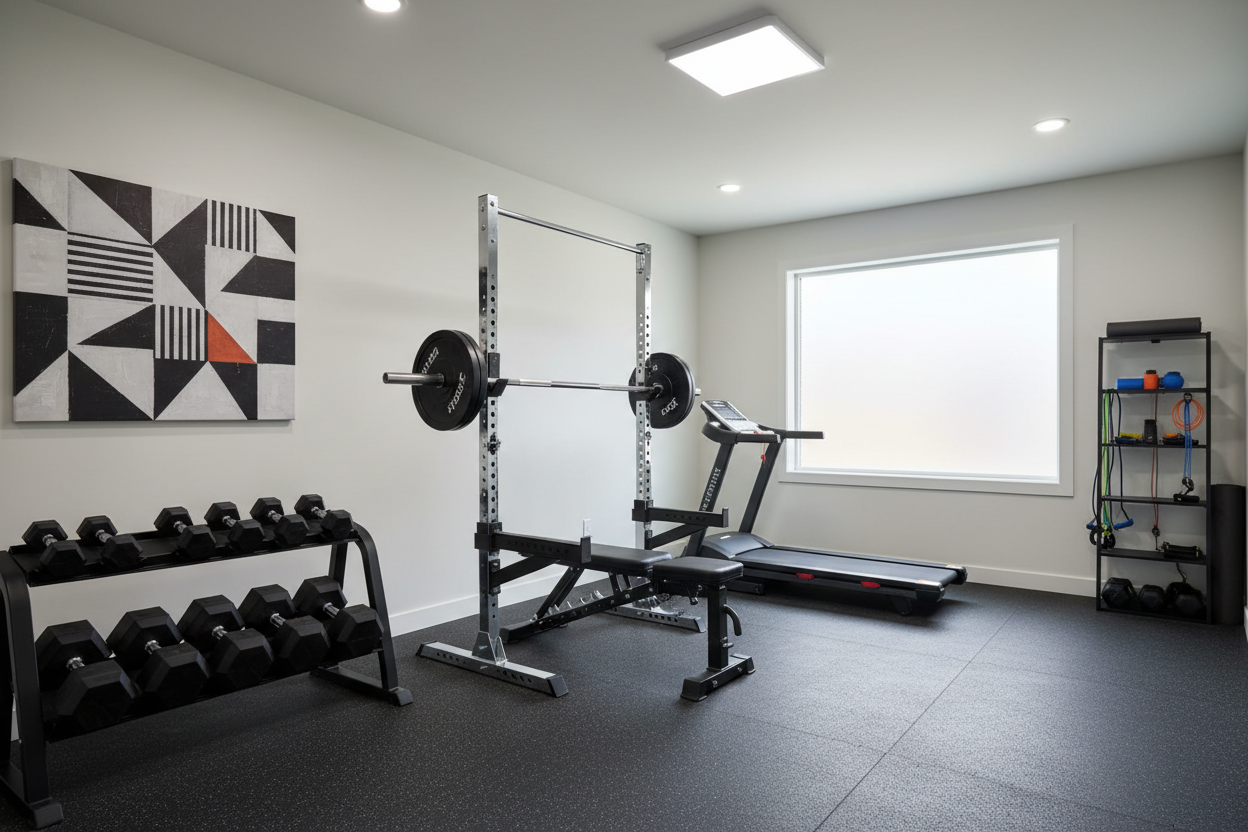
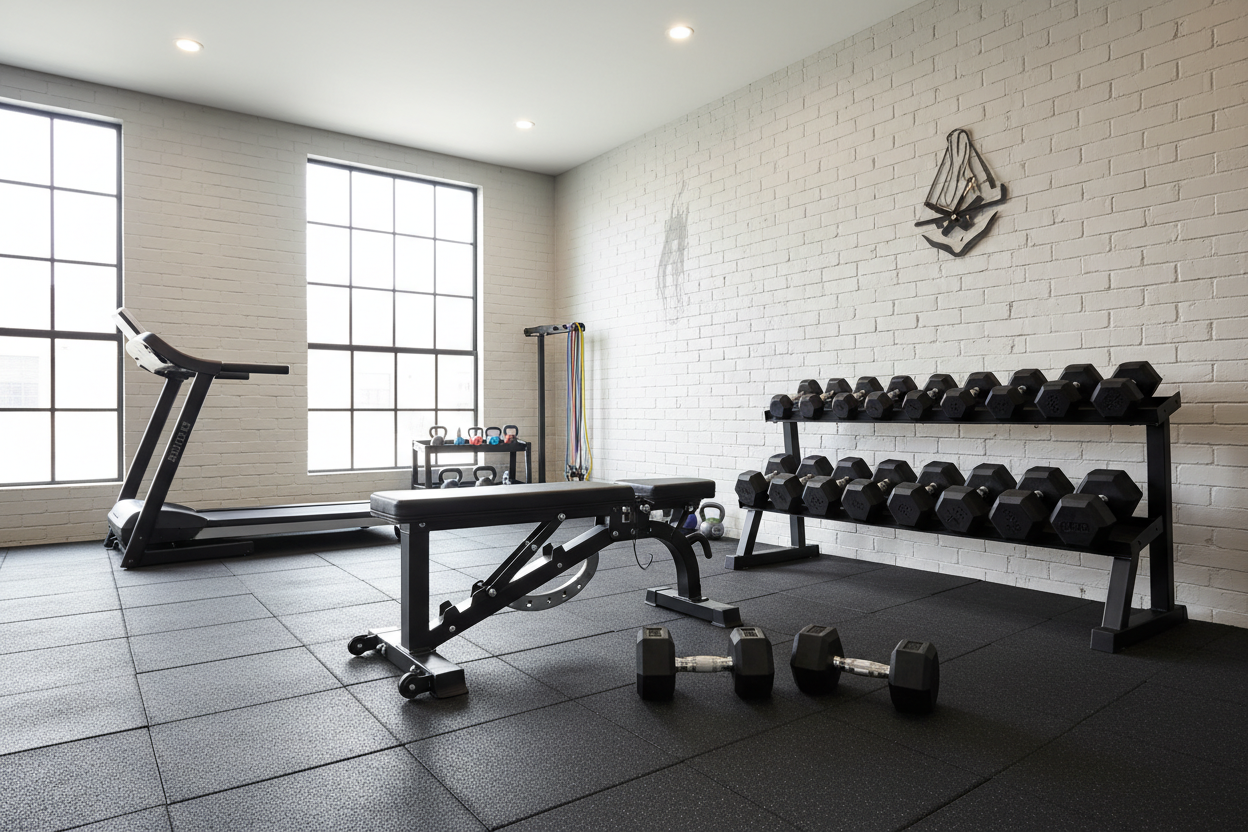
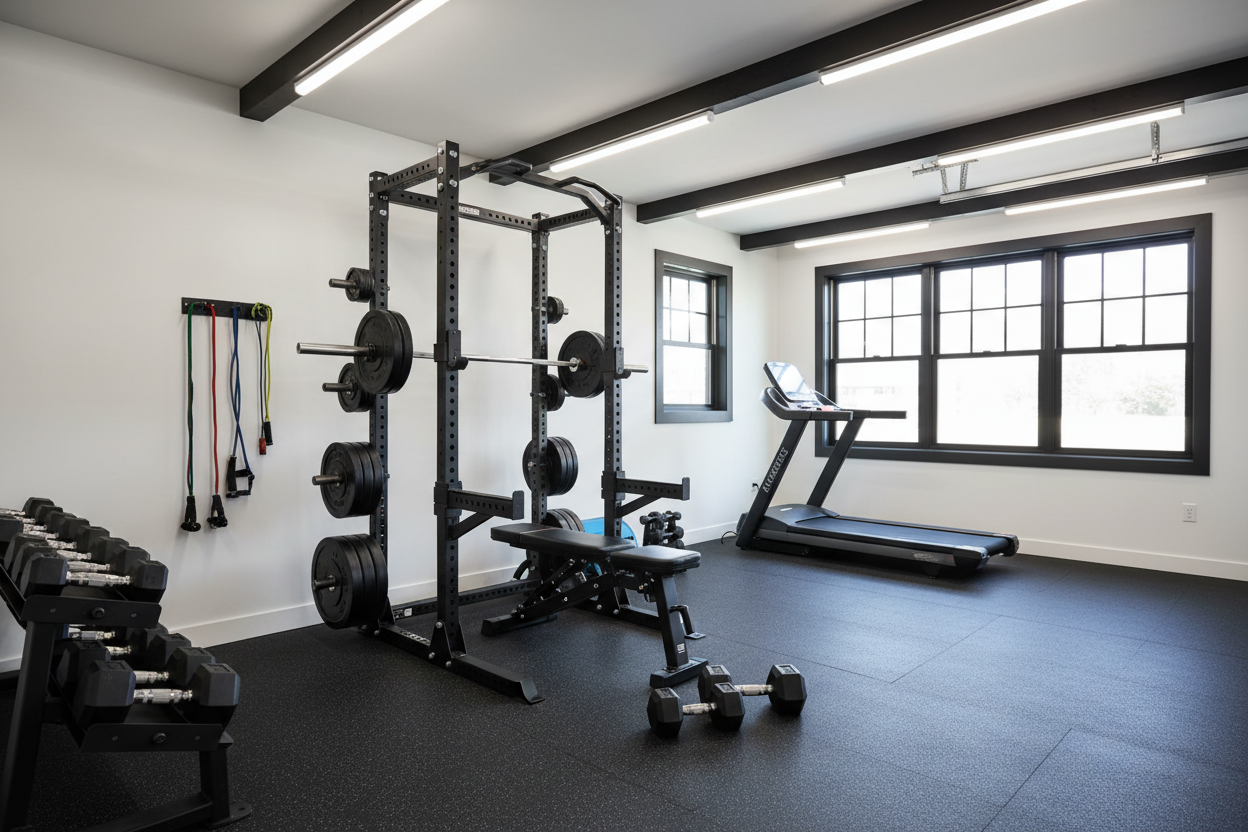
- Garage gym layout is critical; you need your stations within arm's reach to maintain the pace.
Why Staring at the Clock is Ruining Your Momentum
Traditional hypertrophy training is built on the idea of total recovery. You hit a heavy set of bench press, then you sit on your bench for three minutes scrolling through Instagram. By the time you start your next set, you’ve lost your mental edge. For a daily workout to build muscle, this 'stop-and-go' rhythm is a momentum killer.
When you're training in a cold garage or a cramped basement, you need to keep moving to stay warm and focused. If you follow a standard gym workout gain muscle strategy that treats every exercise as an isolated event, you're essentially spending 80% of your gym time doing absolutely nothing. We can do better by filling that 'dead air' with productive work that doesn't fatigue the primary muscles you're trying to grow.
The Push-Pull Method: Working While Resting
The antagonist superset is the backbone of any efficient training programme for muscle gain. The concept is simple: you pair a 'pushing' exercise with a 'pulling' exercise. While your chest is working during a press, your back muscles are stretching and recovering. When you immediately flip to a row, your chest gets its turn to rest. This allows you to compress your rest periods without the performance drop-off you'd see if you tried to superset two different chest exercises.
I’ve tested this across dozens of templates, and it’s the only way I can consistently hit the high volume needed for a gaining mass workout without living in my power rack. If you want to see how this fits into a broader schedule, I usually pull my templates from the Workout Hub, where they break down how to cycle these intensities over a full month.
The Biological Advantage of Opposing Muscles
There is actually some cool science here that goes beyond just saving time. It’s called reciprocal inhibition. When you heavily contract your lats during a barbell row, it signals your chest muscles to relax more fully. This can actually lead to a stronger contraction on your next set of bench presses.
I’ve found that pulling blood into my upper back before pressing makes my shoulders feel 'greased' and stable. It’s like creating a natural cushion for your joints. Instead of your rest period being a total shutdown, it becomes active stabilization work that prepares your body for the next heavy load. It's a weightlifting routine to build muscle that actually respects how your anatomy functions.
A Muscle Gaining Workout Plan You Can Finish in 45 Minutes
To make this work, you need to structure your gym workout plan muscle building sessions into distinct pairs. Don't overcomplicate it. Pick one heavy compound push and one heavy compound pull. Perform a set of A1, rest 60-90 seconds, then perform a set of A2. Repeat until finished, then move to your 'B' pair.
An ideal upper-body day looks like this: A1) Barbell Bench Press, 4 sets of 8, paired with A2) Weighted Pull-ups, 4 sets of 8. Follow that with B1) Overhead Press paired with B2) Dumbbell Rows. For the lower body, try pairing a heavy squat with a hamstring curl or a Romanian deadlift. If you prefer a more rigid guide with specific percentages, I’ve used The Muscle Gain Workout Plan PDF That Replaced My Fitness App for months when I didn't want to think about my own programming.
Setting Up Your Garage for Seamless Transitions
This method only works if you aren't sprinting across the gym to find a pair of dumbbells. In a commercial gym, someone will definitely steal your bench the second you walk toward the cable machine. This is where the garage gym owner has a massive advantage. You can set your gear up exactly how you need it.
I recommend designating a specific 'work zone.' I use a 6X8Ft Exercise Mat Yoga Mat Gym Flooring For Home Workout right next to my rack. This gives me enough space to have my barbell loaded for presses while my dumbbells are staged right on the mat for rows. No walking, no waiting, just work. If you're tight on space, adjustable dumbbells are your best friend here—switching from 50 lbs for rows to 20 lbs for lateral raises takes five seconds.
My Personal Experience with Burnout
A few years ago, I tried to run a high-volume 'bro split' where I dedicated entire days to just one muscle group. I was spending 90 minutes a day in the gym, and my progress stalled because I was constantly exhausted and started cutting sets just to get inside for dinner. I felt like I was failing at my how to gain muscle workout plan because I couldn't keep up with the time commitment.
Switching to antagonist pairs was a wake-up call. I cut my workout time down to 45 minutes, my strength actually went up because I wasn't bored between sets, and my joints stopped aching. The only downside? You can't use 'resting' as an excuse to hide from a hard set of squats anymore. You're always in the mix.
FAQ
Can I use this method for every workout?
Mostly, yes. It works best for upper body (Chest/Back, Biceps/Triceps). For legs, it can be very taxing on the central nervous system, so I usually increase the rest between a Squat and a Leg Curl to about two minutes.
Will I lose strength by resting less?
Actually, most people find they stay stronger throughout the session because the 'resting' muscle is getting a active stretch while the 'working' muscle is under load. You aren't resting less for the specific muscle; you're just using the time more efficiently.
What if I only have one barbell?
Pair a barbell movement with a bodyweight or dumbbell movement. For example, do your Barbell Rows, then immediately drop to the floor for push-ups. It keeps the flow moving without requiring you to strip plates every two minutes.