The Internet Lied to You About a Good Hip Thrust Weight
I was scrolling through my feed last night and saw a 125-pound influencer casually repping out 500 pounds on a hip thrust like it was a bag of groceries. It’s enough to make anyone look at their own hip thrust weight and feel like they are doing something wrong. But after years of coaching and loading thousands of plates in my garage, I can tell you that social media has completely warped our sense of what 'strong' actually looks like for a normal human being.
- Beginners should focus on the 'scoop' and pelvic tilt before adding a single plate.
- A 1x bodyweight thrust is the first major milestone for most lifters.
- Standard iron plates are the enemy of a comfortable setup; use bumpers.
- If you feel it in your lower back, the weight is too heavy—period.
Why Social Media Ruined Our Strength Expectations
Instagram fitness culture is a highlight reel of genetic outliers. When you see someone moving massive weight for hip thrusts, you aren't seeing the three years of boring, incremental progress it took to get there. This leads to 'ego-lifting,' where beginners try to match an arbitrary hip thrust standard they saw online, only to end up with a strained lower back instead of grew glutes.
I’ve seen it a hundred times: a lifter loads up three plates on each side but only moves the bar three inches. They are using their lumbar spine to hinge rather than their glutes to drive. In reality, how much weight for hip thrust sets doesn't matter if your range of motion is non-existent. Real strength is about control at the top of the movement, not just surviving the rep.
What's Actually a Realistic Hip Thrust Weight?
Let's talk about the average hip thrust weight female lbs and kg without the filter. For someone just starting out, the average hip thrust weight female typically lands between 65 lbs and 95 lbs (about 30-40kg). If you can do that with a full pause at the top, you are already ahead of the curve. For men, the average hip thrust weight male often starts around 135 lbs (60kg) because of a generally higher baseline of lean mass, but the mechanics are identical.
When you compare this to how heavy you should actually go on hip abduction, the thrust allows for much more loading because it involves the largest muscle group in your body. However, 'more' doesn't mean 'infinite.' A good weight for hip thrusts is one that allows you to maintain a posterior pelvic tilt—meaning your ribs are down and your chin is tucked—throughout the entire set.
The True Beginner Starting Point
If you are asking 'how much should i be able to hip thrust' on day one, the answer is usually: the bar. A standard hip thrust barbell weight is 45 lbs (20kg). For many, a beginner hip thrust weight female kg might even start with a 10kg technique bar or a single dumbbell across the hips. There is zero shame in starting with a hip thrust beginner weight that feels 'light.' You are training your brain to find your glutes, not trying to win a powerlifting meet in your first week.
Intermediate to Advanced Benchmarks
Once you’ve nailed the form, you can start chasing a hip thrust pr. A solid intermediate goal is 1.5x your bodyweight for reps. If you weigh 150 lbs, hitting 225 lbs for a set of 10 is elite-level strength for most commercial gym-goers. Advanced lifters often push toward 2x or 2.5x bodyweight, but at that point, the limiting factor is often how much weight you can physically fit on the bar or how much pressure your pelvis can take.
Stop Guessing: How to Find Your Perfect Working Load
To find your hip thrust starting weight, start with an empty bar. Do 15 reps. If you feel a 'pump' in your glutes and zero pain in your back, add 10-20 lbs. Continue this until you hit a weight where you can no longer 'tuck' your tailbone at the top. This is what I call the 'fake lockout'—where you think you're at the top, but you're actually just arching your back to get the bar higher. That is your limit for the day.
Once you know your numbers, you need to learn how to load a free weight hip thrust safely. Nothing kills a workout faster than bruising your hip bones because you didn't position the bar pad correctly or tried to manhandle a bar that was too heavy to roll into place.
The Gear You Actually Need to Go Heavy at Home
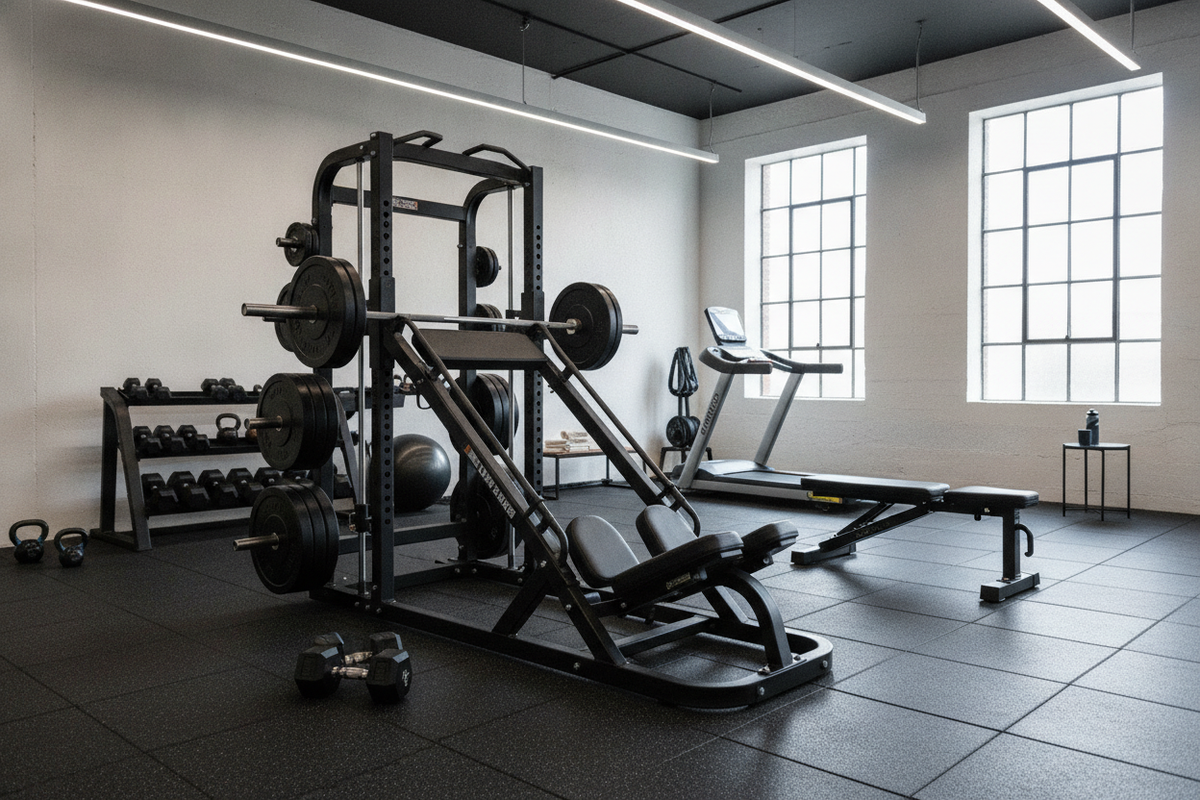
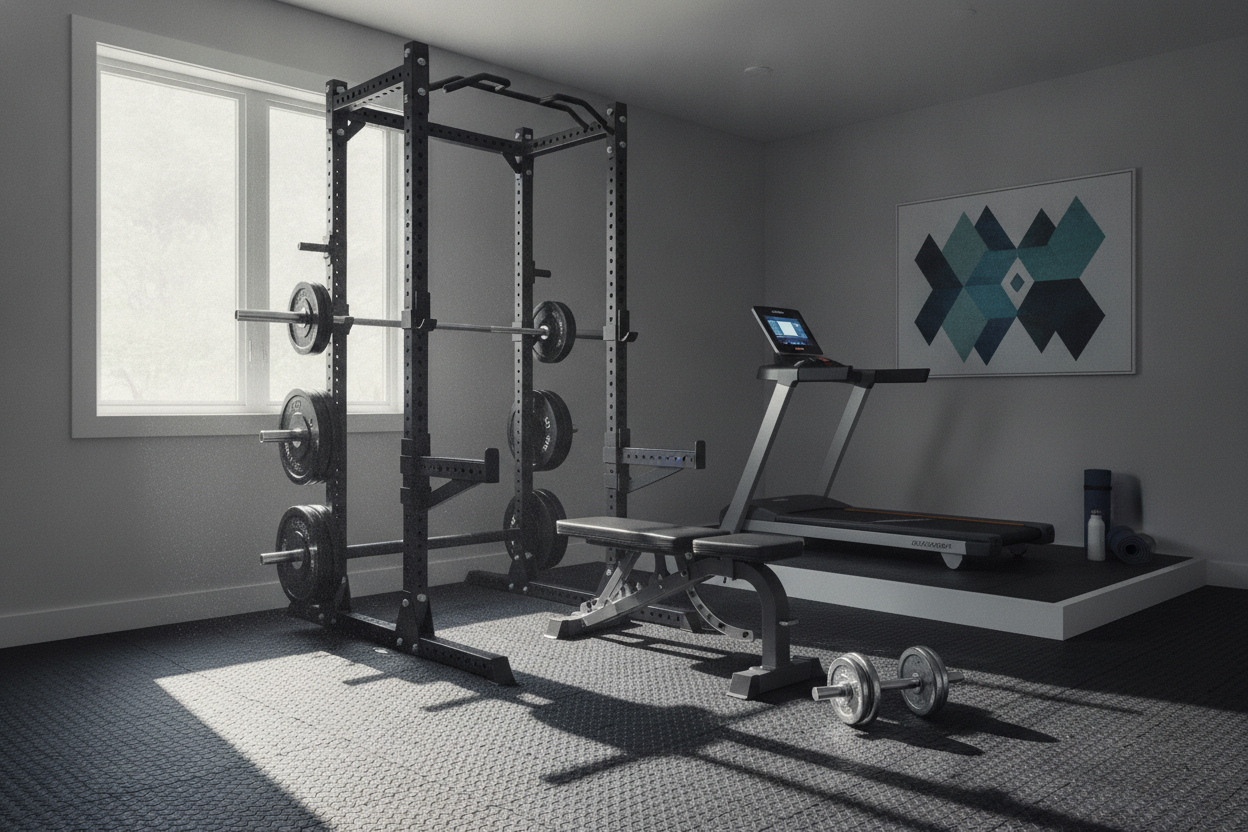
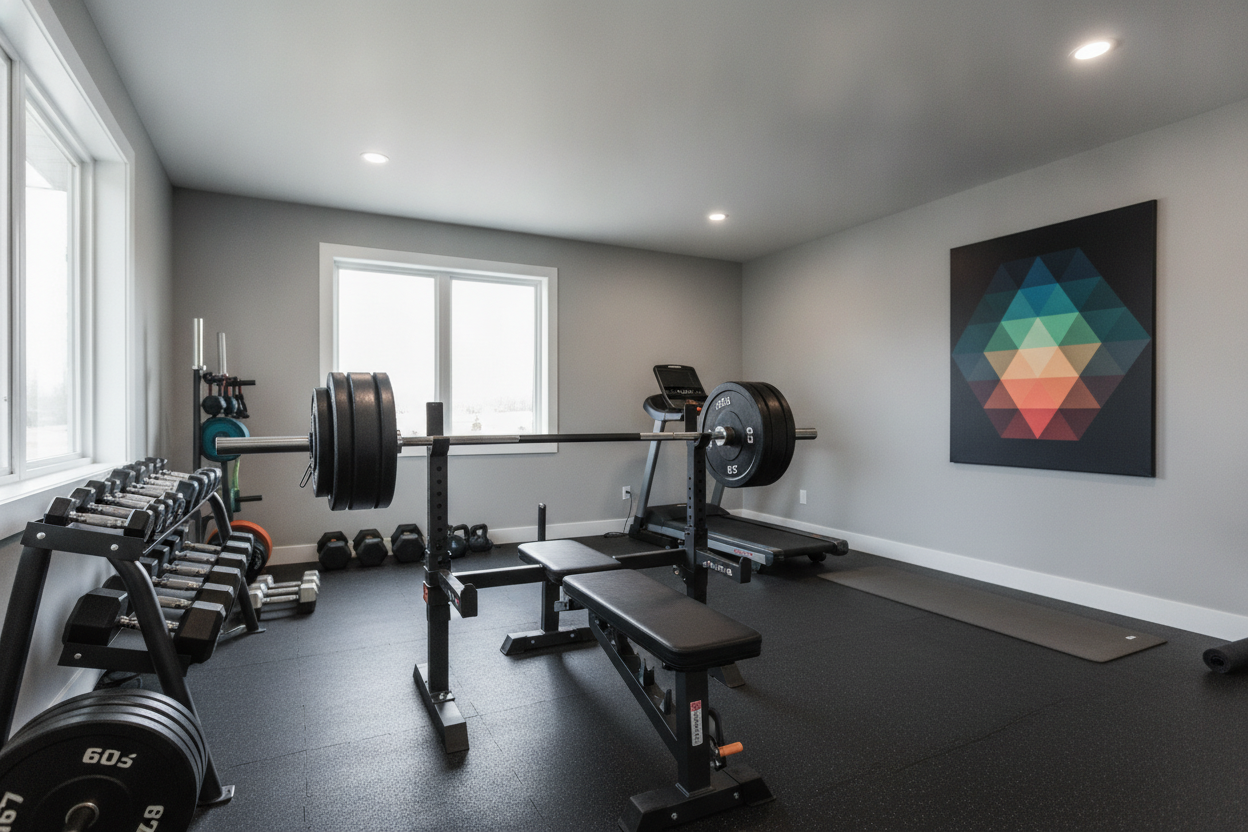
If you're training in a garage, the type of plates you use matters more than you think. Standard 10lb or 25lb iron plates have a small diameter, meaning the bar sits very low to the ground. You’ll have to awkwardly shimmy your legs under a bar that is basically pinning you to the floor. This is why I always recommend a barbell and bumper plate set for anyone serious about this lift. Bumper plates have a consistent 450mm diameter regardless of weight, which gives you the clearance to roll the bar over your thighs easily.
I personally spent years using old rusty iron plates and a rolled-up yoga mat as a bar pad. It was miserable. I finally upgraded to a dedicated hip thrust pad and bumper plates, and my lift went up 50 pounds in a month simply because I wasn't in pain before the set even started. Don't let bad gear be the reason you stay at a beginner weight.
FAQ
How much does a hip thrust bar weigh?
A standard Olympic barbell weighs 45 lbs (20kg). Some specialized 'shorty' bars or female-specific bars weigh 33 lbs (15kg). Always check the bar before adding plates so you can track your progress accurately.
What is a good hip thrust weight for a woman?
A 'good' weight is relative, but being able to thrust your own bodyweight for 10-12 clean reps is a fantastic benchmark that puts you in the top 10% of most gym-goers.
Can I use a Smith machine for hip thrusts?
Yes, and it's actually great for beginners because it removes the stability requirement. However, the 'weight' on a Smith machine isn't always 1:1 with a free barbell due to the friction of the rails and the counterbalanced bar.