The Chest Training Blueprint: How to Actually Build a Bigger, Stronger Upper Body
Building a powerful, well-defined chest requires focusing on horizontal pushing movements that overload the pectoral muscles through a full range of motion. While the standard barbell bench press is the most famous answer, it is rarely the only tool you need. To truly develop the chest, you must combine compound heavy lifting to build density with isolation movements that stretch the muscle fibers and promote hypertrophy.
Many lifters spend years pushing heavy weight without seeing significant changes in their physique because they focus on moving the bar from point A to point B rather than contracting the target muscle. Understanding the anatomy and the specific mechanics of exercises that work chest muscles is the difference between a sore shoulder and a growing pectoral major. Effective training involves targeting the upper, middle, and lower portions of the chest with varying angles and equipment.
My Struggle with the Flat Bench
I spent the first three years of my lifting journey frustrated. I was obsessed with increasing my max on the flat barbell bench press, believing it was the holy grail of chest development. I added weight to the bar, but my chest looked flat, and my front deltoids were constantly inflamed. It wasn't until a mentor corrected my scapular retraction—pinching the shoulder blades back and down—that I realized I hadn't been using my chest at all. I dropped the weight by 30%, focused on the squeeze at the top, and incorporated dumbbells. Within six months, the growth I saw was more significant than the previous three years combined. It taught me that what works out chest muscles isn't just the weight; it's the tension.
The Foundation: Compound Movements
When asking what exercises work chest most effectively, you have to start with compound movements. These exercises recruit multiple muscle groups—the pectorals, triceps, and deltoids—allowing you to move the most weight and stimulate the greatest hormonal response for growth.
Barbell Bench Press
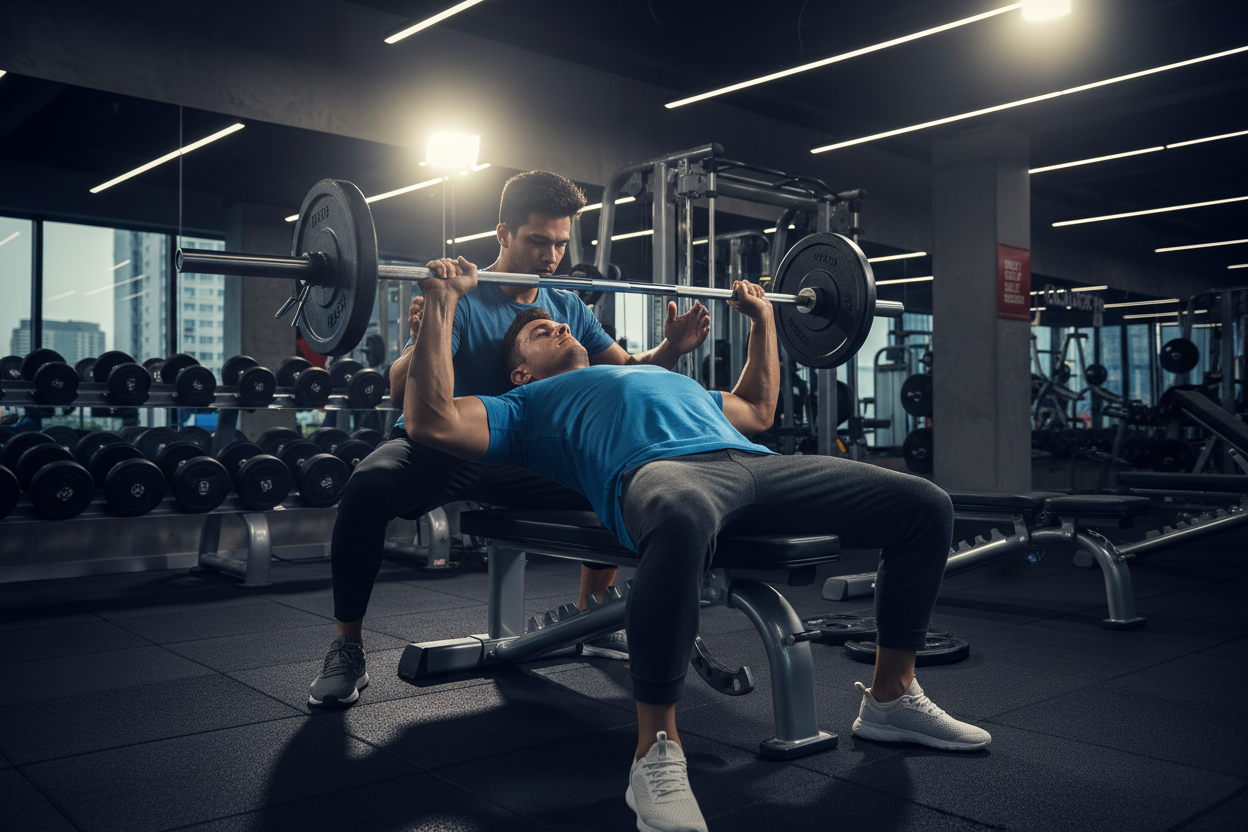
The flat bench press remains a staple for a reason. It allows for maximum loading, which is crucial for mechanical tension. However, hand placement matters. A grip slightly wider than shoulder-width usually offers the best balance between range of motion and strength. If your goal is strictly hypertrophy, ensure you aren't bouncing the bar off your sternum. Control the descent, pause briefly, and explode up.
Incline Dumbbell Press
If you are wondering what workouts build chest aesthetics the best, the incline dumbbell press is arguably superior to the flat barbell bench. The incline angle (set between 15 and 30 degrees) targets the clavicular head (upper chest), which gives the torso a full, plated look. Using dumbbells allows each arm to work independently, correcting muscle imbalances and allowing for a deeper stretch at the bottom of the movement compared to a barbell.
Weighted Dips
Often called the "squat of the upper body," dips are phenomenal for the lower chest and overall mass. To make this one of the effective exercises that work pectorals rather than just triceps, lean your torso forward slightly and flare your elbows out just a bit. This shifts the center of gravity and places the load directly on the lower pecs.
Isolation and Expansion
Once the heavy lifting is done, you need to flush the muscle with blood and focus on the stretch. This is where people often look for an exercise to expand chest width. While you cannot actually widen your ribcage structure significantly after puberty, you can build the outer sweep of the muscle to create that illusion.
Cable Crossovers
Cables provide constant tension throughout the entire range of motion, something free weights cannot do. When performing crossovers, you can adjust the pulleys high, low, or at shoulder height to hit different fibers. The key here is not heavy weight; it is the squeeze where your hands meet. Imagine trying to crush a walnut between your pecs.
Dumbbell Flyes
This is a classic answer for what exercise is good for chest stretching. Lie on a flat or slight incline bench. With a slight bend in your elbows, lower the weights in a wide arc until you feel a deep stretch across the chest. Do not go too heavy here, as the risk of shoulder injury increases with weight. The focus is on the eccentric (lowering) portion of the lift.
Bodyweight Mastery
You don't always need a gym to get a good pump. If you are stuck at home and wondering what exercise to do with chest development in mind, the push-up is king. However, standard push-ups can become too easy quickly. To keep them effective, you need to modify the leverage.
Decline push-ups (feet elevated) target the upper chest, while deficit push-ups (hands on blocks) allow your chest to dip below your hands, increasing the stretch. These are excellent finishers to burn out the muscle fibers at the end of a session.
Structuring Your Routine
Knowing what are exercises for chest is only half the battle; programming them correctly is the other. A common mistake is doing too much volume on the front end and burning out before hitting the isolation movements. A solid structure follows a specific order: heavy compound lift, secondary compound lift, followed by isolation.
Here is a sample hierarchy of what workouts help with chest growth:
-
Primary Mover: Barbell Bench Press (3 sets of 5-8 reps)
-
Secondary Mover: Incline Dumbbell Press (3 sets of 8-12 reps)
-
Isolation: Cable Flyes or Pec Deck (3 sets of 12-15 reps)
-
Burnout: Bodyweight Dips or Push-ups (2 sets to failure)
This sequence ensures you utilize your maximum energy for the lifts that require the most stability and strength. When you are fatigued, you move to machines or lighter weights where the risk of injury is lower.
The Mind-Muscle Connection
Regardless of what exercises to do with chest day, the intent behind the movement dictates the result. You can do bench presses all day, but if your triceps are taking 80% of the load, your chest will not grow. Before every set, retract your scapula. Keep your chest high. When you press, visualize your biceps coming together to meet in the middle. This visualization helps engage the pectorals more effectively than simply thinking about pushing the weight away from you.
Consistency in form beats intensity in weight. If you cannot feel the muscle working, drop the ego, drop the weight, and reset your form. Your chest will thank you with new growth.
Frequently Asked Questions
How often should I train my chest for maximum growth?
For most natural lifters, training chest twice a week is optimal. This frequency allows you to hit the muscle with sufficient volume while providing enough recovery time (usually 48 to 72 hours) for the fibers to repair and grow larger.
Can push-ups actually build a big chest?
Yes, push-ups can build significant mass, especially for beginners or when performed with progressive overload. To continue building muscle as you get stronger, you must increase the difficulty by elevating your feet, wearing a weighted vest, or slowing down the tempo to increase time under tension.
Why do I feel chest exercises in my shoulders?
Feeling chest movements in your front deltoids usually indicates poor scapular retraction or flaring your elbows too wide (90 degrees). To fix this, pinch your shoulder blades together against the bench and tuck your elbows slightly toward your ribcage (roughly a 45-degree angle) during pressing movements.