The best exercise for shoulders with dumbbells looks like a mistake
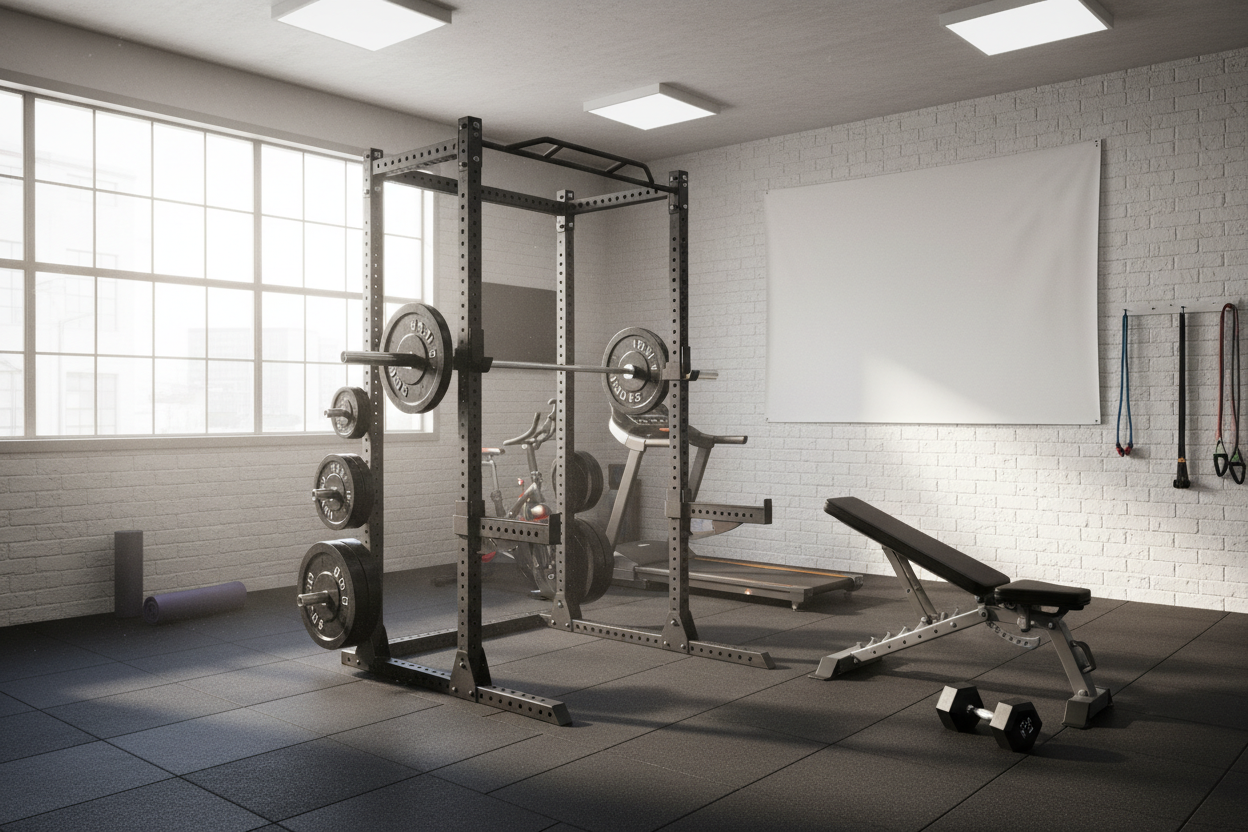
I spent years in a garage gym with nothing but a pair of rusty hex dumbbells and a floor that smelled like old tires. I did everything by the book: chest out, shoulders back, standing perfectly upright. I looked like a textbook illustration of 'proper form,' but my side delts were as flat as a pancake. It took a shoulder injury and a deep dive into biomechanics to realize that the best exercise for shoulders with dumbbells actually requires you to break the rules of posture.
Quick Takeaways
- Standing perfectly upright during lateral raises leaves the first 30% of the movement with zero tension.
- Leaning away from a fixed point shifts the resistance curve to hit the delt from the very start.
- You don't need heavy weights; constant tension makes 10 lbs feel like 30 lbs.
- If you don't have a rack to hold, an incline bench is your best friend for replicating the angle.
Why perfect posture is actually ruining your shoulder gains
We've been conditioned to think that 'strict' means standing like a soldier. In the world of bodybuilding, that rigidity is often a trap. When you stand straight up to do a side raise, your arms are hanging at your sides. Gravity is pulling the weight straight down toward your feet. Because your arm is parallel to the force of gravity, there is literally zero torque on the lateral deltoid at the bottom of the rep. You're basically just holding a suitcase until you get the weight halfway up.
This is why so many people struggle to find good shoulder dumbbell exercises that actually build width. They spend the first half of every rep using momentum to 'swing' the weight into the active zone. By the time the delt actually starts working, the rep is almost over. You aren't training the muscle through its full range; you're just training the top 45 degrees. To build real mass, we need to manipulate gravity so the muscle is screaming the second the dumbbell leaves your thigh.
The gravity problem with standard lateral raises
Think about the physics here. A dumbbell only provides resistance in one direction: down. In a standard standing lateral raise, the 'lever arm' (your actual arm) is shortest at the bottom and longest at the top. This means the exercise is easiest where you are weakest and hardest where you are strongest. It's a mismatched resistance curve that leaves gains on the table.
Most people try to fix this by adding more weight, which leads to the 'ego swing.' You've seen it—guys in the gym using 50-lb dumbbells, humping the air just to get the weights to shoulder height. That isn't a dumbbell shoulder workout at home; it's a trap and lower back workout. If you want those capped, 3D shoulders, you have to stop fighting gravity and start outsmarting it.
The Leaning-Away Lateral: Why this setup changes everything
The fix is the leaning-away lateral raise. By grabbing a power rack, a sturdy doorframe, or even a basement support pole and leaning your body out at a 30-degree angle, you fundamentally change the point of peak tension. In this position, your arm is no longer parallel to gravity at the start of the rep. Even when the dumbbell is hanging straight down, it is already pulling against the lateral deltoid.
This is the undisputed best exercise for shoulders with dumbbells because it eliminates the 'dead zone.' You get tension from 0 degrees all the way to 90 degrees. Because you're anchored to a post, you also can't use your torso to cheat. It forces the medial delt to do 100% of the work. Just make sure you have solid footing; I've had my shoes slip on dusty concrete more than once. Using high-grip exercise mat gym flooring is a must if you're going to be leaning your entire body weight off a vertical post.
How to actually execute the lean without looking foolish
First, stand next to your anchor point. Grab the rack at shoulder height with your non-working hand. Place your feet right at the base of the rack and lean your torso out until your arm is fully extended. You should feel like a human 'Y' shape. Hold the dumbbell in your outer hand, letting it hang straight down. It should be resting slightly away from your hip, not touching it.
When you initiate the lift, don't just think 'up.' Think 'out.' Lead with your elbow and sweep the weight toward the walls. Keep a slight bend in your elbow—locking it out puts too much stress on the joint, but bending it too much turns it into a weird upright row. Stop when your arm is parallel to the floor. If you go higher, the traps take over, and we're trying to isolate the delts here.
The sweep and squeeze for maximum hypertrophy
To make this one of the best shoulder exercises for mass with dumbbells, you have to master the eccentric phase. Don't just let the weight drop. Fight it on the way down. Because of the lean, the weight is still pulling on the muscle even at the very bottom. That 'stretch' under load is a massive trigger for muscle growth. I like to imagine I'm trying to touch the walls with the dumbbell throughout the entire arc.
What if you don't have a rack to hold onto?
If you're training in a living room without a sturdy post to grab, don't worry. You can achieve the exact same mechanical advantage using a bench. Set your bench to a 45-degree or 60-degree incline. Lie sideways against the backrest so your bottom arm is tucked and your top arm is free to move. This is often called the 'Side-Lying Lateral Raise.'
This setup is actually even more stable than the leaning version. It's why I always tell people that a solid weight set and bench is the foundation of any home gym. By lying on the bench, you're locked in. There is zero chance of using momentum. If you've never tried these, be prepared for a reality check—you will likely need to drop your usual lateral raise weight by 40-50% to hit the same rep range.
Programming the lean into your weekly routine
This isn't a movement you load up for sets of five. This is a high-volume, 'pump' exercise. In a typical men's shoulder workout with dumbbells, I'd put this right after your heavy overhead presses. Your shoulders are already warm, and the joints are lubricated. Aim for 3-4 sets of 12-15 reps. If you can do more than 20, the weight is too light or you're not leaning far enough.
I personally like to use these as a finisher. After I've done my heavy work, I'll grab a pair of 15s and do leaning laterals until my shoulders feel like they're on fire. The goal is metabolic stress—forcing blood into the muscle and keeping it there with constant tension.
Modifying this for a beginner dumbbell shoulder workout
If you're just starting out, don't worry about the weight. I've seen guys who can bench 315 lbs struggle with 10-lb dumbbells on leaning laterals. For a beginner dumbbell shoulder workout, focus entirely on the 'sweep.' If you feel your traps shrugging up toward your ears, the weight is too heavy. Master the angle first, then worry about the numbers on the side of the bell.
Personal Experience: The 'Cheating' Trap
I’ll be honest: when I first started doing these, I cheated. I would use my legs to 'pop' my body upright to help the weight move. I thought I was being productive because I was using 25-lb dumbbells. My shoulders didn't change at all. It wasn't until I swallowed my pride, grabbed a pair of 10s, and stayed perfectly still in the lean that my side delts finally started to pop. The downside? It hurts. A lot. But that's the price of actually hitting the muscle.
FAQ
Do I need a special handle to do these?
No. A standard dumbbell works fine. However, if you have dumbbells with very thick handles, you might find your grip gives out before your shoulders do. In that case, use some lifting straps so you can focus entirely on the delt.
Can I do these with cables instead?
Absolutely. Cables are actually superior for constant tension, but since most of us are working out in garages or spare bedrooms, dumbbells are the reality. The leaning-away method is the best way to make a dumbbell act like a cable machine.
Should I lean toward or away from the rack?
Lean away. Leaning toward the rack actually makes the exercise easier at the bottom and harder at the top, which is the opposite of what we want. Leaning away creates that brutal tension right out of the gate.