Next Gym Flooring Exercise Mats Explained: Worth the Hype?
There is nothing quite as heart-dropping as watching a loaded barbell slip from your grip and slam directly into a bare concrete floor. Beyond the deafening noise, the risk of cracking your foundation or ruining expensive bumper plates is a massive stressor for any home gym owner. If you are tired of working out on unforgiving surfaces, next gym flooring exercise mats might be the exact upgrade your space needs.
A proper foundation dictates how safely and effectively you can train. In this guide, we will break down exactly what makes these mats a top contender for garage gyms, basement setups, and spare bedrooms, helping you decide if they fit your specific training style.
Key Takeaways
- Thickness dictates function: Choose 3/8-inch for general fitness and up to 3/4-inch for heavy Olympic lifting.
- Superior shock absorption: Protects both your expensive equipment and your home's foundation from high-impact drops.
- Moisture resistance: Non-porous surfaces prevent sweat and humidity buildup, crucial for basement and garage environments.
- Easy installation: Precision-cut edges allow for a seamless fit without the need for professional contractors.
Choosing the Right Thickness and Material
Interlocking vs. Rolled Rubber
When evaluating your options, the format of the rubber is just as important as the material itself. Interlocking tiles offer incredible versatility for awkwardly shaped rooms and spare bedrooms. They snap together like puzzle pieces, meaning you can easily expand your footprint later. Rolled rubber, on the other hand, provides a near-seamless look that is perfect for larger, rectangular garage setups. Both options deliver the high-density impact resistance required for serious strength training.
Planning Your Home Gym Space
Garage Gyms vs. Spare Bedrooms
North American homes present unique spatial challenges. In a standard two-car garage, you are often dealing with sloped floors and fluctuating temperatures. High-quality next gym flooring mats are designed to withstand these thermal shifts without curling at the edges. If you are setting up in a spare bedroom or an apartment corner, you will want to pay close attention to the weight of the mats and the underlying subfloor. Always leave a quarter-inch expansion gap around the perimeter of the room to account for natural shifting.
Durability & Long-Term Maintenance
Handling High-Impact Drops
A common mistake is buying cheap foam tiles that compress under the weight of a power rack. True gym-grade rubber is vulcanized, meaning it will not permanently indent even if a 500-pound squat rack sits on it for years. Maintenance is incredibly straightforward: a weekly sweep and a quick mop with a pH-neutral cleaner mixed with water will keep the surface looking brand new. Avoid harsh chemicals like bleach, which can break down the rubber binders over time.
From Our Gym: Honest Take
We recently outfitted a 400-square-foot garage testing facility, and the flooring was our first major decision. Laying down these mats completely transformed the acoustics of the room—what used to be an echo chamber is now a muted, professional-feeling training environment.
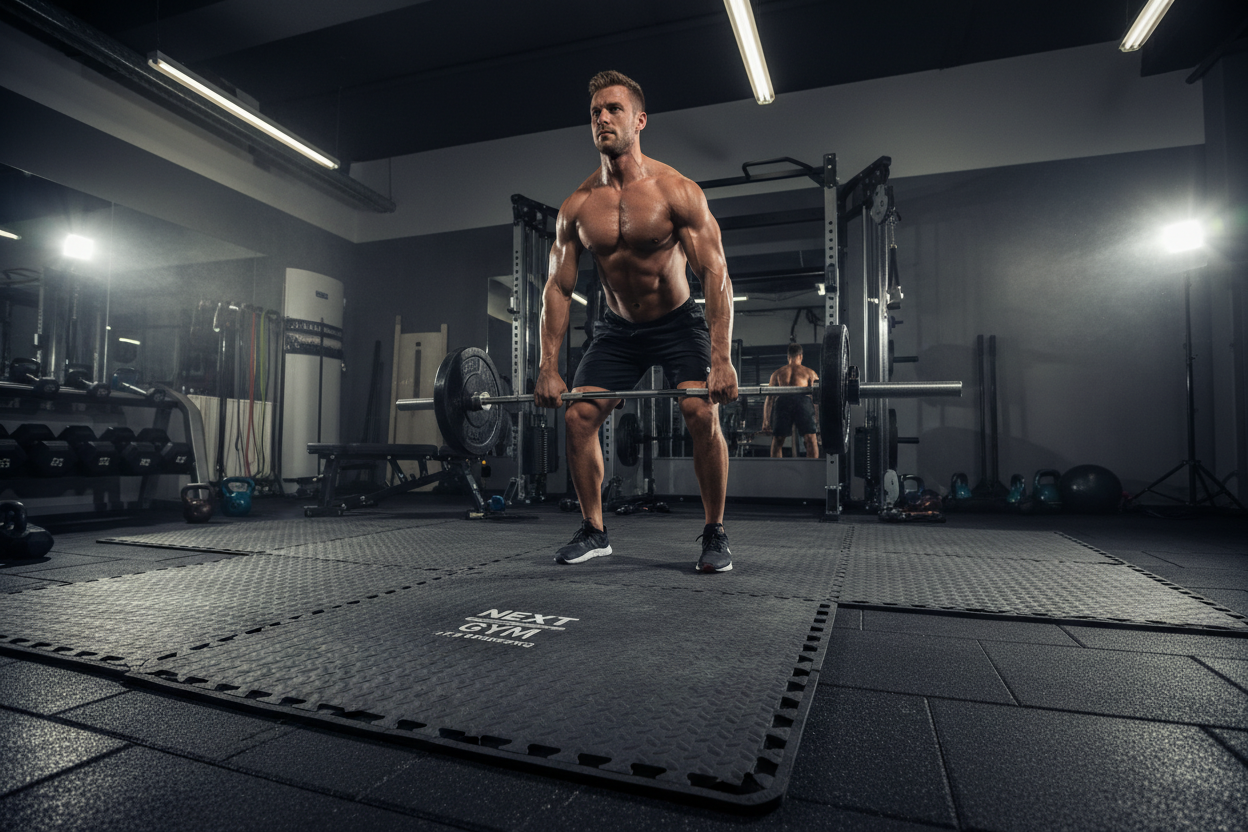
The surface texture is a standout feature. During heavy deadlift sessions in the humid summer months, my chalked grip and flat-soled lifting shoes felt completely locked in. No slipping, no shifting. However, to be completely transparent: you will experience a distinct 'new tire' rubber smell for the first week or two. I highly recommend leaving your garage doors open and running a high-velocity fan to help them off-gas before you start training in an enclosed space.
Frequently Asked Questions
Are these mats safe to use directly over hardwood floors?
While the rubber itself will not scratch hardwood, the friction from heavy equipment shifting on top of the mats can cause micro-abrasions underneath. We strongly recommend placing a thin layer of underlayment or rosin paper between the hardwood and the rubber mats for total protection.
How do I cut the mats to fit around drywall corners?
You do not need power tools. A sharp utility knife, a straight-edge metal ruler, and a bit of patience are all you need. Score the mat lightly three to four times rather than trying to slice through the entire thickness in one go. Placing a piece of scrap wood underneath the cut line makes the process much smoother.
Can I park my car on top of my gym flooring?
Yes, high-density vulcanized rubber can easily support the weight of a standard vehicle. However, be mindful of hot tires in the summer, which can occasionally leave marks, and winter road salt, which should be mopped up promptly to prevent surface degradation.