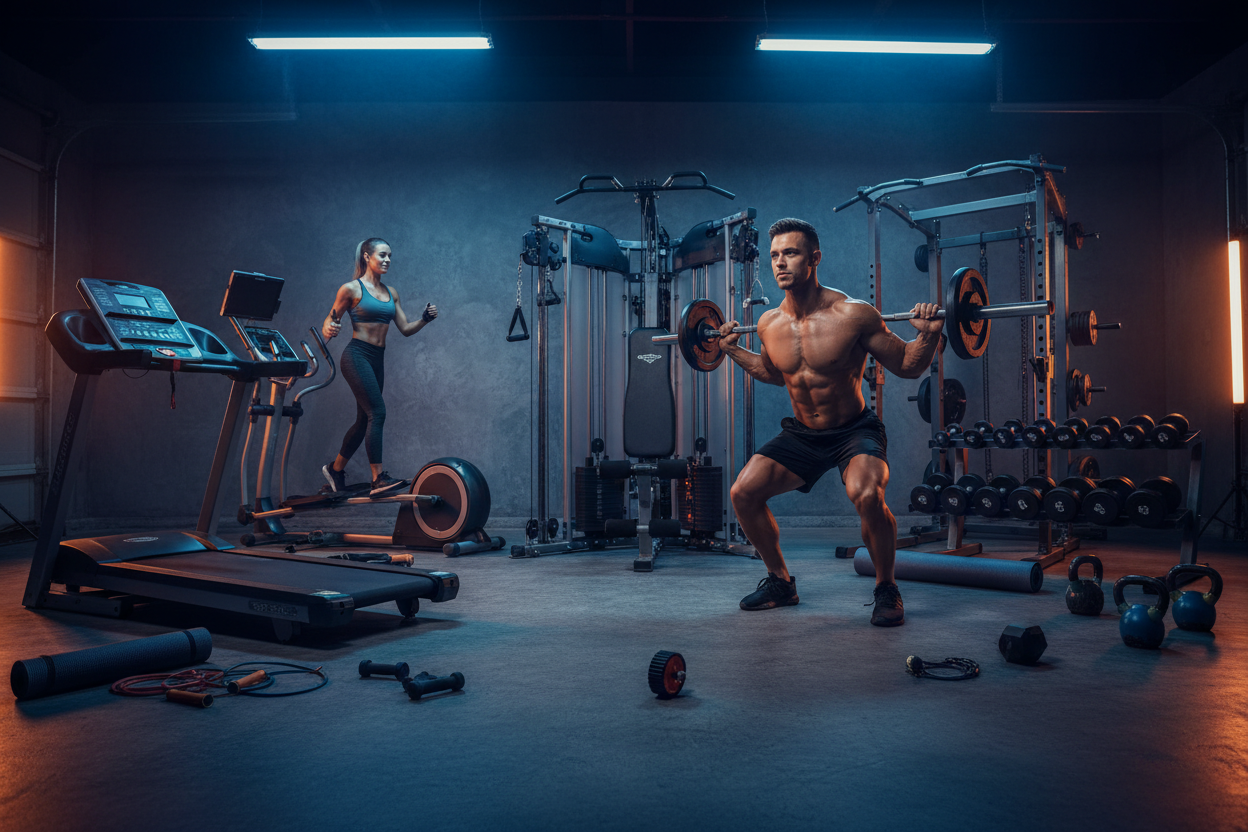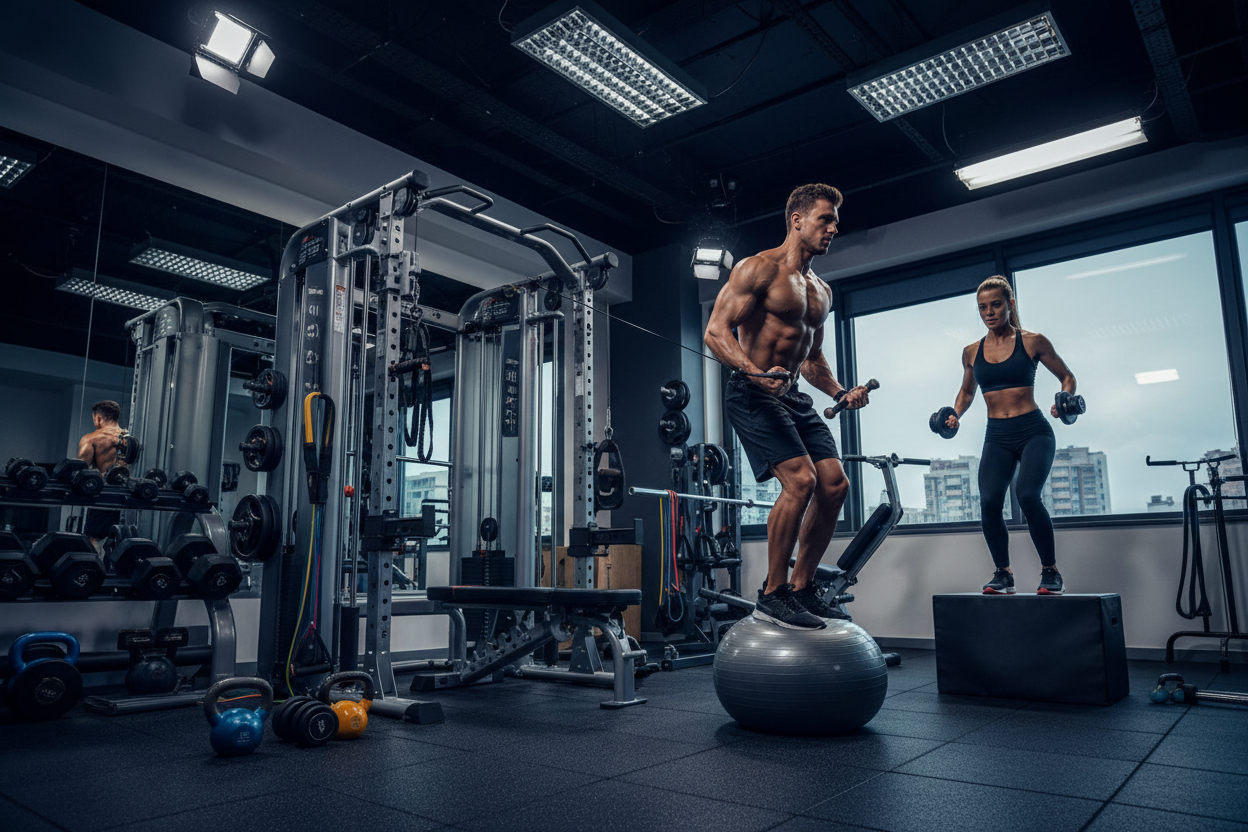
Most Versatile Exercise Equipment: Stop Wasting Gym Space
Building a home gym often feels like a high-stakes game of Tetris. You want to train every muscle group, but you only have a spare bedroom, half a garage, or a tight basement corner to work with. If you are tired of tripping over single-use machines or hitting workout plateaus because you lack the right gear, it is time to rethink your setup.
Finding the most versatile exercise equipment is the ultimate cheat code for home gym owners. By prioritizing gear that supports dozens of different movements, you save money, preserve square footage, and keep your training dynamic. In this guide, we will break down exactly which pieces deliver the highest return on investment for your space.
Key Takeaways
- Adjustable dumbbells and kettlebells offer the highest exercise-to-footprint ratio for small spaces.
- A power rack with a cable attachment is the ultimate anchor for serious strength training.
- Focus on multi-plane movements to determine if a piece of gear is truly versatile.
- Investing in commercial-grade, multi-use equipment saves money over buying several cheaper, single-use machines.
Space Planning: Maximizing Your Footprint
Before buying anything, you have to map out your available square footage. The gear you choose for a spacious two-car garage will look vastly different from an apartment bedroom setup.
Garage Gyms vs. Apartment Corners
If you are working with less than 50 square feet, adjustable free weights are your best friend. They easily rank as the most versatile workout equipment for tight quarters, replacing up to 15 pairs of traditional weights in a 2-foot footprint. For larger garage setups, a half-rack or full power rack becomes the centerpiece. Look for racks with a footprint of roughly 4x4 feet and a height clearance that leaves at least 6 inches between the pull-up bar and your ceiling.
Training Application: Full-Body Functionality
Versatility is not just about saving space; it is about how many movement patterns a single piece of gear can accommodate. Push, pull, squat, hinge, and carry—your equipment should check multiple boxes.
Free Weights vs. Cable Systems
While a barbell is incredible for heavy, compound lifts, a functional trainer (dual cable cross) arguably takes the crown for the most versatile gym equipment on the market. From chest flyes and triceps pushdowns to cable pull-throughs and lateral raises, the constant tension provided by cables is unmatched for hypertrophy. If you combine a functional trainer with an adjustable bench, you can effectively replicate 90 percent of a commercial gym's isolation machines.
Value & Budget: Buy Once, Cry Once
It is tempting to buy cheap equipment, but versatility often requires a higher upfront investment. An adjustable bench and a high-quality pair of adjustable dumbbells might cost a few hundred dollars, but they replace thousands of dollars worth of fixed weights and machines.
When assessing value, look at the price-per-exercise. A $500 leg extension machine does one thing. A $500 barbell and bumper plate set allows for deadlifts, squats, rows, presses, and lunges. Always invest heavily in your core versatile pieces before adding niche accessories.
From Our Gym: Honest Take
When I first set up my 10x12 basement gym, I made the classic mistake of buying a bulky, single-station lat pulldown machine. It took up a quarter of the room and collected dust on leg days. I eventually sold it and invested in a heavy-duty power rack with a high/low pulley ecosystem.
The difference was night and day. The knurling on the rack's included pull-up bar is noticeably more aggressive, giving my chalked grip a solid hold during heavy weighted pull-ups. Plus, the pulley system uses a 2-to-1 ratio that feels incredibly smooth, even when maxing out the weight stack. One minor caveat: if you go the power rack route, measure your ceiling height carefully. At 6 foot 2, I barely had enough clearance for overhead presses inside the rack—something most product pages fail to warn you about.
Frequently Asked Questions
What is the single best piece of equipment for a home gym?
If you have to choose just one, a high-quality set of adjustable dumbbells is the undisputed winner. They allow for heavy pressing, pulling, and lower-body accessory work while taking up minimal space.
How much space do I need for a functional trainer?
Most commercial-grade functional trainers require a footprint of about 5 feet wide by 4 feet deep. However, you also need to account for the working space in front of the machine, so plan for an 8x8 foot dedicated training area.
Are adjustable dumbbells worth the investment?
Absolutely. While the initial price tag can be high, they are incredibly cost-effective when compared to buying a full rack of fixed hex dumbbells. Just remember that pin-selector mechanisms require careful handling—dropping them is a quick way to void your warranty.