
Master Your Exercise At Home Workout With Micro-Sessions
I hear the same story from my busy clients every week. They block out a solid 60 minutes in their calendar for an intense session, but then a late meeting pops up, the kids need dinner, or sheer exhaustion sets in. The workout gets bumped to tomorrow, and tomorrow never comes. If you are struggling to find a full hour, it is time to rethink your approach to an exercise at home workout.
Instead of relying on the traditional gym model, I teach my clients a method called 'exercise snacking.' By breaking your routine into smaller, 15-minute micro-sessions spread throughout the day, you eliminate the mental hurdle of a long workout. This fragmented approach ensures you actually get the work done without needing a dedicated gym hour.
Quick Takeaways for Micro-Session Success
- Ditch the 60-minute mindset; three 15-minute blocks equal 45 minutes of daily volume.
- Use the morning for core activation, midday for heavy resistance, and evening for mobility.
- Leave your equipment out and visible to eliminate setup friction.
- Track total daily volume rather than single-session intensity to monitor progress.
Why the One-Hour Rule is Ruining Your Home Progress
When you try to copy a commercial gym routine in your living room, you are setting yourself up for failure. The one-hour rule demands a massive block of uninterrupted time, which is a luxury most professionals do not have. You end up skipping the exercise home work entirely because you only have 20 minutes free and assume it is not worth the effort.
This all-or-nothing mindset is the enemy of consistency. Your muscles do not hold a stopwatch. They respond to mechanical tension and metabolic stress, regardless of whether that stress is delivered in one continuous hour or broken into manageable chunks. Fragmented training allows you to accumulate volume without the dread of a massive time commitment.
I have seen clients drop 15 pounds and add serious strength by simply doing 10 minutes of kettlebell swings and push-ups before lunch, followed by some core work before dinner. When you lower the barrier to entry, you actually do the work. The best routine exercise at home is the one you consistently execute.
The Science of 'Exercise Snacking' for Home Trainees
Exercise snacking is not just a psychological trick; it is backed by solid exercise physiology. When you split your physical training at home into shorter intervals, you can actually push harder during those brief windows. Your intensity stays high because you know the session is only 15 minutes long. This leads to superior metabolic adaptations compared to slogging through a fatigued 60-minute routine.
Research shows that cumulative volume yields identical—and sometimes superior—results for cardiovascular health and muscle hypertrophy. If you do three sets of squats at 8 AM and three sets of overhead presses at 1 PM, your total daily volume is the same as if you did them back-to-back. The key is reducing the friction between deciding to work out and actually doing it.
To make this work, your environment needs to support instant action. Having a dedicated, always-ready floor space is critical for jumping immediately into brief workout blocks. I always tell my clients to invest in a large exercise mat for home gym use. When your floor is protected and ready, you do not waste five of your precious 15 minutes moving coffee tables or laying down towels.
Structuring Your Daily 15-Minute Micro-Sessions
Programming a work out you can do at home across the whole day requires a bit of strategy. You cannot just do random burpees three times a day and expect a balanced physique. I divide the day into three distinct phases: activation, strength, and decompression. This ensures complete muscular and cardiovascular stimulus without burning out your central nervous system.
By compartmentalizing your fitness workout at home, you also align the physical demands with your natural energy levels. Let us break down exactly how to structure these blocks.
Morning Block: Activation and Core Stability
Your morning block is all about waking up the nervous system and stabilizing the spine. You just spent eight hours lying in a bed; going straight into heavy lifting is a recipe for injury. Instead, focus on dynamic body exercise home movements.
Spend 15 minutes moving through bird-dogs, dead bugs, glute bridges, and thoracic rotations. Keep the tempo controlled. I usually program 3 sets of 10-15 reps for each movement. This routine gets the synovial fluid moving in your joints and fires up the core muscles you will need for midday strength work.
Since this block is low-impact, you can easily do it right next to your bed. A 6x4ft yoga mat is the perfect footprint for morning core and activation work in smaller bedroom spaces. It provides enough cushion for your spine during floor work without taking over the entire room.
Midday Block: Primary Strength and Resistance
When lunchtime hits, it is time to move some weight. This is your primary routine exercise at home where you target compound lifts. You only have 15 minutes, so forget isolation exercises like bicep curls. Focus on squats, hinges, pushes, and pulls using dumbbells, kettlebells, or heavy resistance bands.
Try an Every Minute on the Minute (EMOM) format. Minute one: 15 goblet squats. Minute two: 10 push-ups. Minute three: 12 dumbbell rows. Repeat this circuit five times. It is brutal, efficient, and will spike your heart rate while building dense muscle.
If you prefer a more traditional setup and have a bit more budget, incorporating compact hardware can drastically increase your intensity. I often point clients toward the best at home exercise machines for users who want to maximize their midday strength block using efficient, compact equipment like adjustable dumbbells or low-profile cable trainers.
Evening Block: Decompression and Mobility
After a long day of sitting at a desk and grinding through your previous micro-sessions, your evening block should down-regulate the nervous system. This is an essential part of your exercises for fitness at home, focusing on deep stretching and joint mobility.
Hold stretches for 60 to 90 seconds. Target the hip flexors, pecs, and lats. This not only improves your flexibility but also signals to your brain that it is time to sleep, aiding in recovery. If you need a guided sequence, this stretching workout at home serves as an ideal template for your evening decompression block.
Building a Frictionless Environment for Quick Workouts
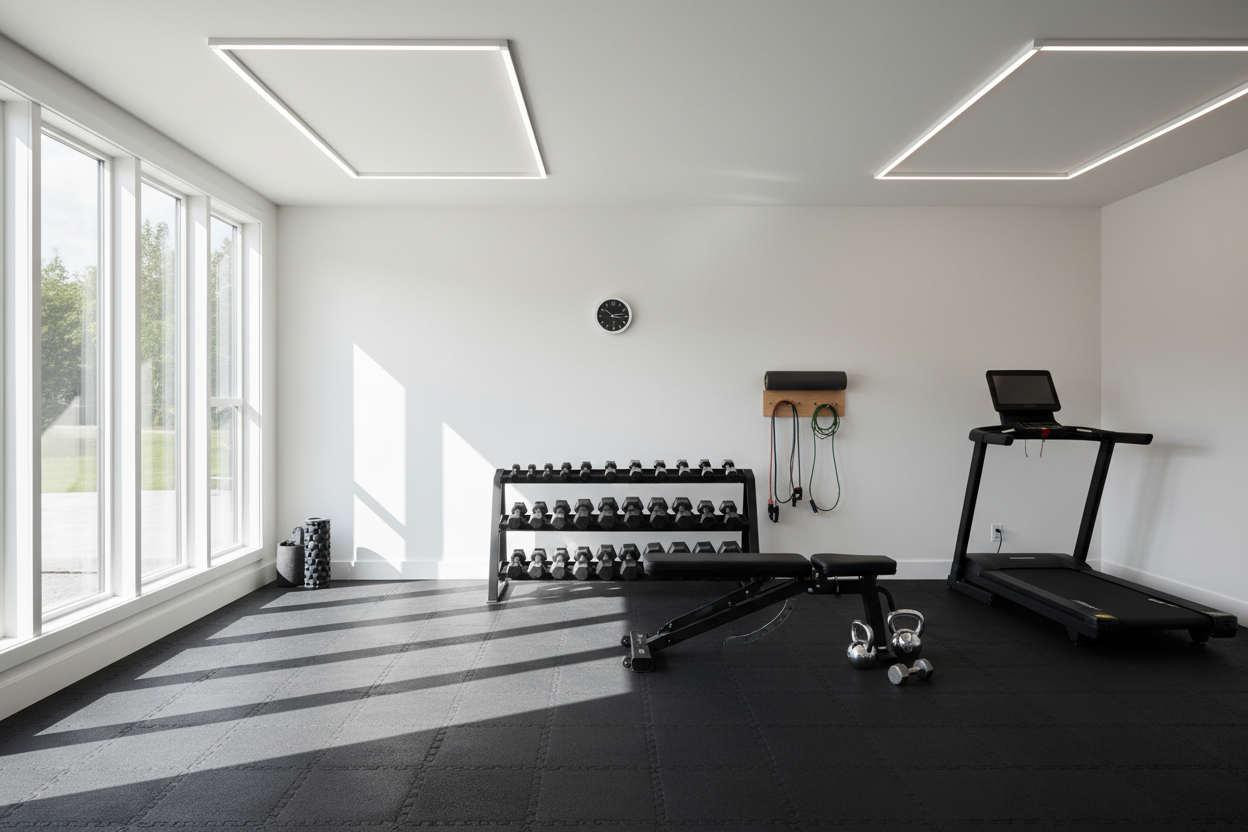
The micro-session method dies instantly if you have to spend 10 minutes setting up gear. To execute workouts in home successfully, your environment must be frictionless. Leave your kettlebells in the corner of the office. Keep your resistance bands draped over the door handle. Out of sight means out of mind.
I learned this the hard way when testing a highly-rated foldable squat rack last year. The marketing claimed it folded away in seconds. In reality, moving the j-cups, taking off the 45-pound plates, and pulling the locking pins took a solid five minutes. As a result, I stopped using it for quick midday squats. The honest downside to foldable gear is the setup tax. Now, I tell clients to prioritize equipment that requires zero assembly before use, like a pair of 5-52.5 lb adjustable dumbbells sitting on a dedicated stand.
Tracking Progress Across Fragmented Routines
When your working out at home exercises are split into multiple daily sessions, logging your progress can feel chaotic. You are no longer writing down one massive list of exercises at the end of an hour. Instead, you need a running tally.
Keep a simple notebook open on your desk or use a basic notes app on your phone. Record the weight, sets, and reps immediately after your midday strength block. For the morning and evening mobility blocks, simply check them off as completed. Over the course of a week, tally up your total sets per muscle group. You will likely find that your total weekly volume is actually higher with micro-sessions than it was when you were trying to force a single, grueling hour.
Frequently Asked Questions
Can I build muscle with just 15-minute workouts?
Yes, provided you use sufficient resistance and train close to failure. Three 15-minute strength sessions a week, focusing on progressive overload, will absolutely build muscle.
Do I need to warm up before a 15-minute midday session?
Your morning mobility block handles your general joint lubrication for the day. For the midday block, a quick 2-minute specific warm-up, like bodyweight squats before weighted squats, is usually sufficient.
What if I miss one of my daily micro-sessions?
Do not stress over it. The beauty of the micro-session approach is its flexibility. If you miss the morning core work, simply tack 5 minutes of planks and bird-dogs onto your evening mobility routine.


