Machine to Build Muscle: The Definitive Hypertrophy Guide
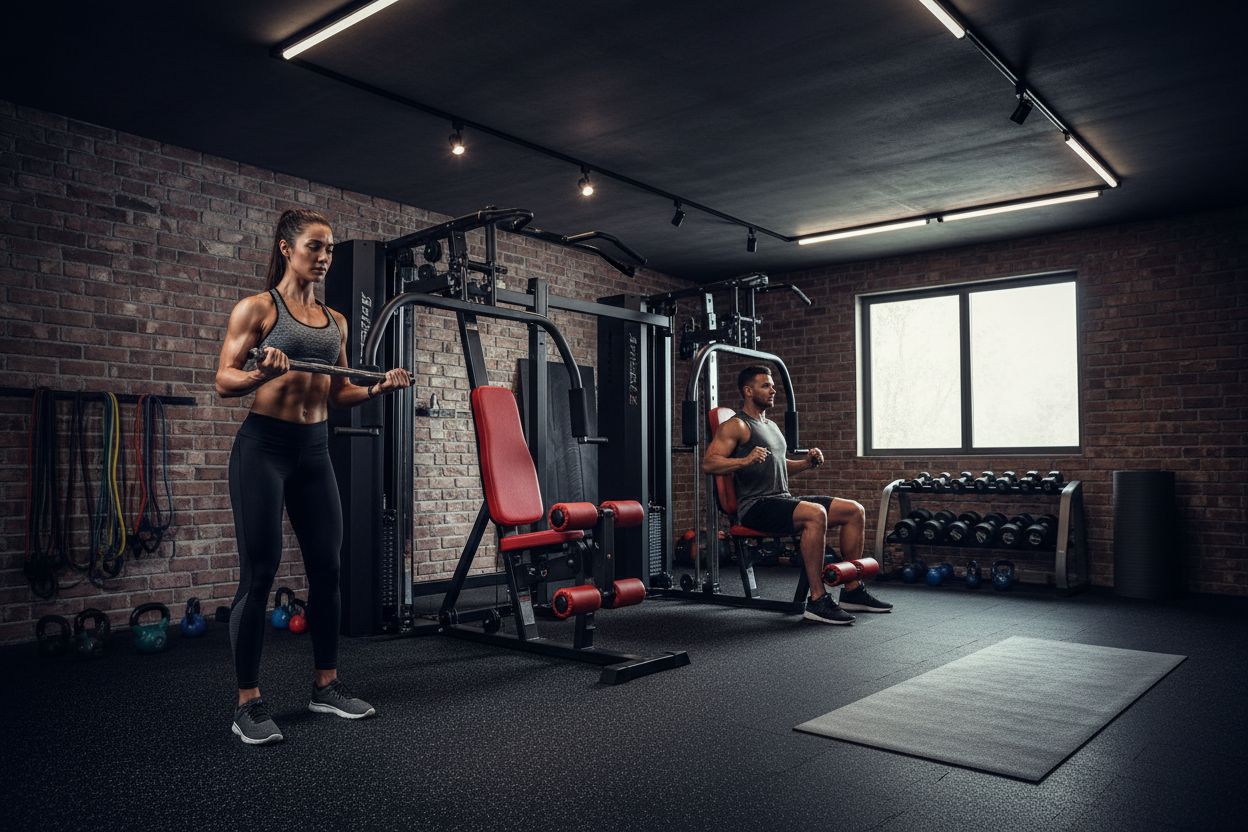
There is a persistent myth in the fitness industry that you cannot achieve significant hypertrophy unless you are grinding under a heavy barbell. While free weights are fantastic, ignoring the right machine to build muscle is a mistake that leaves gains on the table.
Bodybuilders have known this for decades. The goal of hypertrophy isn't just to move weight from point A to point B; it is to place maximum mechanical tension on the target tissue. Machines offer a level of stability that allows you to push closer to failure safely, often eliciting a better growth response than free weights alone.
Key Takeaways: The Machine Advantage
- Stability equals output: Machines remove the need to balance the load, allowing you to direct 100% of your effort into pushing the weight.
- Safety near failure: You can safely train to muscular failure without a spotter, a critical driver for growth.
- Constant tension: Many modern machines provide a resistance profile that matches your muscle's strength curve better than gravity-dependent dumbbells.
- Isolation: They allow you to target specific muscle heads without systemic fatigue limiting your performance.
Why Stability Drivers Hypertrophy
To understand why machines work, you have to look at the physics of tension. When you do a barbell squat, a significant amount of your energy goes into stabilizing your torso and hips. If your lower back gets tired before your quads, your set ends before your legs have received the optimal stimulus.
Machines that build muscle effectively solve this by locking you into a fixed path of motion. This external stability means your internal stability demands drop. The result? You can grind out those last three painful reps that actually trigger growth, rather than stopping because your balance wavered.
Selecting the Right Equipment
Plate-Loaded vs. Selectorized
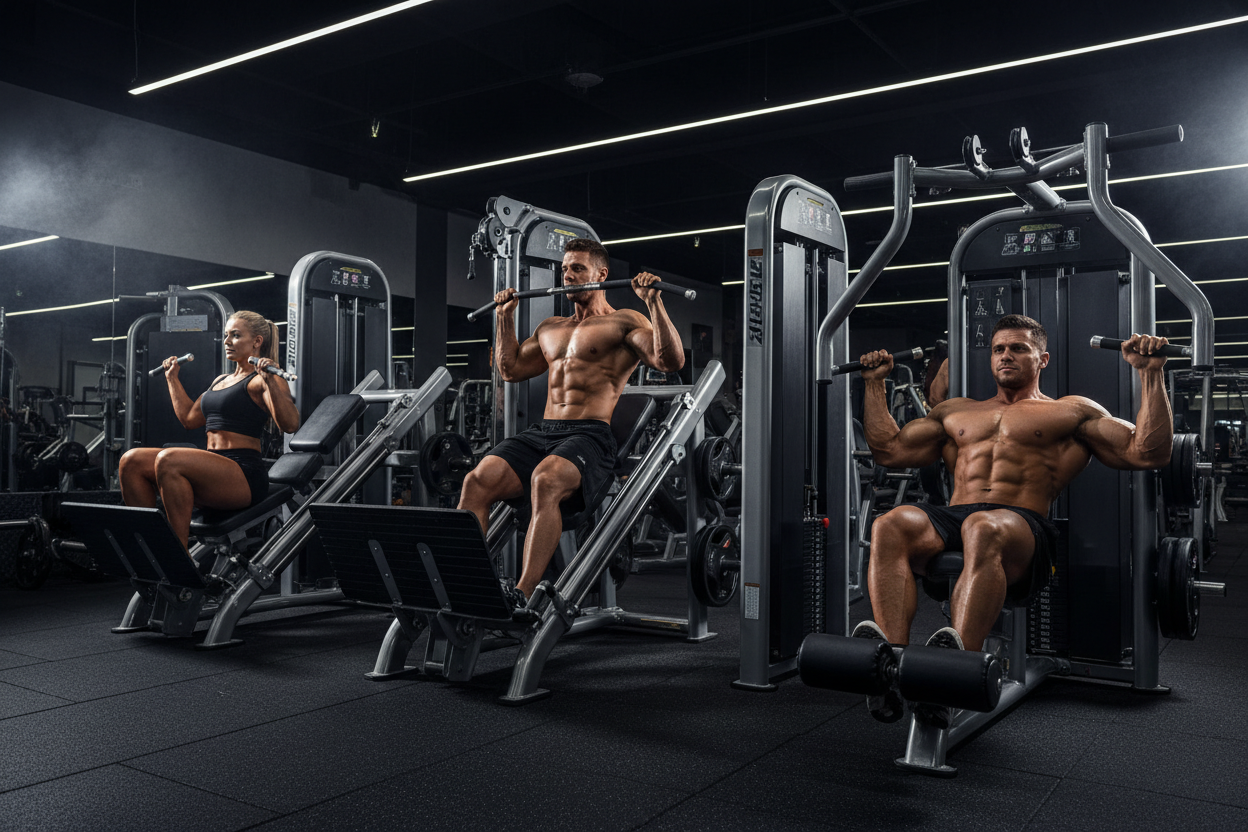
Not all equipment is created equal. Plate-loaded machines (think Hammer Strength) generally mimic the feel of free weights but with added stability. They are excellent for heavy, explosive movements.
Selectorized machines (the ones with the pin stack) provide constant tension. These are often superior for metabolic stress techniques like drop sets because you can change the weight in seconds without getting up.
Cables: The Hybrid Approach
Cables are technically machines, but they offer freedom of movement. They are essential exercise equipment to build muscle because they allow you to manipulate the angle of resistance. Unlike a dumbbell fly where there is zero tension at the top of the movement, a cable fly keeps the pec under tension throughout the entire range of motion.
Common Mistakes to Avoid
The biggest error I see trainees make is treating machine work as "easy work." Just because you are seated doesn't mean you should be scrolling on your phone between sets.
Another issue is fitment. If the machine's pivot point doesn't align with your joint's pivot point, you risk injury. Spend the extra thirty seconds adjusting the seat height and back pad. If the machine feels "off" or causes joint pain, skip it. Not every machine fits every body type.
My Training Log: Real Talk
Let's be honest about the reality of machine training. I want to talk about the Hack Squat. On paper, it's just a leg press variation. In reality, it's a torture device.
I remember a specific leg block I did last winter. I was using an old, slightly rusted linear hack squat machine. The thing about machines is that they remove the fear of falling over, which means you have no excuse to stop. I recall the specific sound of the sled bearings grinding—a low hum—as I lowered into the hole.
The worst part wasn't the weight; it was the shoulder pads. They had this coarse vinyl that would dig into my traps when I was three reps from failure. I remember staring at a fleck of chipped paint on the footplate, legs shaking uncontrollably, knowing that because the machine was stable, I had to do one more rep. That specific feeling of safety combined with absolute physical misery is something you just don't get with a barbell squat, where you're always subconsciously saving a little energy to keep from getting crushed.
Conclusion
Don't let purists tell you that machines are for beginners. Used correctly, they are precision tools for sculpting a physique. They allow you to take muscles to absolute failure safely and apply tension exactly where you need it. Mix them with your free weights, adjust the fit to your body, and push the intensity.
Frequently Asked Questions
Can you build muscle with machines only?
Yes, absolutely. Your muscles do not know if you are holding a barbell or pushing a lever; they only detect mechanical tension. As long as you apply progressive overload (adding weight or reps over time), you can build a significant physique using only machines.
Are free weights better than machines for mass?
Not necessarily better, just different. Free weights recruit more stabilizer muscles and are generally better for athletic performance and functional strength. However, for pure hypertrophy (muscle size), machines can sometimes be superior because they allow for greater isolation and intensity without balance acting as a limiting factor.
What is the best machine for chest growth?
While subjective, a converging chest press is often superior to a standard bench press machine. The converging motion (where the handles come together as you push out) allows for a greater peak contraction of the pectoral muscles, mimicking the natural function of the chest better than a straight bar path.