Incline Bike Machine: The Truth Before You Buy
If you've hit a wall with your cardio routine, you aren't alone. Pedaling away on a flat road for 45 minutes can feel monotonous, and for many home gym owners, it stops delivering the strength and endurance gains it used to. Enter the incline bike machine—a game-changer that bridges the gap between traditional cycling and uphill resistance training.
Whether you are outfitting a sprawling garage gym or trying to maximize a tight apartment corner, adding an incline feature to your ride dramatically changes the stimulus. In this guide, we will break down exactly what to look for, how it transforms your training, and whether it's truly worth the investment for your space.
Key Takeaways
- Intensified Muscle Engagement: Riding at an incline shifts the focus toward your glutes, hamstrings, and core.
- Higher Caloric Burn: Simulated hill climbs demand more energy, maximizing short workout windows.
- Space Considerations: Look for models with a compact footprint, but account for vertical clearance when fully inclined.
- Durability Matters: A solid steel frame is non-negotiable to prevent wobbling during high-resistance uphill sprints.
Why Add Incline to Your Ride?
Standard cycling is fantastic for cardiovascular health, but it often neglects the posterior chain. When you utilize an exercise bike incline feature, you force your body to adapt to simulated gravity.
Targeting New Muscle Groups
On a flat road, your quads do the heavy lifting. By bumping up the grade to 10% or 20%, the biomechanics of your pedal stroke change. You have to pull up and push down with more force, heavily recruiting your glutes and hamstrings. It turns a standard cardio session into a legitimate lower-body strength endurance workout.
Crushing Caloric Plateaus
If you only have 20 minutes to train before work, efficiency is everything. Uphill resistance demands significantly more oxygen and energy. An incline stationary bike allows you to perform High-Intensity Interval Training (HIIT) with hill sprints, burning more calories in half the time compared to steady-state flat riding.
Specs That Actually Matter
Not all bikes are created equal. When shopping for an incline bike machine, it's easy to get distracted by flashy touchscreens. Here is what actually dictates performance.
Motorized vs. Manual Incline
Entry-level models might require you to step off the bike to manually adjust the front fork height. While budget-friendly, this ruins the flow of a workout. For a seamless experience, invest in a bike with motorized incline that adjusts via a button or automatically syncs with virtual training apps like iFIT or Zwift.
Stability and Weight Capacity
When you are out of the saddle grinding up a 20% grade, the bike takes a beating. Look for a machine with a user weight capacity of at least 300 lbs and a heavy-duty steel frame. A heavier flywheel (30+ lbs) also ensures a smoother, jerk-free pedal stroke under heavy resistance.
From Our Gym: Honest Take
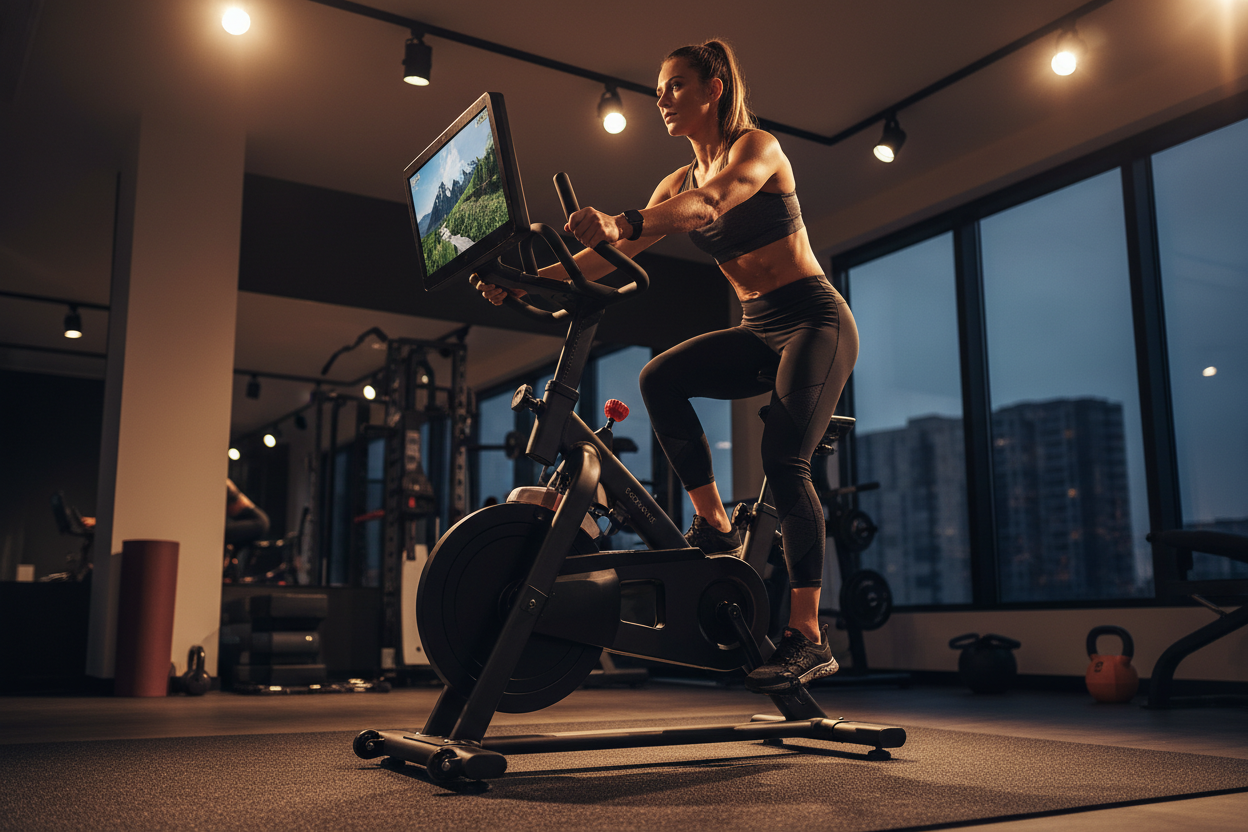
We've tested dozens of cardio machines over the years, and I recently spent six months exclusively using a premium incline stationary bike in my garage gym. The physical difference is undeniable—my out-of-the-saddle climbing strength skyrocketed, and it translated directly to my heavy barbell squats.
However, I'll be completely honest about a common drawback: the footprint and vertical clearance. At 6-foot-1, when the bike pitched up to a full 20% incline, I came uncomfortably close to my 8-foot garage ceiling. Additionally, on the model I tested, the 22-inch display had a slight but noticeable wobble during max-effort hill sprints. It wasn't a dealbreaker, but it's something to keep in mind if you are an aggressive rider. Overall, the training benefits vastly outweighed the minor structural quirks.
Frequently Asked Questions
Is an exercise bike incline feature really necessary?
It isn't strictly necessary for basic cardio, but it is highly recommended if you want to build leg strength, increase your caloric burn in less time, or train for outdoor hilly rides from the comfort of your home.
How much ceiling clearance do I need for an incline stationary bike?
Always add your height, the maximum pedal height, and an extra 15 inches for safety and incline pitch. For most users, a standard 8-foot ceiling is sufficient, but taller riders in basements with 7-foot ceilings may run into clearance issues at max incline.
Does riding on an incline hurt your knees?
When set up correctly, cycling is low-impact. However, high-resistance hill climbs can put additional torque on the knee joint. Ensure your seat height is properly adjusted and start with lower inclines to build tendon strength before tackling 20% grades.