I Swear By This 10-Minute Exercise Routine for Beginners at Home
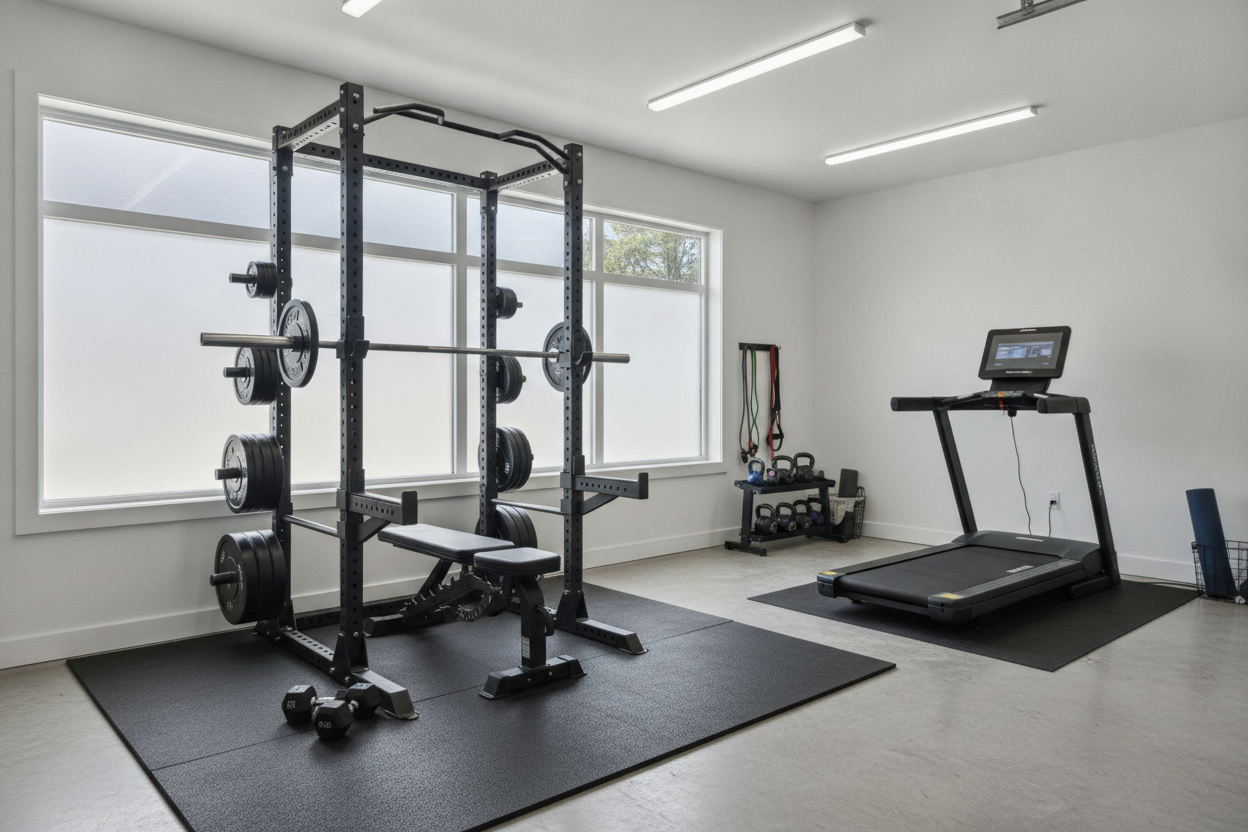
I remember staring at a $2,000 power rack I’d just bolted into my garage floor, feeling completely paralyzed. I had all the gear, the fancy barbell, and the bumper plates, yet I hadn’t actually moved a weight in three days because I was overthinking the 'perfect' 60-minute session. If you’re just starting out, that friction is your biggest enemy. This exercise routine for beginners at home is designed to kill that friction before it kills your motivation.
- Consistency beats intensity every single time for beginners.
- You don't need a single dumbbell to see initial strength gains.
- Household furniture is your best friend for scaling movements.
- A 10-minute cap makes it impossible to use 'no time' as an excuse.
The Friction Problem: Why Most Day-One Workouts Fail
Most people fail because they try to go from zero to hero in twenty-four hours. They download a 45-minute HIIT circuit that involves burpees, mountain climbers, and other high-impact movements that feel like a punishment. By the time they finish, their heart is pounding, their joints ache, and their brain associates exercise with pure misery. That is a trap. The main goal of beginner home workouts isn’t to burn a specific number of calories or to see a six-pack by Friday. It is to build the habit of showing up.
When you’re looking at at home workouts for beginners, you have to realize that your willpower is a finite resource. If you spend all that willpower just trying to survive a grueling session, you won't have any left to do it again tomorrow. Ambitious 45-minute sessions are great once you have a foundation, but on day one, they are a recipe for burnout. You want to finish your workout feeling like you could have done a little more. That 'little more' is what brings you back for the next session.
I’ve seen it a hundred times: someone buys a full set of adjustable dumbbells, does a massive leg day, and then can’t walk for a week. They quit because the barrier to entry became a mountain. We want to make the barrier a speed bump. We are building a fitness routine for beginners at home that focuses on the 'start' rather than the 'finish.'
The 10-Minute Rule for Building a True Fitness Habit
The psychology of a 10-minute commitment is powerful. It is short enough that you can’t realistically say you don’t have time for it. Even on your busiest day, you have 10 minutes. By setting the bar this low, you remove the mental barriers that usually lead to procrastination. When the goal is just ten minutes, skipping the workout actually feels harder than just doing it. You lose the ability to negotiate with yourself.
This approach helps create a workout routine at home for beginners that actually feels good. Instead of dreading the upcoming hour of sweat, you know you’ll be done before the coffee is finished brewing. This prevents the severe delayed onset muscle soreness (DOMS) that usually ruins week one. If you’re too sore to move, you’re not going to train. If you feel energized and slightly challenged, you’ll be itching to get back to it. This is how to workout at home for beginners without turning your life upside down.
The Exact 10-Minute Exercise Routine for Beginners at Home
This routine is a simple circuit. You will perform three movements back-to-back. Set a timer on your phone for 10 minutes. Do 10 reps of each movement, rest for 30 seconds, and repeat until the timer goes off. Don't worry about how many rounds you get; just focus on moving well. This is the core of any good workout routine for beginners at home.
We are focusing on the three primary human movements: pushing, squatting, and pulling. By using your own body weight and a few household items, you can scale these moves to your current strength level. This at home exercise plan for beginners requires zero specialized equipment, meaning you can start right now in your living room.
Move 1: The Kitchen Counter Push-Up
Standard floor push-ups are incredibly difficult for most people starting out. If your form breaks down, you put unnecessary stress on your shoulders and lower back. By using your kitchen counter to elevate your hands, you change the angle and reduce the amount of body weight you have to move. It is the perfect introductory chest movement for a home workout beginner.
Keep your core tight and your elbows tucked at a 45-degree angle. Don't let your hips sag. If the counter is too easy, move to a lower surface like a sturdy coffee table or the arm of a couch. The higher the surface, the easier the rep.
Move 2: The Couch Box Squat
Squatting is the king of leg exercises, but many beginners fear falling backward or hurting their knees. The couch box squat eliminates that fear. Stand in front of your couch, feet shoulder-width apart. Sit your hips back until your glutes lightly touch the cushion, then drive back up to a standing position. It’s an incredibly simple home workout for beginners to build leg strength safely.
The couch acts as a safety net and a depth gauge. It ensures you aren't putting too much pressure on your knees by shifting your weight too far forward. As you get stronger, try to just 'kiss' the cushion rather than sitting down fully.
Move 3: The Doorframe Row
Pulling movements are the hardest to replicate at home without a pull-up bar or dumbbells. However, a doorframe row is a brilliant rudimentary pulling motion. Stand in a doorway, grab the trim on both sides, and lean back until your arms are straight. Pull your chest toward the opening of the door. This trains your back and biceps without needing any gear.
A beginner exercise routines at home must include a way to train the back to balance out all the pushing we do. You can adjust the difficulty by moving your feet closer to the doorframe. The more 'horizontal' you are, the harder the rep becomes.
Setting Up Your Space to Eliminate Excuses
Environment design is just as important as the workout itself. If you have to move a coffee table, find your shoes, and unroll a mat every time you want to train, you’re adding friction. I recommend having a dedicated space that is always ready. I personally keep a 6x8ft exercise mat rolled out in my spare room or a corner of the living room. It’s a permanent visual cue to my brain that 'this is where the work happens.'
A large, non-slip surface provides the grip you need and protects your floors. More importantly, it defines your 'gym.' When you step onto that mat, the distractions of the house fade away. It’s a 10-minute sanctuary. Even if you’re just doing beginner workouts to do at home, having that dedicated 6x8 ft space makes the routine feel professional and permanent.
What to Do When 10 Minutes Gets Too Easy
Eventually, these 10 minutes will feel like a breeze. Your first instinct might be to go out and buy a 50-lb kettlebell or a complex cable machine. Don't do that yet. Before adding external weight, start mastering tempo. Instead of rushing through your reps, take three seconds to lower yourself and three seconds to push back up. This increases time under tension and makes the muscles work significantly harder without adding a single pound of iron.
Once you’ve mastered the tempo, you can increase the time to 15 or 20 minutes, or find lower surfaces for your push-ups. The goal of this home workout beginner phase is to exhaust the possibilities of your own body weight before complicating things with gear. You’re building a foundation that will last a lifetime.
Personal Experience: My Biggest Mistake
When I first started training at home, I thought I needed a 'hardcore' environment. I blasted loud music, drank way too much caffeine, and tried to do 50 burpees every morning. I lasted exactly four days. I hated it. I realized later that I was trying to perform for an imaginary audience. When I switched to a simple 10-minute routine using just my furniture, I actually stayed consistent for a month. That consistency built the base that eventually allowed me to deadlift 500 pounds. It all started with the kitchen counter.
FAQ
Do I need to wear gym shoes at home?
Not necessarily. For low-impact movements like box squats and doorframe rows, training barefoot or in socks (if you have a grippy mat) is actually great for foot health and balance. If you're on a slippery hardwood floor, put on some cross-trainers for safety.
How many days a week should I do this?
Start with three days a week—maybe Monday, Wednesday, and Friday. This gives your central nervous system time to adapt. If you feel great after two weeks, you can move to five days. Consistency is more important than frequency.
What if I can't even do one push-up on the counter?
No problem. Move to a wall. Stand a few feet away from a wall, place your hands on it, and perform the movement there. As you get stronger, move to the counter, then the couch, then the floor. Everyone starts somewhere.