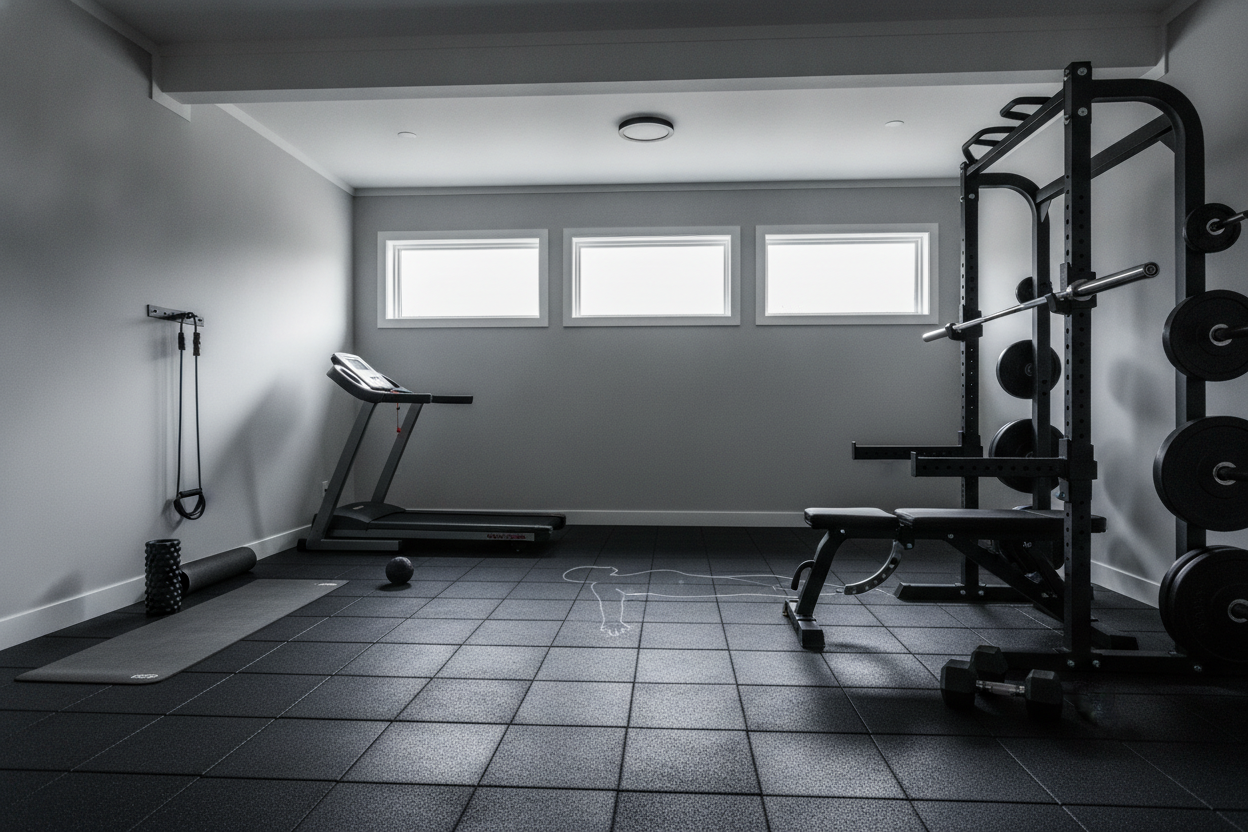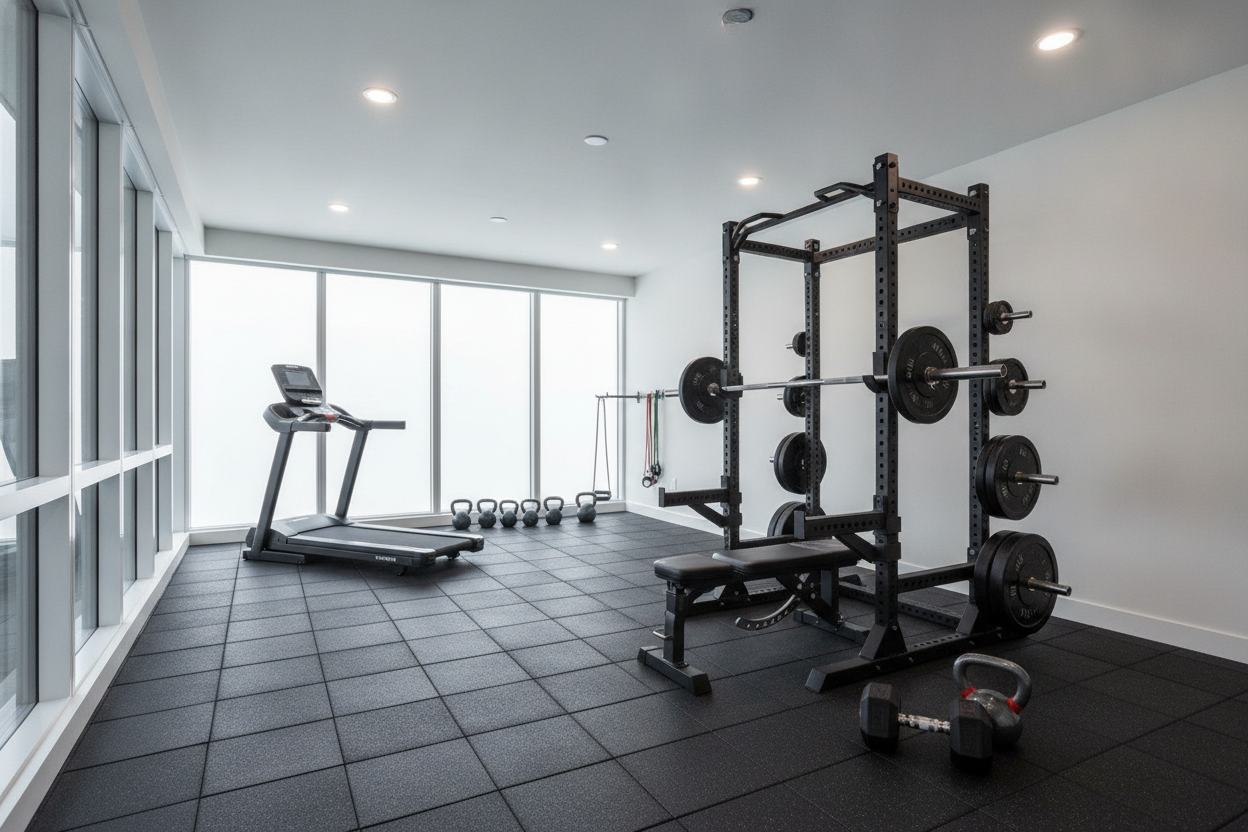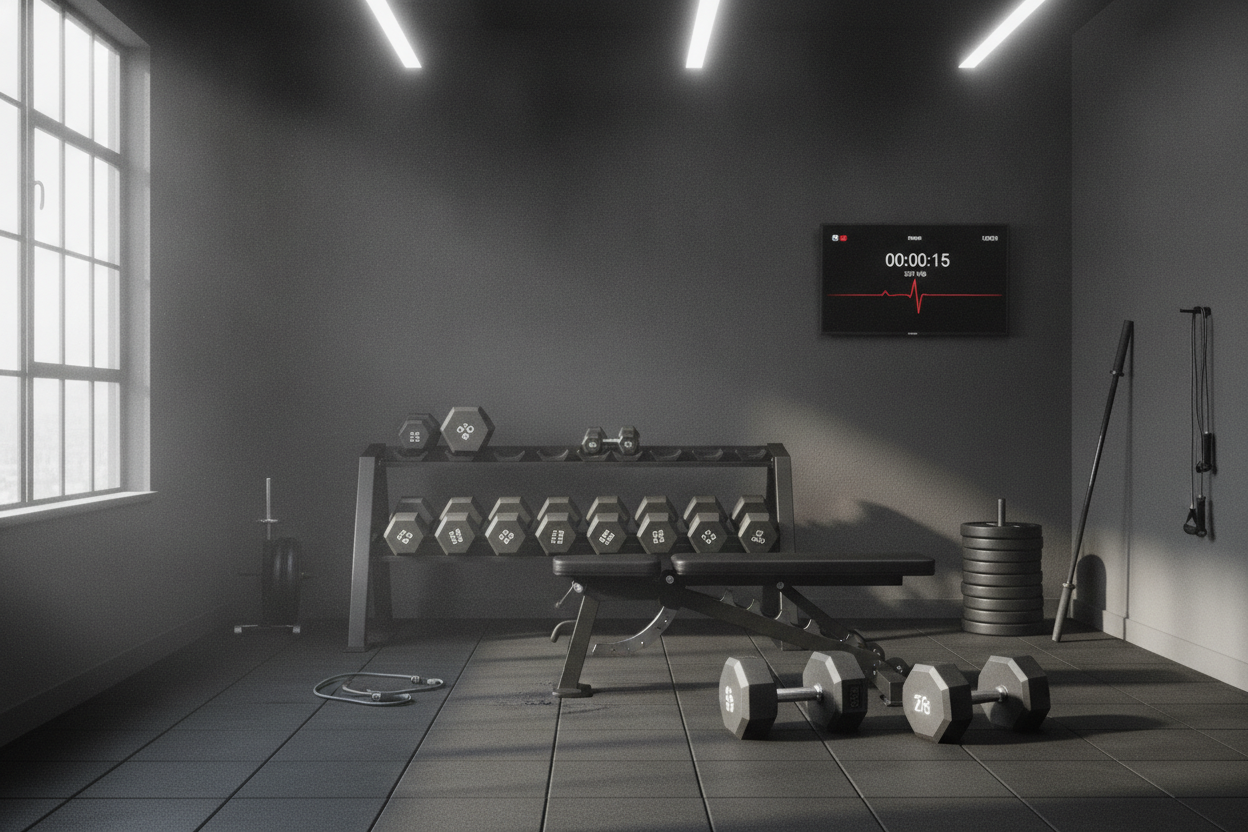
I Let a Timer Dictate My Intense Legs Workout at Home (And It Wrecked Me)
I remember staring at my 50-pound adjustable dumbbells and feeling a sense of genuine defeat. I had just come from a commercial gym where I was squatting three plates for reps, and now I was stuck in a 10x10 spare room trying to convince myself that goblet squats were 'basically the same thing.' They aren't. If you have ever tried to replicate a heavy barbell session with residential gear, you know the frustration of your grip giving out long before your quads even feel a tingle. To get an intense legs workout at home, I had to stop trying to lift heavy and start lifting fast.
Quick Takeaways
- Abandon traditional 3-set-by-10-rep schemes; they don't work with light home weights.
- Use Escalating Density Training (EDT) to force hypertrophy through sheer volume and minimal rest.
- Invest in a high-traction surface to prevent slipping during high-intensity intervals.
- Track total repetitions per time block rather than just the weight on the bar.
The Illusion of 'Heavy' in a Living Room Gym
The biggest mistake I see people make is trying to treat their living room like a Gold's Gym. You see it on Instagram all the time: someone trying to clean a pair of 80-pound dumbbells just to get them into position for a squat. Unless you have a dedicated rack, trying to max out your home equipment usually leads to a shoulder or wrist injury before you ever reach a hard leg workout at home. The physics just don't favor the home trainee.
When you hold weight in front of you, like in a goblet or front squat, your upper back and core become the limiting factors. Your legs are capable of moving hundreds of pounds, but your spine isn't going to enjoy holding that much iron while standing on a rug. I wasted months doing slow, boring reps with 'heavy' dumbbells that weren't actually heavy enough to grow my legs. I was just getting really good at holding heavy things while my legs stayed the same size. To fix this, you have to stop chasing the 'big number' and start chasing the clock.
Enter Density Training: Replacing Iron With Urgency
If you can't increase the load, you have to increase the density. Escalating Density Training, or EDT, is a system where you perform as much work as possible in a fixed timeframe. Instead of doing a set and scrolling through your phone for two minutes, you are moving almost constantly. This is the ultimate equalizer for the home gym owner because it turns 30-pound weights into absolute torture devices. It forces an intense at home leg workout response because you are drastically shortening the recovery window.
I used to be skeptical about whether this actually built muscle. I kept asking myself, Can a Leg Workout at Home for Man Actually Build Serious Size? The reality is that hypertrophy is driven by mechanical tension and metabolic stress. When you are on minute twelve of a fifteen-minute block and your quads are on fire, the metabolic stress is through the roof. You don't need a 500-pound leg press when you are doing 80 reps of squats in ten minutes. Your body doesn't know the weight is 'light'; it just knows it's under an incredible amount of demand.
Setting Up Your Space for Uninterrupted Agony
The logistics of a timed workout are different than a standard session. Since the clock never stops, you can't be tripping over a coffee table or sliding on a hardwood floor. I’ve made the mistake of trying to do high-rep lunges on a bare floor, and it’s a recipe for a pulled groin. You need a zone where you can drop weights and move laterally without thinking about your footing.
A dedicated Large Exercise Mat For Home Gym is basically mandatory for this style of training. You need that rubberized grip so that when you're sweating, your feet stay planted during those final, shaky reps. It also saves your floor from the inevitable 'controlled drop' when your legs finally give out. I like a mat that’s thick enough to dampen the noise but firm enough that it doesn't feel like I'm standing on a marshmallow. If your surface is unstable, your brain will naturally hold back on the intensity to keep you from falling. Eliminate that barrier.
The 15-Minute Density Block (The Routine)
Here is the exact protocol I use when I want to feel like I’ve actually done something productive. Set a timer for 15 minutes. Pick two intense leg exercises at home that work opposing muscles—I prefer Dumbbell Front Squats and Romanian Deadlifts (RDLs). Use a weight you could normally do for 12-15 reps, but you’re only going to do sets of 6 to 8. The goal isn't to go to failure on set one; it's to keep moving for the entire 15 minutes.
Perform 6 squats, then immediately perform 6 RDLs. Rest only as long as you need to catch your breath, then go again. In the beginning, you’ll feel like a superhero. By minute eight, you’ll be questioning your life choices. I stage my weights on a 6X4Ft Yoga Mat Exercise Mat Gym Flooring For Home Workout so I have a clear 'work area.' This specific footprint is perfect because I can have my squat weights on one side and my RDL weights on the other without having to take a single step. The efficiency of your setup dictates the intensity of the workout. If you have to walk across the room to change weights, you're losing the density that makes this program work.
What If You Have Literally Zero Equipment?
Sometimes you’re traveling or your gear hasn't arrived yet. You can still create a massive stimulus using bodyweight alone, but you have to be disciplined with your tempo. Instead of just cranking out air squats, use a 4-second descent and a 2-second pause at the bottom. The 'stop' at the bottom removes all momentum and forces the muscle fibers to do all the work. If you need a visual on how to structure a fast-paced bodyweight session, this 13 Min Leg Booty Thigh Workout 🔥 No Equipment At Home shows exactly how to keep the heart rate up and the tension high without a single dumbbell in sight.
How to Track Your Progress When Reps Don't Matter
In a commercial gym, progress is easy: add a plate. At home, progress is about 'density.' To see if you’re actually getting stronger, you have to track your total rep count within that 15-minute block. If you did 70 total reps of squats and 70 reps of RDLs this week, your goal for next week is 72. This is progressive overload in its purest form. You are doing more work in the same amount of time. Once you can hit a specific rep ceiling—say, 100 reps per movement—then you increase the weight or shorten the time. It’s simple, it’s brutal, and it’s the only way I’ve found to keep my legs growing without a squat rack.
Personal Experience: My First EDT Disaster
The first time I tried this, I went out way too fast. I treated the first five minutes like a sprint, doing sets of 10 with almost no rest. By minute seven, my vision was blurring and I actually had to lie down on my mat for three minutes just to keep from puking. I failed the workout because I didn't respect the clock. Density training is a slow burn that turns into a wildfire. Now, I start with very short, controlled sets and only 'sprint' in the final three minutes. Pace yourself, or the timer will win every time.
Frequently Asked Questions
Can I do this every day?
Absolutely not. This style of training creates a massive amount of systemic fatigue. Twice a week for legs is plenty if you're actually pushing the pace. Your CNS needs time to recover from the constant tension.
What if my dumbbells are too light?
If your weights are very light, increase the time block to 20 minutes or increase the reps per set to 12. The goal is to reach a point where you are struggling to finish the set by the end of the block.
Do I need special shoes?
I prefer training barefoot or in flat-soled shoes on a high-quality mat. You want to feel the floor. Squatting in running shoes with 'cloud' foam is a great way to lose your balance when your legs are fatigued.