How to Find the Right Weights for Strength Training Without Guessing
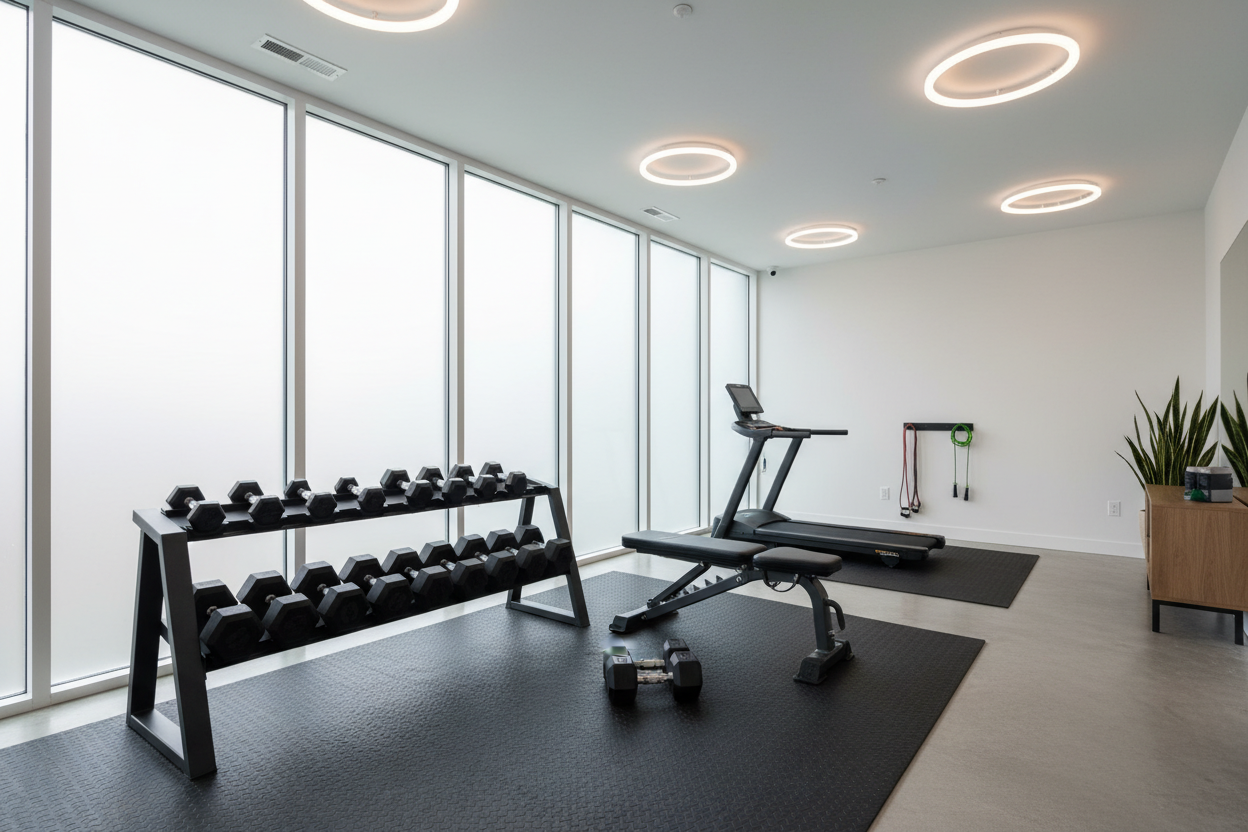
I remember standing in front of a massive rack of rubber-coated hex dumbbells for the first time, feeling like a total amateur. I didn't want to be the guy struggling with the tiny 10-pounders, but I also didn't want to be the guy who dropped a 40-pounder on his own foot because he was trying to look tough. Choosing the right weights for strength training shouldn't feel like a high-stakes guessing game or a test of your ego.
Quick Takeaways
- Use the 10-rep test to find your baseline load.
- Aim for 2 Reps in Reserve (RIR) to maximize growth without burning out.
- Prioritize stability—if you're wobbling, the weight is too heavy or the equipment is too cheap.
- Don't be afraid to start with machines to learn the movement patterns safely.
The 'Goldilocks' Problem of the Dumbbell Rack
Most beginners fall into one of two camps when they first start out. The first camp picks up a starter weight that is essentially a glorified paperweight. They do 50 reps of bicep curls while barely breaking a sweat, wondering why their arms don't look like Thor's after three weeks. This isn't strength training; it's aggressive fidgeting. If the weight doesn't provide enough resistance to challenge the muscle fibers, your body has no reason to adapt and grow stronger.
The second camp is the ego-loading crew. They see a veteran lifter tossing around 60s and think they should be doing the same. This is how much weight a beginner should lift if they want a fast track to the physical therapist's office. When you lift too heavy too soon, your form disintegrates. You start arching your back like a bridge during a chest press or using momentum to swing your curls. Not only does this stop the target muscle from working, but it puts massive stress on your joints and tendons that aren't ready for the load.
Finding what weights to start with is about finding that 'Goldilocks' zone. You want a load that is heavy enough to be respected, but light enough that you can control every inch of the movement. If you're constantly asking what weight should i use, the answer isn't a fixed number like '20 pounds.' The answer is whatever weight makes the last few reps of your set feel difficult but doable.
The 2-Rep in Reserve (RIR) Rule Explained
If you want to know how much weight should i lift as a beginner, you need to understand Reps in Reserve, or RIR. It sounds like sports science jargon, but it's actually very simple. RIR is just a measure of how many more reps you feel you could have done at the end of a set if someone put a gun to your head. For most strength goals, you want to finish your set with about 2 RIR. This means you stop when you feel like you could have done two more reps with perfect form, but a third would have been a struggle.
This rule is the ultimate answer to how much weight should i start lifting. If you finish a set of 10 and feel like you could have done 15 more, the weight is way too light. If you finish 10 reps but your last two involved a lot of grunting and shaking, you’re at 0 RIR, which is okay occasionally but will burn you out if you do it every set. Beginners often struggle to gauge this because they haven't pushed themselves to failure yet, but you'll get better at 'feeling' the tank empty as you train.
Using RIR takes the guesswork out of how much weight should you start lifting. It allows your training to be fluid. Some days you'll feel like a beast and 30 pounds will feel like 2 RIR. Other days, when you're sleep-deprived, 20 pounds will be your limit. By focusing on the effort rather than the number, you ensure you're always working at the right intensity for your current state.
A Step-by-Step Guide to Finding Your Starting Load
Stop wondering how to know what weight to start with and just follow this protocol. Pick a movement—let's say a dumbbell overhead press. Walk to the rack and grab a pair of weights that look 'medium' to you. For most guys, this might be 15 or 20 lbs; for women, maybe 8 or 10 lbs. Now, attempt to do a set of 10 reps with perfect form. Keep your core tight and don't use your legs to help push the weight up.
Here is the breakdown of the results. If you hit 15 reps and you aren't even breathing hard, put those back. They are too light to be your best weights to start with. If you can't even get to 6 reps without your form breaking or your arms shaking like jelly, they are too heavy. You want to find a weight to workout with that allows you to hit between 8 and 12 reps while maintaining that 2 RIR we talked about earlier. This is the sweet spot for hypertrophy and strength.
This rep-test is how to find starting weight for lifting across every exercise in your program. Remember that 'big' movements like squats and rows will use much heavier weights than 'small' movements like lateral raises or tricep extensions. Don't be surprised if your starting weight for a goblet squat is 40 lbs while your starting weight for a bicep curl is only 15 lbs. That is completely normal and expected for how much should i lift as a beginner.
Free Weights vs. Fixed Paths for Beginners
One of the hardest parts of figuring out what weight to start with is dealing with stability. If you've never lifted before, your 'stabilizer muscles'—the tiny muscles that keep the weight from wobbling—are going to be weak. You might have the raw strength to push 30-lb dumbbells, but your wrists might be shaking so much that you can't actually complete the movement safely. This is a common hurdle when deciding what weight should you start lifting.
If you find that free weights are too frustrating to start with, don't be a hero. Utilizing weight lifting machines is a perfectly valid way to build your initial strength base. Machines take the stability requirement out of the equation, allowing you to focus entirely on pushing or pulling the load. This can help you safely identify what is a good weight to start lifting for your primary muscles without being limited by your shaky balance.
Once you've spent a few weeks on machines and built some confidence, you can transition back to dumbbells or barbells. You'll likely find that you have to drop the weight significantly when moving from a machine to a free weight. That's fine. The goal isn't to move the biggest number on day one; it's to move the weight correctly so you can move even bigger numbers on day one hundred.
Creating a Safe Testing Environment at Home
You can't accurately gauge how much weight to start lifting if your equipment is distracting you. If you're trying to test your max dumbbell bench press on a flimsy folding chair or a bench that wobbles every time you move, your brain will subconsciously dial back your strength to keep you from falling. I've seen too many home gym setups where the equipment is the bottleneck, not the lifter's muscles.
To get a true reading on your strength, you need a solid foundation. A sturdy piece of gear like the Gxmmat adjustable weight bench provides the stability you need to actually push your limits. When you aren't worried about the bench creaking or tipping, you can focus on your RIR and form. This is especially important when you're trying to figure out how much weight i should start lifting on movements like the incline press or seated rows where stability is key.
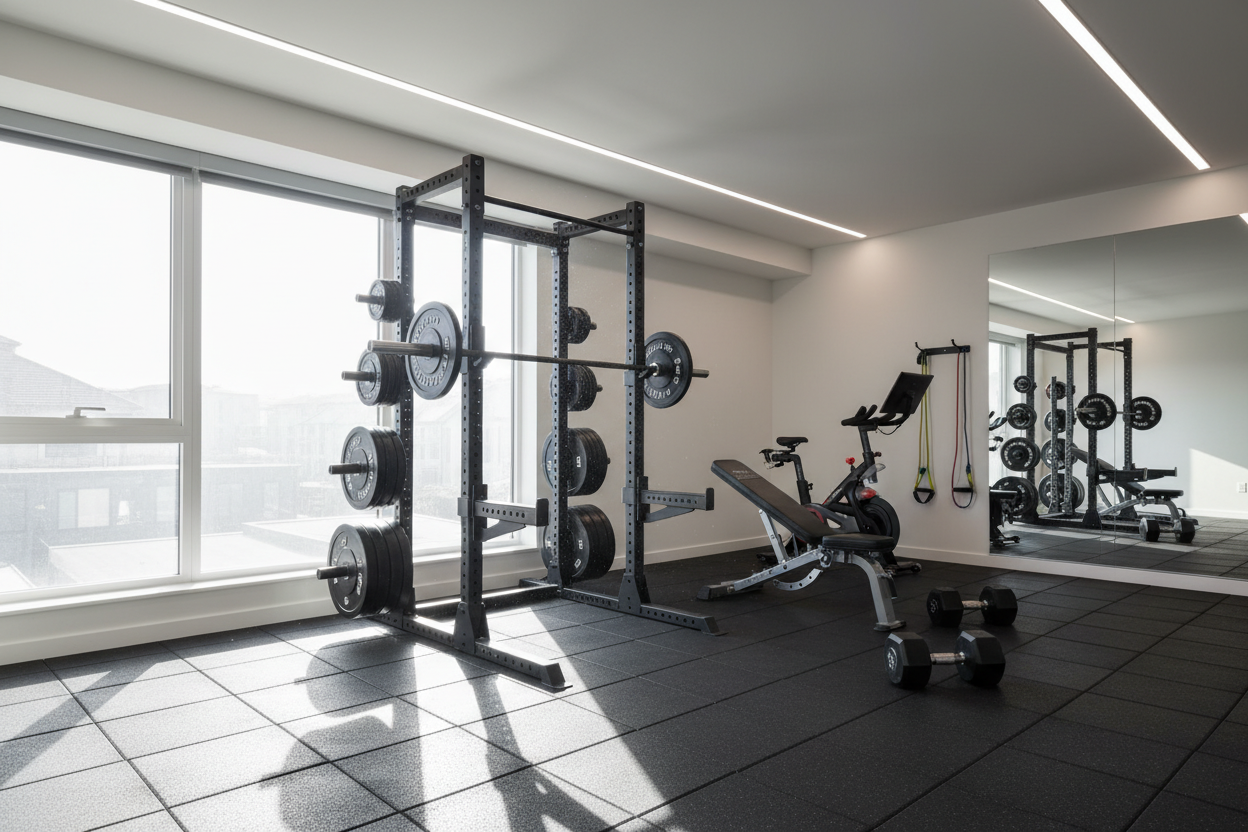
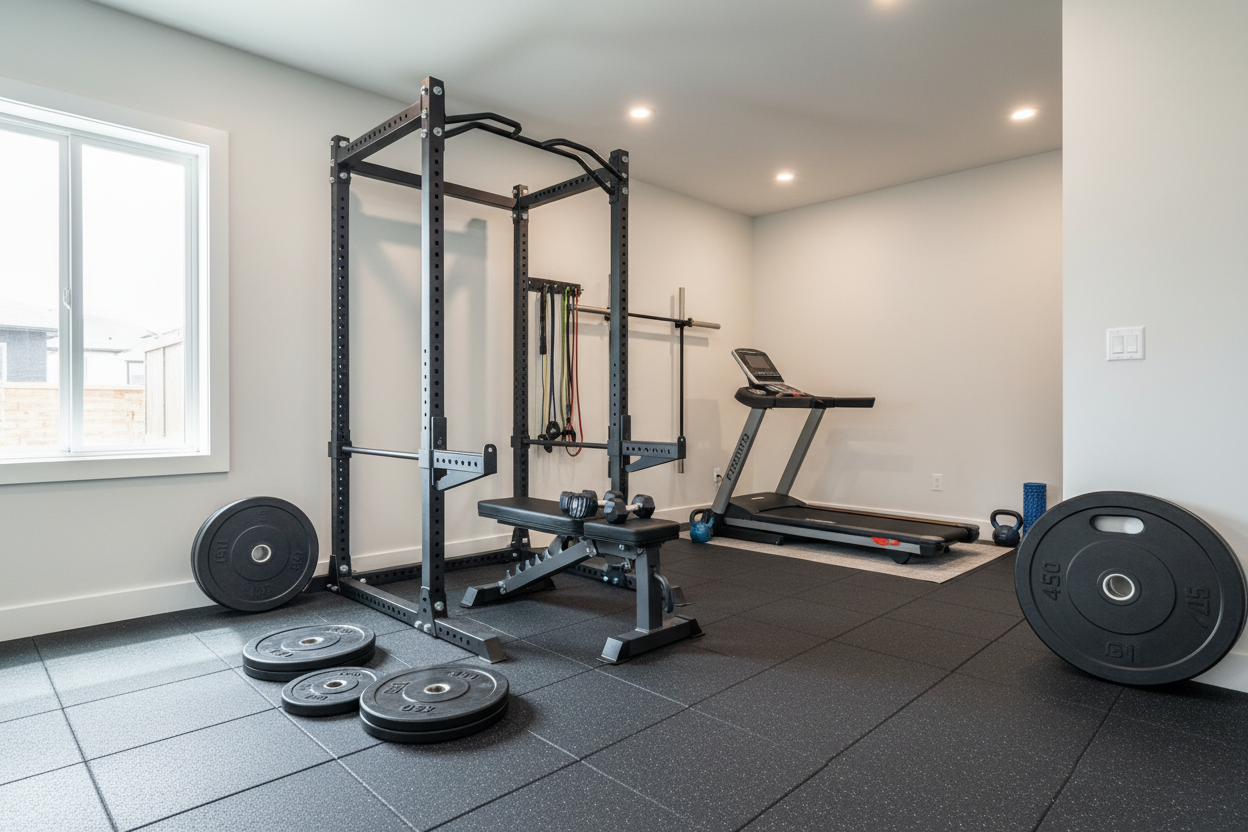
Make sure your space is clear of clutter, too. There's nothing worse than finishing a heavy set of weights for strength training and having nowhere to safely drop them because you're surrounded by kids' toys or laundry. A dedicated 6x8 foot space with some basic rubber flooring will give you the confidence to test your weights properly and safely.
When to Finally Add More Iron
Once you've figured out what weights should i start with, the next question is: when do I stop using them? This is the core of progressive overload. If you stay with the same 20-lb dumbbells for six months, your body will stop changing. It has already adapted to that stress. To keep getting stronger, you have to gradually increase the demand on your muscles.
A good rule of thumb is the '2-for-2' rule. If you can perform two extra reps over your target in your last set for two consecutive workouts, it's time to move up. For example, if your goal is 10 reps and you hit 12 reps easily two sessions in a row, grab the next increment of weight. This is the natural progression of how much weight should i start with and where I should go next.
Don't feel like you have to make massive jumps. Moving from 20-lb dumbbells to 25-lb dumbbells is a 25% increase in weight—that's huge! If your gym has fractional plates or smaller dumbbell increments, use them. Slow, steady progress is much more sustainable than trying to double your lift every month. The goal is to keep the weight to workout with challenging enough that you stay in that 2 RIR zone as you get stronger.
My Personal Experience: The 'Manly' Weight Mistake
When I first started lifting in my garage, I was obsessed with the idea of a 'starter weight.' I thought that as a grown man, I shouldn't be seen touching anything under 30 pounds. I spent three weeks trying to 'muscle up' 35-lb dumbbells for overhead presses. My form was atrocious—I was leaning back so far I was basically doing a standing chest press, and my lower back was screaming. I wasn't getting stronger; I was just getting injured.
I finally swallowed my pride and dropped down to 15s. I focused on the 10-rep rule and perfect form. Guess what? My shoulders actually started growing because the muscle was finally doing the work instead of my spine. The biggest lesson I learned is that the weight on the bar is just a tool. If the tool is too big for the job, you're going to break something. Start lighter than you think you need to, and earn the right to lift the heavy stuff.
FAQ
What weight should I start lifting for bicep curls?
Most beginners should start with 10 to 15-lb dumbbells. Use the 10-rep test: if you can do 15 reps without your elbows moving forward or your back swinging, move up to 20s. If you can't get 8 clean reps, drop to 5 or 8-lb weights.
Is 5 lbs too light for a starter weight?
Not for everyone. For movements like lateral raises or rear delt flies, 5 lbs can be plenty heavy for a beginner because those muscles are small. Don't let the small number bruise your ego; form is everything in those movements.
How do I know if I'm lifting too much weight?
If you have to hold your breath, swing your body, or shorten the range of motion to finish a rep, the weight is too heavy. You should be able to control the weight on the way down just as well as on the way up.