Foam vs Rubber Gym Flooring: What to Know Before You Buy
Building a home gym is an exciting project, but one of the most easily overlooked elements is what goes directly under your feet. Whether you are converting a damp basement, a two-car garage, or a spare bedroom, choosing between foam vs rubber gym flooring is a foundational decision that dictates exactly what kind of workouts you can safely perform.
Make the wrong choice, and you might end up with permanently dented mats, cracked concrete, or a surface that shifts dangerously during your heavy squats. In this guide, we will break down exactly which material belongs in your training space, how they handle heavy loads, and which one offers the best long-term value for your fitness goals.
Key Takeaways
- Impact Resistance: Rubber flooring is essential for heavy weightlifting and dropping barbells, whereas foam is strictly designed for light bodyweight work.
- Equipment Support: High-density rubber easily supports 500+ pound power racks; EVA foam will permanently compress, puncture, and tear under heavy equipment.
- Comfort & Yield: Foam provides superior, soft cushioning for floor exercises, yoga, stretching, and plyometrics.
- Price Point: Foam is significantly cheaper upfront, but rubber offers a 'buy-it-for-life' return on investment for serious strength training.
Durability and Heavy Lifting
When Rubber is Mandatory
If your training involves kettlebells, dumbbells over 30 pounds, or a heavy power rack, rubber is non-negotiable. Vulcanized or recycled rubber mats (typically 3/8-inch to 3/4-inch thick) are incredibly dense and absorb massive amounts of kinetic energy. This protects your home's foundation and prevents your expensive bumper plates from cracking upon impact.
Where Foam Falls Short
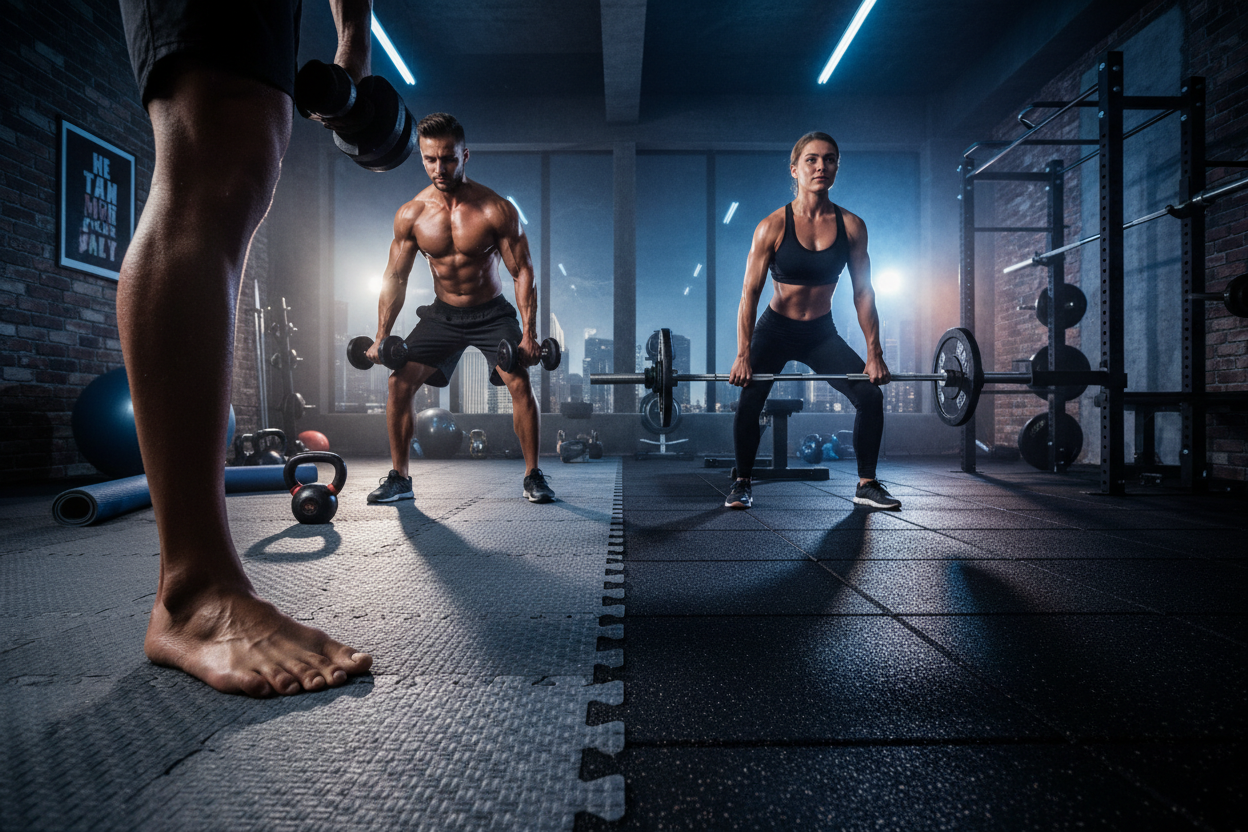
When comparing rubber vs foam gym flooring for strength training, EVA foam immediately shows its structural weaknesses. Foam is highly compressible and lacks density. If you place a heavy squat rack, functional trainer, or treadmill on interlocking foam tiles, the feet of the machine will permanently flatten and puncture the material within days. Foam also lacks the surface friction needed for explosive movements, making it a slipping hazard during heavy barbell lifts.
Space Planning and Installation
Garage Gyms vs. Spare Bedrooms
Your room environment plays a massive role in this flooring debate. For uninsulated garage gyms in North America, heavy 4x6 foot rubber stall mats are the gold standard. They will not expand or contract drastically with seasonal temperature changes, and they stay firmly anchored under their own weight (often weighing around 100 pounds per mat).
Conversely, if you are setting up a lightweight Pilates space, mobility studio, or kid-friendly workout zone in a second-floor spare bedroom, interlocking foam tiles shine. They are lightweight, incredibly easy to cut to size with a standard utility knife, and will not overburden your residential floor joists.
Value and Budget Breakdown
Upfront Costs vs. Long-Term Investment
Foam interlocking tiles are incredibly budget-friendly, often costing less than a dollar per square foot. If you are on a strict budget and only need a clean, soft space for stretching and calisthenics, it is a highly viable short-term solution.
Rubber flooring requires a higher upfront investment, usually ranging from two to four dollars per square foot depending on thickness and whether you choose virgin or recycled material. However, commercial-grade rubber is a true 'buy once, cry once' purchase. It will likely outlast the house itself, making it the far superior value for dedicated home gym owners.
From Our Gym: Honest Take
When I first built out my own two-car garage gym, I tried to save a few bucks by laying down 1/2-inch EVA foam tiles under my lifting station. Big mistake. Within two weeks, my 400-pound power rack had punched straight through the foam to the concrete below. During a heavy deadlift session shortly after, a dropped 45-pound iron plate took a massive chunk right out of the mat.
I immediately scrapped the foam and swapped to 3/4-inch vulcanized rubber stall mats. The grip on my lifting shoes was instantly better, and the floor felt indestructible. The only minor con? The recycled rubber had a distinct, pungent tire smell for the first three weeks. I had to leave the garage door open and run a high-velocity box fan to off-gas the room. Once the smell faded, however, it was the single best foundational upgrade I ever made to my training space.
Frequently Asked Questions
Can I put heavy equipment on foam mats?
No. Heavy equipment like treadmills, ellipticals, and power racks will permanently compress, dent, and eventually tear through foam mats. Always use high-density rubber under heavy machinery to distribute the weight evenly and protect your floors.
Does rubber flooring smell bad?
Recycled rubber often has a strong 'tire' odor when brand new. This off-gassing process is completely normal but can be annoying in enclosed spaces. Virgin rubber has significantly less odor but costs more. Mopping the mats with a mild degreaser and ensuring good ventilation will clear the smell in a few weeks.
Which is better for yoga and stretching?
Foam is vastly superior for floor work. Rubber is incredibly dense and unforgiving on the knees, elbows, and spine, while EVA foam provides a soft, cushioned surface that is perfect for yoga, Pilates, and daily mobility routines.