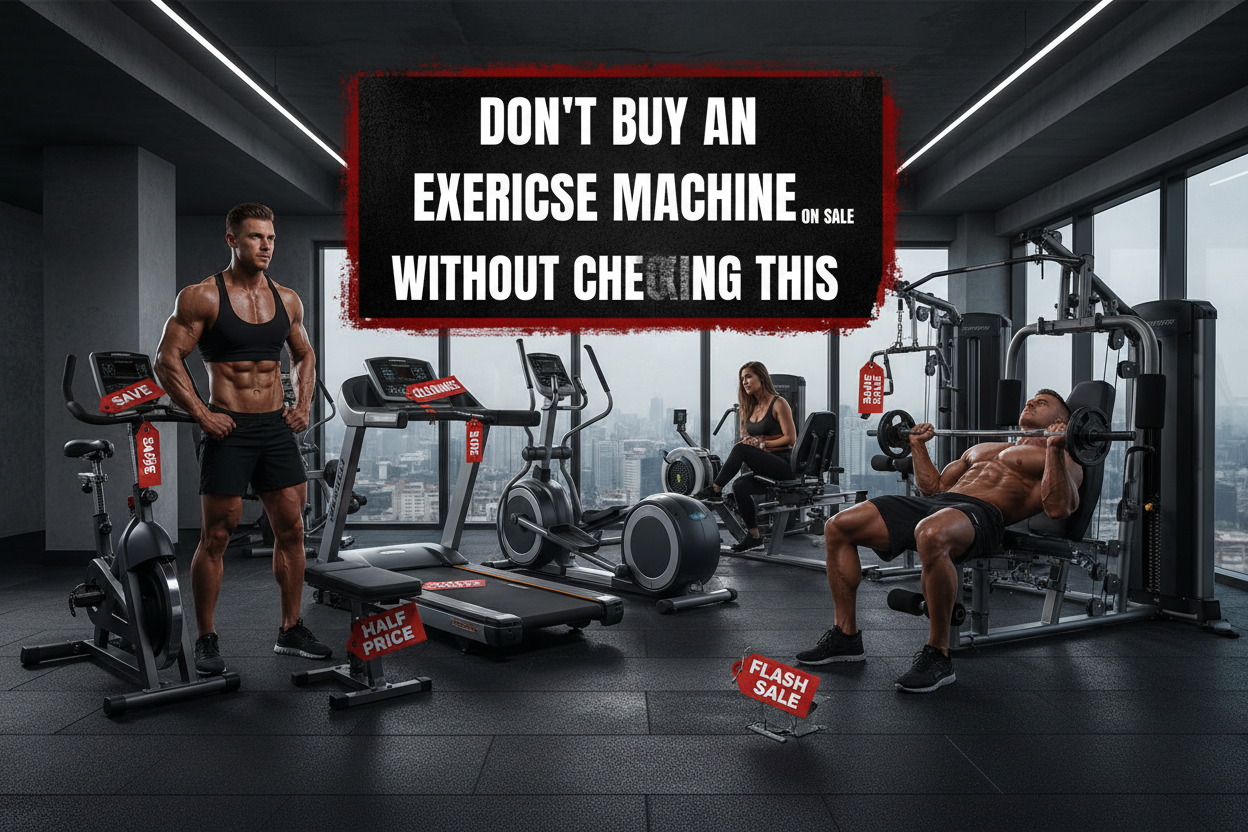
Don't Buy an Exercise Machine on Sale Without Checking This
Finding a premium exercise machine on sale feels like a victory. We all want that commercial-grade treadmill or elliptical without the commercial-grade price tag. However, the discount market is flooded with equipment that looks sleek in photos but rattles like a tin can the moment you pick up the pace.
If you aren't careful, that bargain purchase becomes an expensive clothes hanger within three months. This guide cuts through the marketing noise to help you distinguish between a genuine steal and a waste of floor space.
Quick Summary: Smart Buying Checklist
If you are rushing to checkout, review these critical points to ensure you are actually getting value, not just a lower price.
- Check the Weight Capacity: If a machine's max user weight is under 250 lbs, the frame is likely made of thin, unstable tubing.
- Verify the Warranty: A legitimate deal still includes at least a 1-year warranty on parts and 5+ years on the frame.
- Look for 'Continuous' Horsepower: For treadmills, ignore 'Peak' HP. You need at least 2.5 CHP for running.
- Inspect the Footprint: Sale items are often non-returnable. Measure your space twice before buying.
- Research the Brand History: Ensure the manufacturer sells replacement parts; otherwise, a broken belt renders the machine useless.
The Hidden Cost of "Exercise Machines Cheap"
There is a massive difference between an affordable machine and a cheap one. When you search for "exercise machines cheap," you often find equipment manufactured with lower-grade steel and plastic components.
Here is the engineering reality: Stability comes from mass. Heavy flywheels and thick steel frames cost money to ship and manufacture. If a cardio machine is suspiciously light and cheap, it will likely wobble during intense use. This isn't just annoying; it's a safety hazard. For home gyms, prioritize stability over fancy touchscreens. You can always use an iPad for entertainment, but you cannot fix a wobbly frame.
Timing the Market: When to Look for an Exercise Machine Sale
Retailers operate on predictable cycles. Understanding these can save you hundreds of dollars on high-end gear.
The January Myth vs. Spring Cleaning
Most people assume January is the best time to buy. Actually, prices are often inflated in January to capitalize on New Year's resolutions. The real exercise machine sale season usually hits in late spring (April/May) when retailers clear out inventory for new models, or Black Friday.
The Secondary Market
Don't ignore used listings. You can often find premium at home gym equipment for sale on marketplaces from people who bought high-end gear in January and gave up by March. In these cases, you are getting a machine that is barely broken in for a fraction of the retail cost.
Technical Specs You Cannot Ignore
When analyzing a discount, look past the glossy photos and inspect the spec sheet.
Treadmills: Motor Duty
Manufacturers love to advertise "Peak Horsepower" because the number is higher. This is meaningless. It represents the motor's power at its absolute breaking point. Always look for "Continuous Horsepower" (CHP). If the spec sheet doesn't specify, assume it's underpowered.
Ellipticals and Bikes: Flywheel Weight
Smooth resistance depends on the flywheel. A light flywheel creates a jerky, "stuttering" motion at the top of the pedal stroke. Look for a flywheel weight of at least 15-20 lbs for a fluid feel.
My Personal Experience with Exercise Machine on Sale
I have bought my fair share of budget gear, but one purchase taught me a painful lesson. A few years ago, I found a folding treadmill heavily discounted online. The specs looked decent on paper, and the price was unbeatable.
When it arrived, the assembly was easy enough. But the first time I tried a sprint interval, reality hit. The deck was too thin to absorb the shock, creating a loud banging noise that shook the floorboards. Worse, the motor had low torque. Every time my foot landed, the belt would hesitate for a millisecond before catching up. That micro-stutter threw off my gait and eventually caused a flare-up of Achilles tendonitis.
I realized too late that the machine was on sale because it was being discontinued due to motor complaints. I ended up selling it for parts and buying a refurbished commercial unit instead. The lesson? If the motor can't keep up with your stride, the discount isn't worth the injury risk.
Conclusion
Building a home gym doesn't require a fortune, but it does require diligence. Scrutinize the specs, ignore the hype, and focus on the structural integrity of the equipment. A sturdy, basic machine will always outperform a flimsy one loaded with electronics. Hunt for value, not just the lowest price tag.
Frequently Asked Questions
Is it safe to buy floor models during an exercise machine sale?
Yes, floor models can be excellent deals. However, inspect the belt for wear and listen for clicking noises in the motor or flywheel. Always ask if the manufacturer's warranty still applies from the date of purchase.
What is the best month to find at home gym equipment for sale?
The best discounts often appear in late spring (April/May) as retailers clear inventory, and during Black Friday sales. Avoid buying in early January when demand and prices are at their peak.
Are refurbished exercise machines worth it?
Absolutely. Buying a refurbished commercial-grade machine is often a better investment than buying a brand-new, low-quality budget machine. Just ensure the refurbishment was done by a certified technician.