
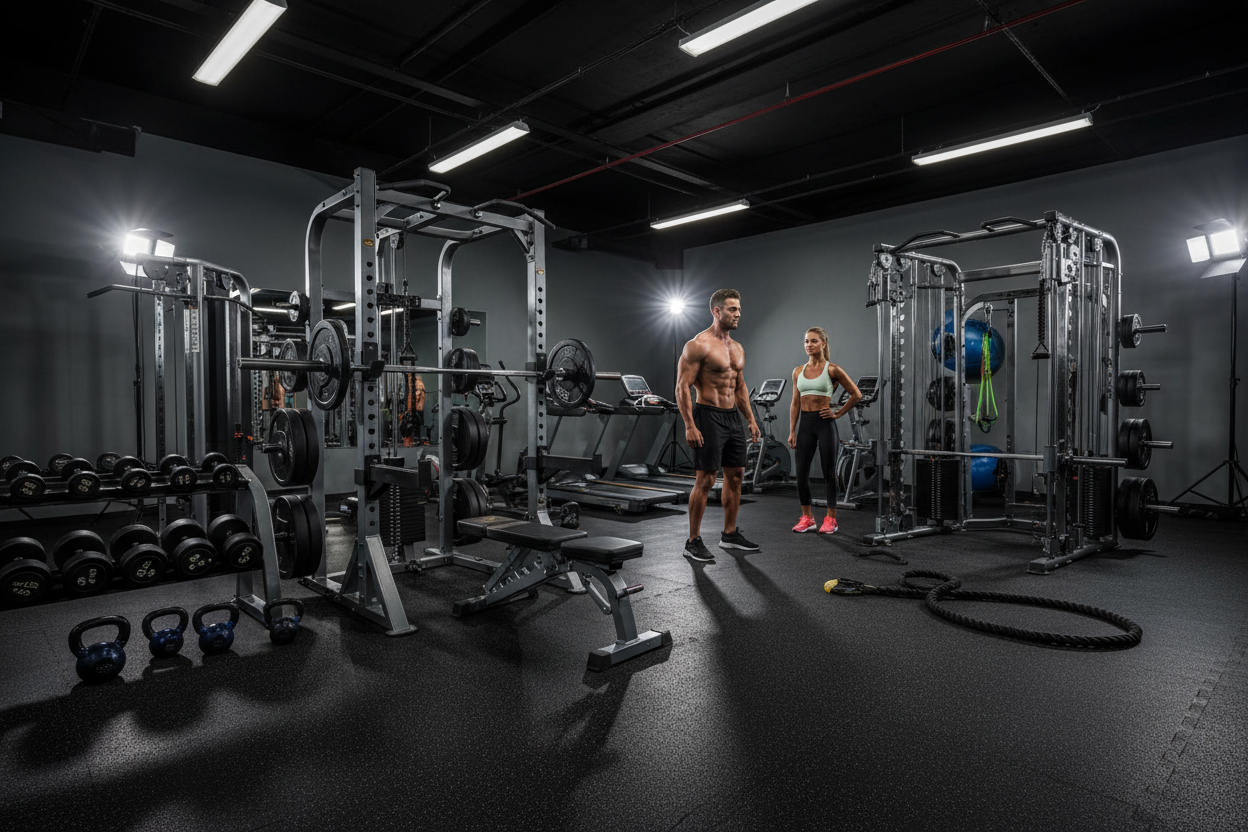
Complete Gym Equipment for Sale: Stop Before You Invest
Building a home gym piece by piece can feel like a never-ending, expensive puzzle. You buy a rack here, hunt down plates there, and suddenly realize your gear doesn't match and your space is a cluttered mess. That is exactly why many fitness enthusiasts eventually search for complete gym equipment for sale—seeking a streamlined, all-in-one solution that guarantees compatibility and saves time.
But is buying a bundled package actually the smartest move for your North American garage or basement setup? In this guide, we break down exactly what to look for, how to measure your space, and what separates a high-value package from a marketing gimmick.
Key Takeaways
- Measure vertically and horizontally: Always account for barbell clearance and ceiling height before purchasing a full package.
- Prioritize the power rack: The centerpiece of any bundle should be a heavy-duty rack with at least a 1,000-pound weight capacity.
- Check weight plate materials: Opt for urethane or virgin rubber bumper plates to minimize noise and protect your flooring.
- Beware of low-tier bundles: Cheap packages often skimp on barbell knurling and bench stability—invest in commercial-grade touchpoints.
Space Planning: Making the Package Fit
Garage vs. Basement Setups
The biggest mistake buyers make when browsing full gym equipment for sale is underestimating the footprint. A standard two-car garage offers ample room, but basements often come with low ceilings. If your ceiling is under 8 feet, you need a short-post power rack. Additionally, factor in a buffer zone of at least 24 inches around your lifting platform for safe plate loading and spotting.
Essential Components of a Quality Bundle
Core Strength Gear
When evaluating entire gym equipment for sale, look closely at the core trio: the rack, the bench, and the barbell. An adjustable FID (Flat/Incline/Decline) bench should have a minimal pad gap and a weight rating of at least 800 lbs. The barbell should feature dual knurl marks and a decent whip if you plan on doing Olympic lifts, or a stiff 29mm shaft for heavy powerlifting.
Flooring and Storage
Don't overlook the foundation. High-density rubber stall mats (at least 3/4-inch thick) are non-negotiable for protecting your concrete from dropped deadlifts. Proper storage pegs integrated into the rack will keep your plates organized and maximize your usable floor space.
Value & Budget Analysis
When to Splurge vs. Save
Buying a complete package generally saves you on shipping and bundled discounts. Splurge on the moving parts—your barbell bearings, bench hinges, and rack J-cups. You can save money by choosing basic cast iron plates over competition-style bumpers if you aren't dropping weights from overhead.
From Our Gym: Honest Take
We recently tested a highly-rated complete package in our own 400-square-foot facility. While the convenience of having everything arrive on a single freight pallet was unbeatable, I noticed the barbell included in the bundle was slightly underwhelming. The knurling was too passive for my heavy deadlift sets, and I found my chalked grip slipping past 400 pounds. However, the 3x3-inch 11-gauge steel rack was rock solid. After 8 months of daily use in a humid garage environment, there are zero signs of rust on the powder-coated frame. My advice? Buy the complete package for the rack, bench, and plates, but be prepared to upgrade your barbell down the line if you are an advanced lifter.
Frequently Asked Questions
Is buying a complete gym package worth the investment?
Yes, purchasing a bundled package is usually more cost-effective than buying individual pieces, especially when factoring in freight shipping. It also ensures all your attachments and plates are fully compatible with your rack.
How much space do I need for a complete home gym?
At a minimum, you need an 8x8 foot area (64 square feet) to comfortably fit a power rack, bench, and allow clearance for a 7-foot Olympic barbell. For optimal comfort and safety, a 10x10 foot space is recommended.
What weight limit should I look for?
Always aim for equipment with a weight capacity well above your current lifting numbers. A standard recommendation is a 1,000-pound limit for the rack and an 800-pound limit for the bench to ensure long-term safety and durability.


