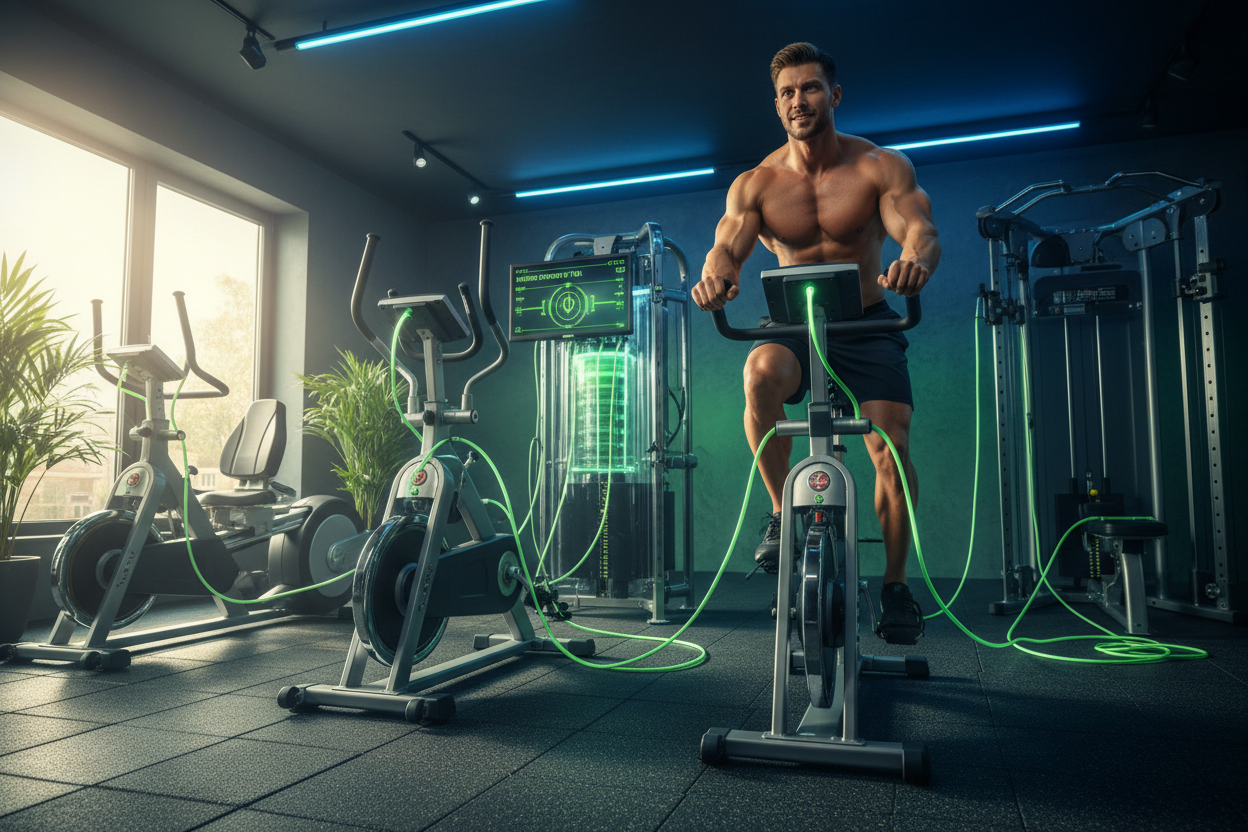
Can Electricity Generating Gym Equipment Actually Power Your Home?
We have all had the same thought while grinding through a spin class or sweating on an elliptical: "I am expending so much energy here; why is it just vanishing into thin air?" It is a logical question. In an era where sustainability is critical, the concept of electricity generating gym equipment seems like the ultimate win-win scenario. You get fit, and the grid gets green energy.
But before you cancel your utility contract and invest in a fleet of dynamo-equipped bikes, we need to have a serious conversation about physics, costs, and expectations. The technology exists, but the marketing often outpaces the reality.
Key Takeaways: The Short Answer
- It's about wattage, not voltage: An average human produces roughly 100 to 150 watts during a sustained moderate workout. That is enough to power a lightbulb, not a washing machine.
- The "Grid-Tie" factor: True energy producing exercise equipment requires a micro-inverter to convert your DC output into AC power that is compatible with your wall outlet.
- Cost vs. Return: The ROI is measured in decades, not months. You buy this gear for the environmental statement, not to save money on bills.
- Cardio is king: Bikes and ellipticals are the primary exercise machines that generate electricity. Strength training (lifting weights) is anaerobic and difficult to capture energy from.
How Power Generating Exercise Equipment Actually Works
The science behind workout equipment that generates electricity is relatively simple. It operates on the same principle as a wind turbine or a hydroelectric dam, just on a much smaller, sweatier scale.
When you pedal a bike or push an elliptical, you create kinetic energy. In standard machines, this energy is wasted as heat through friction (brake pads) or magnetic resistance. However, an exercise machine generate electricity system replaces that passive resistance with a generator/dynamo.
From Sweat to Socket
As you move, you spin a generator that creates Direct Current (DC). Since your home and the power grid run on Alternating Current (AC), this raw power must pass through an inverter. Once converted, the electricity flows back into the building's internal grid. If the building is consuming power (lights, HVAC), your energy is used immediately. If the building is dark and empty (rare), the meter might technically spin backward.
The Output Reality: Managing Expectations
This is where many people get disappointed. We tend to overestimate our physical power output. Elite cyclists might sustain 400 watts for an hour, but the average gym-goer is likely hovering between 75 and 150 watts.
To put that in perspective regarding energy producing gym equipment:
- 1 Hour of Cycling (100W): Powers a standard LED TV for about an hour.
- 20 Minutes of Elliptical: Charges a smartphone.
- To Run a Fridge (500W): You would need roughly 4-5 people pedaling continuously.
While a single piece of exercise equipment that produces electricity won't take you off the grid, the cumulative effect in a commercial setting changes the math. A gym that generates electricity with 50 bikes running a spin class can generate substantial kilowatts, offsetting the facility's lighting costs significantly.
Types of Gym Equipment That Generates Electricity
Not all movements are created equal when it comes to harvesting power. Here is the hierarchy of fitness equipment that generates electricity.
Stationary Bikes (The Gold Standard)
Bikes are the most efficient exercise equipment that generates electricity because the motion is continuous and rotary. There is no "pause" at the top or bottom of the movement, allowing for a steady stream of current to the generator.
Ellipticals and Cross-Trainers
These are also excellent options for power generating gym equipment. Because they engage both the upper and lower body, users can often generate higher wattage than on a bike, though the mechanical complexity of the machine makes them more expensive to manufacture.
Rowers and Treadmills
Rowers are intermittent power sources (pull-recover-pull), which requires capacitors to smooth out the energy flow. Treadmills are tricky. Most treadmills consume massive amounts of power to move the belt. However, green energy gym setups are now utilizing non-motorized, curved treadmills where the runner drives the belt, turning the motor into a generator. These are rare but effective.
Commercial vs. Home: Is it Viable for You?
If you are looking for electricity generating gym equipment for sale for your garage gym, be prepared for sticker shock. Brands like SportsArt (the leader in this niche with their ECO-POWR line) build commercial-grade gear. A grid-tied elliptical can cost three to four times more than a standard residential model.
For a gym that produces electricity (a commercial facility), the math works better. The equipment creates a unique selling proposition (USP). Members feel good knowing their workout is reducing the facility's carbon footprint. It is a marketing tool as much as an energy solution.
My Training Log: Real Talk
I want to be transparent about what it feels like to actually use this gear. Last year, I spent a month testing a grid-tied spin bike setup to see if I could charge a portable power station.
The first thing I noticed was the "resistance feel." On a normal magnetic flywheel, the resistance is buttery smooth. On the generator bike, there was a distinct, gritty feeling—almost like a vibration through the pedals—especially when I tried to sprint. It’s the feeling of the magnets fighting back to create current.
But the most humbling moment? I did a brutal 45-minute interval session. I was gassed, covered in sweat, heart rate at 160. I looked at the output meter. I had generated roughly 0.11 kWh. That is about 1.5 cents worth of electricity. It was a stark reminder that while exercise to generate electricity is noble, human legs are terrible power plants compared to a solar panel. You do this for the planet and the mindset, not to get rich.
Building a Green Fitness Routine
Investing in electricity generating gym equipment is a commitment to a philosophy. It transforms the concept of a workout from a selfish act into a contribution. While you might not power your entire home, you are offsetting your own consumption. Every watt you generate is a watt the grid doesn't have to burn coal for.
If you aren't ready to buy a $3,000 generator bike, you can still embrace the electric gym equipment ethos: switch to manual treadmills, turn off the TVs on the cardio deck, and unplug your machine when you are done. The greenest energy is the energy you don't use.
Frequently Asked Questions
How much does electricity generating gym equipment cost?
Commercial-grade units usually start around $2,000 and can go up to $5,000+ per machine depending on the brand and technology. This is significantly higher than standard residential equipment due to the complex inverters and durability requirements.
Can I build my own power generating exercise equipment?
Yes, DIY enthusiasts often hook up car alternators to bicycle rear wheels. However, creating a safe, regulated current that can be fed back into your home's wall outlet requires advanced electrical knowledge and specialized grid-tie inverters. Improper setups can be a fire hazard.
Are there gyms that generate electricity near me?
"Eco-gyms" are a growing trend, particularly in Europe and major US cities. Look for facilities that advertise as "sustainable fitness centers" or specifically mention brands like SportsArt ECO-POWR in their amenities list.