
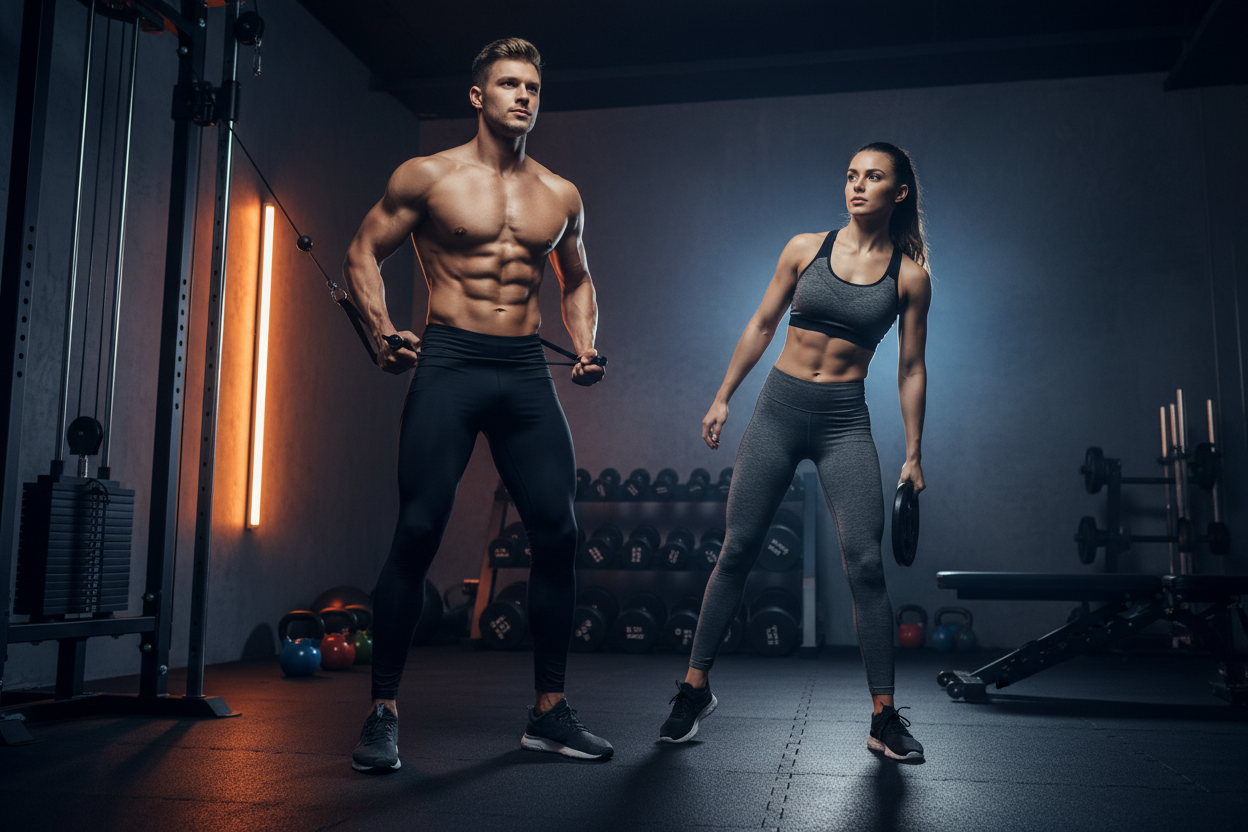
Best Standing Ab Exercises: Why Floor Crunches Are Obsolete
Let's be honest: nobody actually enjoys dragging a yoga mat onto a freezing garage floor for endless sets of crunches. Whether you're dealing with limited floor space in a basement gym, neck pain from traditional sit-ups, or simply a workout plateau, shifting your core training to an upright position changes the game. If you are looking for the best standing ab exercises, you are already on the right track to building a more functional, resilient midsection.
Standing core movements don't just save you from lying on a dusty rubber stall mat; they force your entire body to stabilize, burning more calories and mimicking real-world movements.
Key Takeaways
- Standing core exercises engage secondary stabilizer muscles, improving overall balance and posture.
- They are highly adaptable to small home gym spaces where floor clearance is limited.
- You can easily add resistance using dumbbells, kettlebells, or cable machines to scale difficulty.
- Upright movements prevent the lower back strain and neck pulling commonly associated with traditional floor crunches.
Why Upright Training is the Future of Core Work
When you train your core standing up, you are training your body the way it actually moves in daily life and athletic performance.
Functional Strength and Posture
Floor crunches isolate the rectus abdominis, but they do little for your functional strength. The best standing exercises for abs require your deep core stabilizers, glutes, and lower back to fire simultaneously. This upright engagement directly translates to a stronger squat, a more stable overhead press, and better daily posture.
Structuring the Ultimate Routine
To build the best standing ab workout, you need a mix of rotational, anti-rotational, and flexion movements. You don't need a massive commercial facility to pull these off; a standard home gym setup is more than enough.
Essential Movements to Incorporate
Some of the most effective movements include dumbbell side bends, standing kettlebell halos, and medicine ball woodchoppers. Cable machine paloff presses are also elite for anti-rotation. These are widely considered some of the best standing ab exercises for women and men alike, as they scale perfectly to any fitness level simply by adjusting the weight.
Maximizing Limited Space
If you're working out in an apartment corner or a cramped garage, the best standing exercises are a lifesaver. You only need the footprint of your own body. Just ensure you have enough overhead clearance if you're incorporating medicine ball slams or high-to-low cable chops.
From Our Gym: Honest Take
When I first swapped my floor routine for standing cable woodchoppers, I learned a quick lesson about home gym spatial planning. At 6 foot 2, performing high-to-low chops in my basement gym meant my hands were constantly scraping the low ceiling joists. I had to widen my stance and drop into a quarter-squat to get the clearance I needed.
Honestly, that forced adjustment made the movement even better. It locked in my hips and forced my obliques to take 100% of the rotational load. The only caveat? If you're using a budget pulley system rather than a dual-cable cross, the swinging weight pin can get a little jerky during fast rotational movements. Keep the reps slow and controlled to maintain tension.
Frequently Asked Questions
Can you really get a strong core from standing exercises?
Absolutely. Standing exercises force your core to stabilize your entire body weight against gravity and added resistance. This often leads to greater overall core activation than lying on the floor.
Do I need specialized equipment for a standing ab workout?
No. While functional trainers, dumbbells, and medicine balls are fantastic for adding progressive overload, many standing core exercises can be done using just bodyweight or resistance bands.
How often should I train my core standing up?
Treat your core like any other muscle group. Incorporating standing ab work 2 to 3 times a week at the end of your primary strength sessions is a highly effective way to build strength without overtraining.


