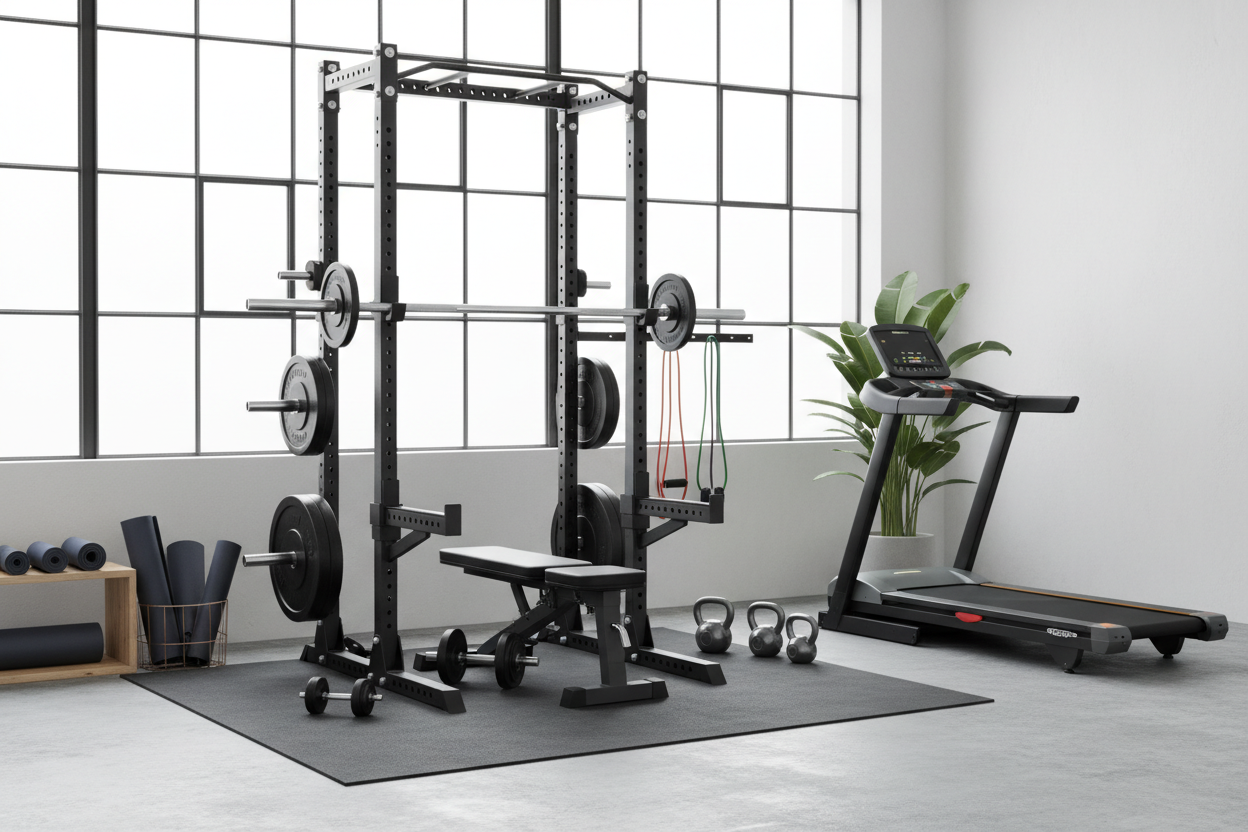
Best compact home gym: The truth about small space setups
Let's face it: not everyone has a sprawling two-car garage ready to be converted into a fitness sanctuary. If you are tired of tripping over stray dumbbells and want to build a serious training routine without sacrificing your living room, finding the best compact home gym is your ticket to consistent gains.
But with so many all-in-one trainers, smart mirrors, and folding racks flooding the market, separating the gimmicks from the gear that actually performs can be exhausting. In this guide, we will break down exactly what you need to look for to maximize your limited square footage while still getting a commercial-grade workout.
Key Takeaways
- Footprint matters most: Always measure your floor space with the equipment fully extended, including bench clearance.
- Resistance type dictates versatility: Cable-driven and digital resistance systems offer the most variety in the smallest packages.
- Vertical clearance is a hidden trap: Ensure you have at least 84 inches of ceiling height for overhead movements.
- Portability vs. Stability: Lighter systems are easy to move but may lack the anchor weight needed for heavy rows or lat pulldowns.
Mapping Out Your Footprint
Apartment Corners vs. Garage Gyms
When searching for the best home gym small space setup, the first step is defining your actual usable area. A corner of an apartment bedroom has vastly different constraints than a single-bay garage. For indoor apartment setups, you need to consider floor load capacity and noise. Smart gyms or digital resistance machines excel here because they eliminate the clanking of cast iron weight stacks.
The Working Envelope
Don't just measure the machine's static footprint. You need to calculate the 'working envelope'—the total space required when you are actively using the equipment. If a functional trainer is 4 feet wide, you still need an additional 2 to 3 feet of clearance in front of it to perform lunges, cable crossovers, or bench presses comfortably.
Choosing Your Resistance Type
Selectorized vs. Cable Systems
The best compact home gyms on the market today generally rely on either selectorized weight stacks or cable-pulley systems. Selectorized stacks provide that classic commercial gym feel but add significant weight and bulk to the unit. Cable systems that utilize resistance bands, dial-in tension, or electromagnetic resistance are often the superior choice for tight spaces, offering up to 300 pounds of resistance in a machine no thicker than a bookshelf.
From Our Gym: Honest Take
We recently spent three months testing a popular wall-mounted digital resistance trainer in a standard 10x10 spare bedroom. Here is the honest truth: the space-saving aspect is phenomenal. The unit itself only protrudes 4 inches from the wall. However, what the product pages don't emphasize is the space needed for the adjustable bench.
At 6'2, I found that performing incline presses required me to pull the bench back significantly, eating up almost the entire center of the room. The smooth, constant tension of the cables was incredible—my grip held solid, and the eccentric load felt heavier than traditional free weights. Just be aware that 'compact' refers to the machine's storage state, not necessarily the space you need to actually train hard.
Frequently Asked Questions
Is a compact home gym actually worth the investment?
Yes, provided you choose a system that aligns with your training goals. If you value convenience and consistency over lifting 500-plus pounds, a compact trainer will pay for itself in saved gym membership fees and commute time.
How much space do I really need for a small home gym?
At a minimum, aim for a 6x6 foot clear area. This provides enough room for a compact machine, an adjustable bench, and the necessary range of motion for full-body exercises without hitting walls or furniture.
Can you build muscle with compact cable machines?
Absolutely. Muscle hypertrophy relies on progressive overload and time under tension, both of which high-quality cable or digital resistance systems provide exceptionally well. The constant tension often leads to better isolation of the targeted muscle groups.