Back Pulling Machine Explained: What to Know Before You Buy
Building a thick, wide back in a home gym often feels like an uphill battle. While barbells and pull-up bars are undeniable staples, they can leave your lower lats and mid-traps under-stimulated, eventually leading to a frustrating workout plateau. If you are tired of relying solely on bent-over rows that heavily tax your lower back, investing in a dedicated back pulling machine could be the game-changer your training routine needs.
Whether you are outfitting a two-car garage or carving out a dedicated corner in your basement, adding this piece of equipment requires careful planning. Let's dive into what makes these machines tick, how to choose the right one for your space, and whether it is actually worth the investment.
Key Takeaways
- Footprint matters: Most plate-loaded models require at least a 4x5 foot area, plus additional clearance for loading plates.
- Selectorized vs. Plate-Loaded: Plate-loaded models save money and utilize your existing bumper plates, while selectorized stacks offer faster drop sets.
- Versatility: A quality pullback machine allows for both unilateral (one-arm) and bilateral pulls to fix muscular imbalances.
- Chest support is crucial: Look for adjustable, high-density chest pads to isolate the lats and protect your lumbar spine during heavy lifts.
Choosing the Best Machine for Back Workout
Evaluating Resistance Types
When shopping for exercise equipment for your back, the first major decision is the resistance mechanism. Selectorized weight stack machines offer unmatched convenience, allowing you to change weights with a simple pin drop. However, they are significantly more expensive and heavy to move. For most North American home gym owners, a plate-loaded back pulling machine is the smarter budget play. It utilizes the Olympic plates you likely already own and keeps the overall cost and shipping weight manageable.
Space and Footprint Considerations
Garage and basement gyms are notorious for space constraints. A surprisingly common mistake is buying a machine where you pull back without accounting for your natural elbow flare and the side clearance required to load 45-pound plates. You will typically need a minimum footprint of 50 inches in width and 60 inches in depth. Always measure your ceiling height as well, especially if you are looking at a high-low row combo machine. If you are in a basement setup, ensure the machine's height clears your overhead floor joists.
Maximizing Your Training
Targeting the Entire Posterior Chain
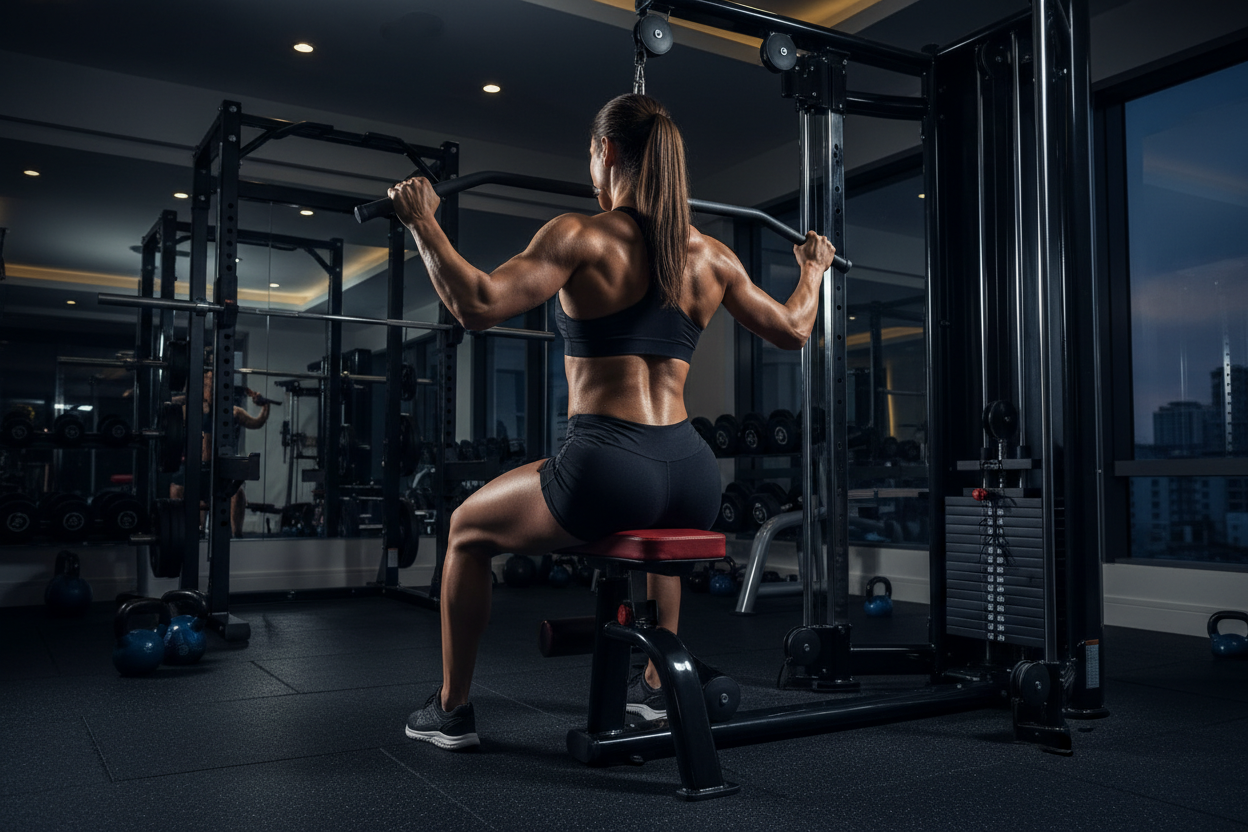
The beauty of a dedicated pullback machine lies in its biomechanics. Unlike traditional barbell rows, the chest pad removes momentum and lower back fatigue from the equation. This allows you to purely isolate the latissimus dorsi, rhomboids, and rear delts. By adjusting your seat height and grip handle—switching from a wide overhand grip to a close neutral grip—you can easily shift the muscular focus from upper back thickness to lower lat sweep.
From Our Gym: Honest Take
We have tested dozens of back machines over the years, and I currently run a plate-loaded, chest-supported row in my own garage gym. The isolation is incredible; after six months of heavy use, my mind-muscle connection on back days has never been better. However, I have to be honest about a minor caveat: the chest pad on many mid-tier models can feel a bit narrow. At 6'2" and 220 pounds, I found the stock pad dug into my sternum during heavy sets exceeding 250 pounds. I ended up sliding a custom neoprene sleeve over the pad, which completely solved the issue. The thick, aggressive knurling on the aluminum handles, however, is flawless—my chalked grip holds solid even on the heaviest unilateral pulls.
Frequently Asked Questions
Is a back pulling machine worth the space in a home gym?
If back development is a priority and you struggle with lower back fatigue during free-weight rows, absolutely. It provides commercial-gym-level isolation that is incredibly hard to replicate with just barbells and dumbbells.
What is the difference between a T-bar row and a pullback machine?
A T-bar row typically requires you to support your own torso angle, which heavily engages the core and lower back. A chest-supported pullback machine takes the lower back out of the movement entirely, allowing for stricter muscle isolation and safer failure.
Can beginners use this equipment safely?
Yes. Because the chest pad stabilizes the spine and the machine dictates a fixed path of motion, it is actually one of the safest ways for beginners to learn proper back contraction without risking lumbar injury.