Are Popular Fitness Programs for Seniors Actually Safe at Home?
I remember watching my dad try one of those 'sit and be fit' videos a few years back. He was bored out of his mind after ten minutes. He didn't need a chair; he needed a plan that didn't treat him like he was made of glass. Most fitness programs for seniors are designed by people who are terrified of liability, not people who actually understand physiology and bone density.
If you're training at home, you need to know the difference between a routine that keeps you busy and one that keeps you out of a nursing home. I've spent a decade testing racks, bars, and programs, and the stuff marketed to older adults is often the most disappointing segment of the industry. It lacks the one thing that actually matters: resistance.
Quick Takeaways
- Mainstream programs often over-prioritize seated cardio while ignoring essential muscle-building movements.
- Functional strength—hinging, squatting, and carrying—is the best defense against age-related injury.
- Progressive overload is still the gold standard, even if you're 75.
- Home setups must prioritize floor stability to prevent slips and falls.
The Problem with the 'Silver Sneakers' Approach
The harsh reality is that many fitness programs for senior citizens are essentially just 'movement' classes. They focus heavily on seated aerobics or low-impact cardio. While moving is better than sitting on the couch, these routines often ignore the most critical factor in aging: sarcopenia (muscle loss). You don't lose your ability to walk because you didn't do enough jazzercize; you lose it because your quads and glutes withered away.
Most of these commercial plans are 'safe' because they don't ask you to do anything hard. But for a senior, 'hard' is exactly what builds bone density. We need to stop treating 65 like it’s 95. If you aren't picking up something heavy and putting it back down, you aren't training for longevity—you're just passing time. A real program should challenge your balance and your grip strength, not just your ability to wave your arms in a circle while sitting in a kitchen chair.
What Makes a Routine Actually Work for Older Adults?
A legitimate program for older lifters needs to mirror real-life movements. I call these the 'Big Three' of aging: the ability to get up from a chair (squat), the ability to pick something up from the floor (hinge), and the ability to carry groceries (loaded carry). If a routine doesn't include variations of these, it's a waste of your time.
Core stability is also non-negotiable, but I’m not talking about sit-ups. Older adults need 'anti-rotation' and 'anti-extension' work—exercises that teach the spine to stay rigid when an outside force tries to move it. This is what prevents a back tweak when you're reaching into the trunk of a car. We also have to account for joint sheer. As we age, the 'mileage' on our knees and shoulders means we should favor neutral grips (palms facing each other) and movements that keep the load close to the center of gravity.
The Progressive Overload Rule
You don't get a pass on progressive overload just because you've got a few grey hairs. To keep muscle, you have to give it a reason to stay. This means if you used 5lb dumbbells last month, you should be looking at 7.5lb or 10lb weights this month. The trick is doing it without risking a strain. I recommend micro-loading—increasing weight by tiny increments rather than huge jumps. If you're using adjustable dumbbells, look for sets that allow for 2.5lb jumps rather than the standard 5lb or 10lb increments found in cheap big-box sets.
Adapting Commercial Gym Routines for the Living Room
You don't need a $5,000 leg press machine to get a clinical-grade workout. Most high-end clinical programs can be stripped down to their raw mechanics. Instead of a seated chest press machine, we use floor presses with dumbbells to protect the shoulders. Instead of a cable row, we use a resistance band anchored to a door. The physics are the same, even if the equipment is simpler.
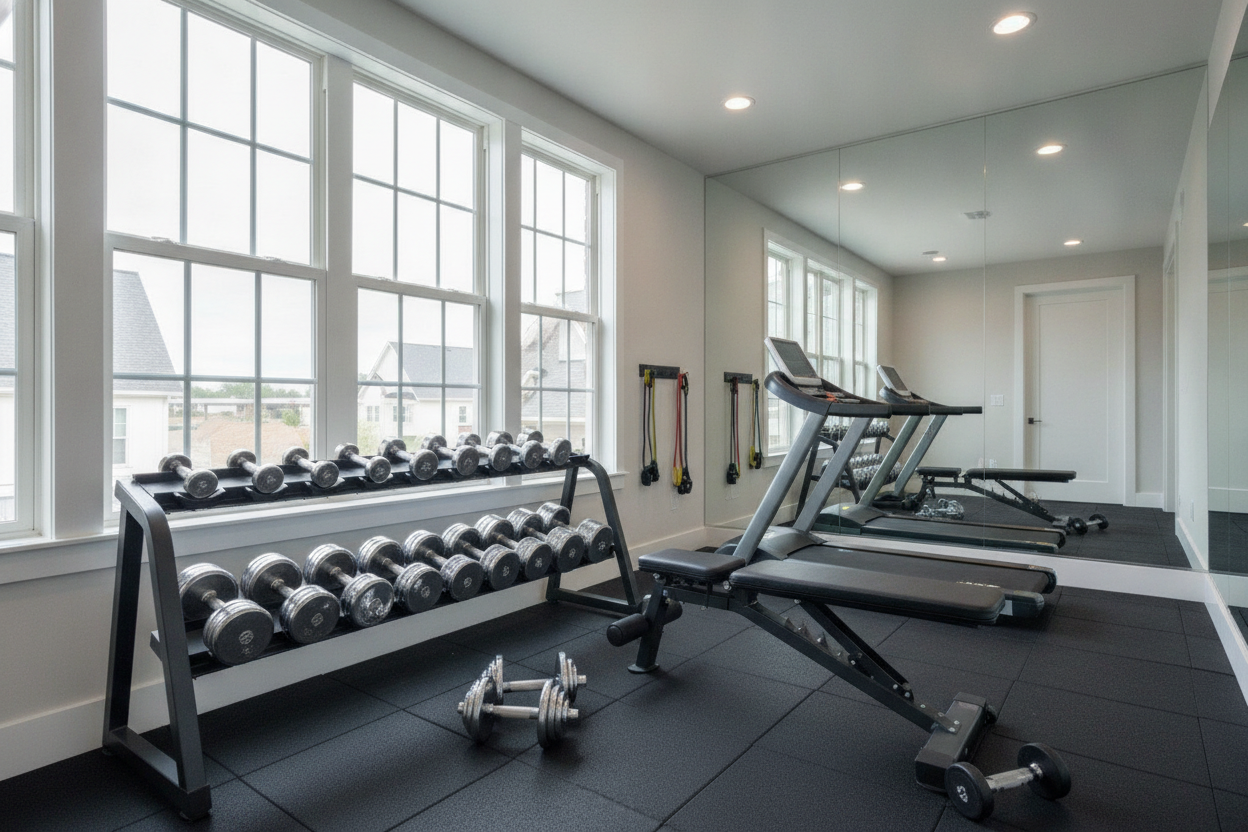
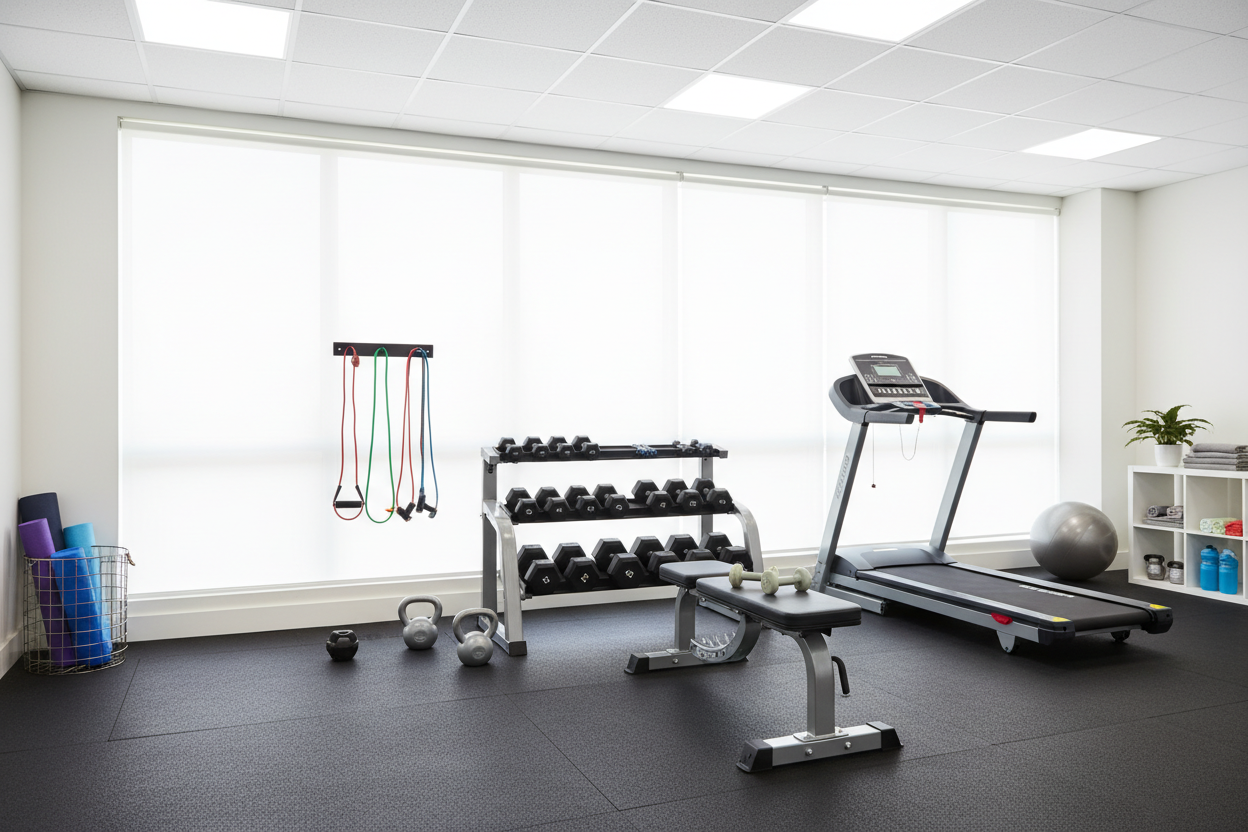
Translating these clinical movements into a home setting often involves adapting fitness programs gym plans for your home setup by focusing on free weights and bodyweight progressions. I've found that seniors often feel more confident with dumbbells because they can control the path of the weight, unlike a machine that forces you into a fixed, often uncomfortable, track. You can build a world-class physique in a 10x10 space if you have a solid bench and a versatile set of weights.
How to Set Up Your Space to Prevent Falls
Safety at home isn't just about the exercises; it's about the environment. I’ve seen too many people try to train on area rugs or slick hardwood. That is a recipe for a hip fracture. You need a dedicated, non-slip training zone. I always tell people to invest in a large exercise mat for home gym use so they aren't sliding on laminate floors while trying to hold a goblet squat.
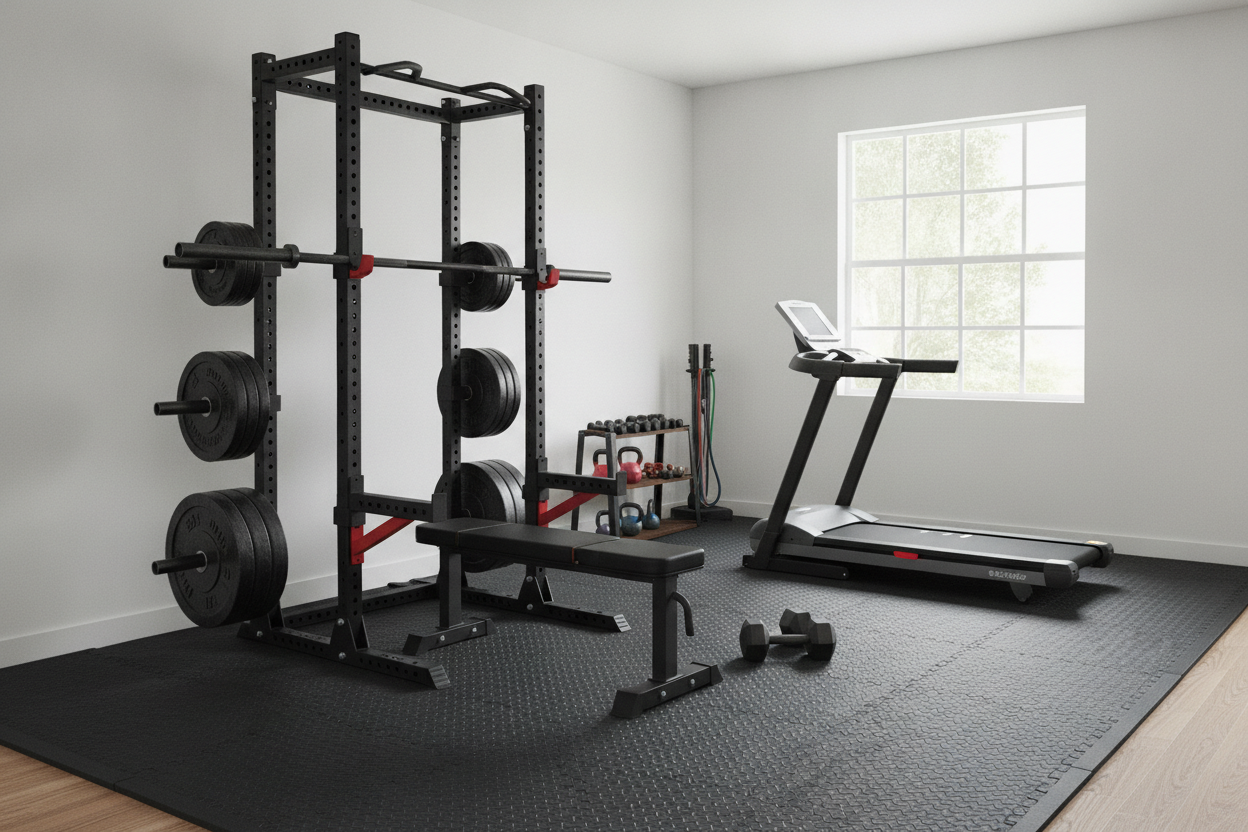
The surface needs to be firm enough for balance but forgiving enough for joints. Using high-density gym flooring for home workout spaces provides that necessary shock absorption. If you're doing standing overhead presses or even just balance drills, that extra grip underfoot is the difference between a productive session and a trip to the ER. Clear the clutter, remove the throw rugs, and make sure your lighting is bright enough to see any stray equipment on the floor.
Ditch the Pink Dumbbells: The Final Verdict
It’s time to demand more from the fitness industry. Stop buying into the idea that 'senior fitness' means low effort. You are capable of building real, functional strength that changes how you move through the world. Ditch the 2lb pink dumbbells and the 'easy chair' routines. Invest in a few pieces of high-quality gear, secure your flooring, and start lifting with intent. Your future self will thank you when you're still independent and strong well into your 80s.
Personal Experience: My Floor Failure
I once tried to set up a small training area for a client in his 70s using those cheap, colorful interlocking foam tiles you see in playrooms. During a simple set of lunges, the tiles separated under his feet. He didn't fall, but he lost his confidence for the rest of the session. It taught me that for older lifters, equipment stability is the number one priority. I immediately swapped it for a heavy, single-piece rubber mat that didn't budge. Don't cheap out on the foundation of your gym.
FAQ
Is lifting weights safe if I have arthritis?
Yes, and it's actually recommended. Strengthening the muscles around a joint takes the pressure off the joint itself. Just stick to movements that don't cause 'sharp' pain—dull aches are usually fine, but sharp stabs mean you should adjust your form or the range of motion.
Do I need a full power rack?
Probably not. Most seniors can get 90% of their results with a solid set of adjustable dumbbells and a sturdy bench. A rack is great, but it's not a barrier to entry for building real strength.
How many days a week should I train?
Three days a week is the sweet spot. It gives your central nervous system and your joints enough time to recover between sessions, which becomes more important as you get older.