Advanced Workout Gear: What You Actually Need to Level Up
It happens to all of us. You've spent months grinding in your garage gym, mastering the basics, and suddenly the gains dry up. You're hitting a wall, and those beginner linear progression programs just aren't cutting it anymore.
Stepping up to an advanced workout means more than just slapping extra plates on the bar. It requires strategic programming, dialed-in recovery, and often, upgrading your equipment to handle heavier loads and specialized movements. In this guide, we'll break down exactly what it takes to transition your training and your home gym setup to the next level.
Key Takeaways
- Advanced training requires equipment with higher weight capacities, typically 11-gauge steel construction.
- Specialty barbells become essential for managing joint fatigue during high-volume blocks.
- Proper flooring (at least 3/4-inch rubber) is non-negotiable for heavy deadlifts and Olympic lifts.
- Safety systems like drop-in spotter arms or strap safeties are mandatory when pushing to failure alone.
Essential Gear for High-Level Training
Power Racks and Weight Capacity
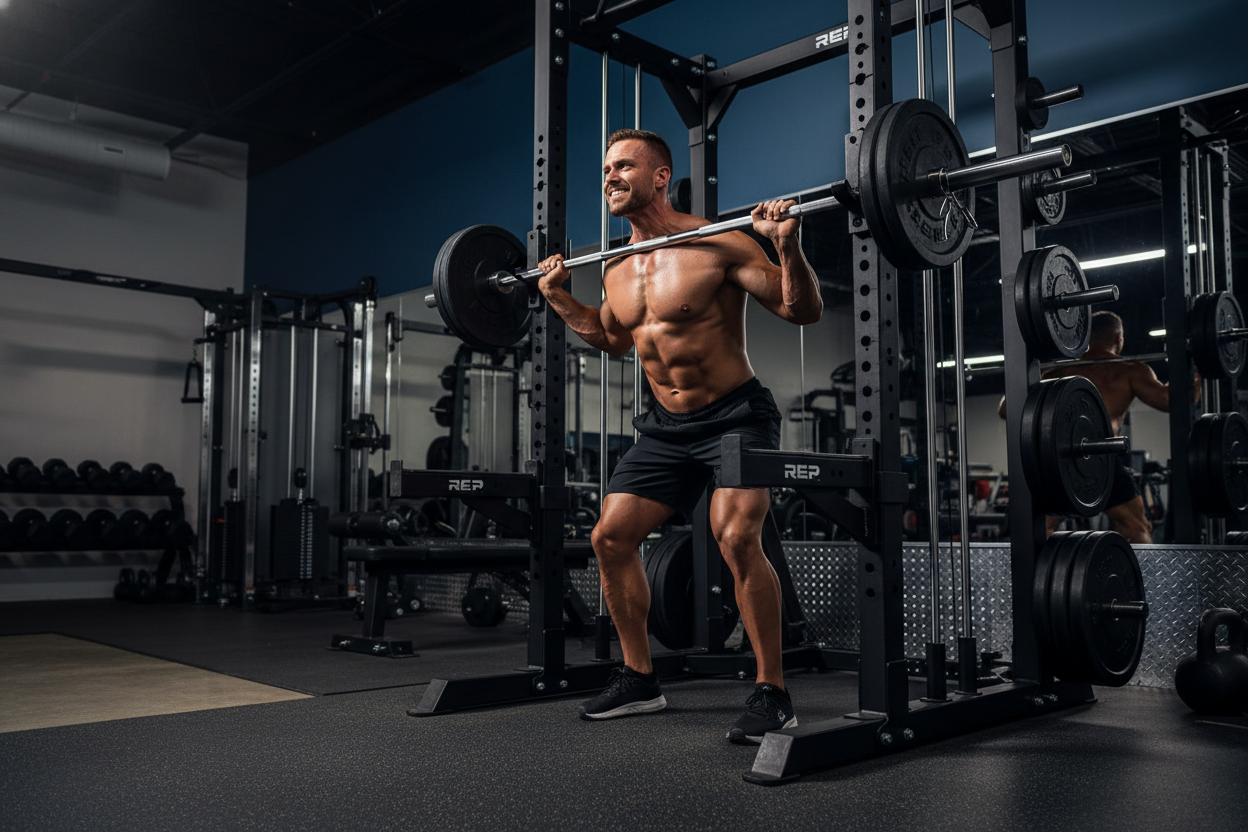
When you transition from intermediate lifting to advanced programming, the physical stress on your equipment multiplies. An entry-level 2x2-inch tubular steel rack might sway under heavy loads. For serious lifters, upgrading to a 3x3-inch, 11-gauge steel power rack is the gold standard. Look for racks with 1-inch hole spacing through the bench press zone to ensure you can dial in your safety pins perfectly to your body's mechanics.
Specialty Bars for Joint Health
Heavy, frequent barbell work takes a toll on your elbows, shoulders, and wrists. Incorporating specialty bars—like a Safety Squat Bar (SSB), a Swiss bar, or a trap bar—allows you to continue pushing maximum weight while altering the biomechanics to spare your joints. This is a hallmark of intelligent, long-term strength planning and a staple in any high-level home gym.
Space Planning for Complex Movements
Clearance and Flooring Considerations
Advanced routines often incorporate dynamic or accommodating resistance (bands and chains) and overhead work. If you're outfitting a basement or garage, you need to calculate vertical clearance carefully. A standard 90-inch rack requires at least 96 inches of ceiling height if you plan to do pull-ups without hitting your head. Furthermore, your flooring needs an upgrade. Standard foam tiles will compress and create instability; invest in 3/4-inch vulcanized rubber stall mats to protect your foundation and provide a rock-solid lifting surface.
From Our Gym: Honest Take
When I finally transitioned my own training to a true workout advanced protocol, the biggest wake-up call wasn't the sheer volume—it was my equipment's limitations. I was running a heavy conjugate block, and my old squat stand felt terrifyingly wobbly under 400+ pounds with resistance bands attached. Upgrading to a heavy-duty 4-post rack changed everything. Suddenly, I could confidently push to failure without a spotter. One specific tip: if you're adding specialty bars for your heavier leg days, make sure your rack is at least 43 inches wide internally. Anything narrower, and racking a cambered bar becomes a pinched-finger nightmare.
Frequently Asked Questions
Is an advanced workout safe to do alone at home?
Yes, provided you have the right safety infrastructure in place. High-quality safety straps or pin-pipe safeties are mandatory. Always test your safety heights with an empty bar before starting your working sets.
Do I need commercial-grade equipment to train hard?
Not necessarily commercial-grade, but you do need "prosumer" or heavy-duty residential gear. Look for high weight capacities (1,000+ lbs static ratings) and robust warranties that cover structural integrity rather than just cosmetic defects.
How much space do I need for a heavy lifting setup?
A standard power rack footprint is roughly 4x4 feet, but you need an 8x10 foot area minimum to safely load a 7-foot barbell and have room to move around the rack during complex supersets.