Indoor and Outdoor Mats: The Complete Home Gym Guide
Setting up a home gym often means expanding beyond the four walls of your basement or garage. When the weather is perfect, dragging your kettlebells or bumper plates onto the driveway is a game-changer. But nothing ruins a workout—or your concrete—faster than dropping heavy weights on a bare surface. That is why investing in versatile indoor and outdoor mats is one of the smartest upgrades you can make for your training space.
Whether you need a dedicated indoor outdoor floor mat to protect your joints during high-intensity interval training, or a heavy-duty surface to absorb the shock of a barbell, choosing the right foundation is critical. In this guide, we will break down exactly what to look for so you can train safely in any environment.
Key Takeaways
- Material is everything: Vulcanized rubber repels water, while standard crumb rubber absorbs it, leading to mold and degradation.
- Thickness dictates function: Aim for at least 3/4-inch thickness if you plan on dropping weights, regardless of where the mat is placed.
- UV resistance prevents warping: A true indoor/outdoor floor mat is treated to withstand direct sunlight without curling at the edges.
- Transition zones matter: Do not overlook the entryway; keeping debris out of your lifting zone extends the life of your equipment.
Decoding the Anatomy of a Quality Mat
Rubber vs. Foam vs. PVC
When shopping for an indoor outdoor mat, you will quickly notice a massive price gap between materials. Cheap EVA foam tiles might seem appealing for a basement corner, but the moment you take them outside, they will blow away in the wind or melt in the summer sun. For a serious home gym, high-density rubber is the only viable option.
If your setup transitions from a garage to a patio, you need an outdoor indoor mat that handles temperature fluctuations. Vulcanized rubber undergoes a heating process that makes it non-porous. This means rain, sweat, and spilled pre-workout will pool on top rather than seeping in, making cleanup as simple as hosing it down.
Space Planning: Bridging the Gap Between Garage and Driveway
Defining Your Workout Zones
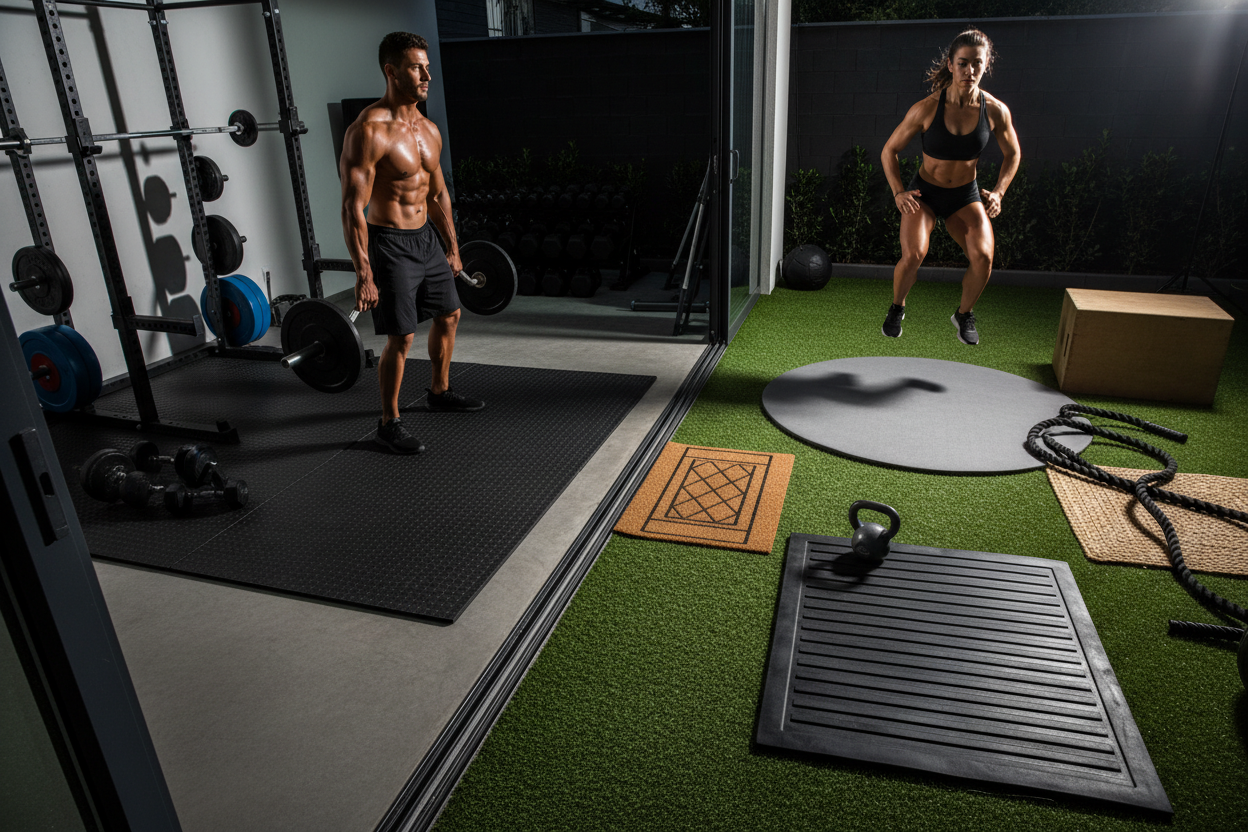
Most North American home gyms are built in garages, which naturally serve as a hybrid indoor/outdoor space. When planning your flooring, consider how you move through the area. You might have your heavy power rack bolted down inside, but prefer to do your plyometrics or kettlebell swings out in the driveway.
This is where transition zones become vital. We highly recommend placing heavy-duty indoor outdoor door mats at the threshold of your garage. Dragging dirt, tiny rocks, and moisture into your primary lifting area will quickly scratch your expensive barbells and damage your main flooring. A commercial-grade door mat indoor outdoor placed right at the roll-up door acts as a necessary barrier, keeping your primary workout zone pristine.
Durability and Maintenance: Surviving the Elements
An indoor outdoor floor mat takes a beating not just from heavy deadlifts, but from Mother Nature. If you leave your mats outside permanently, UV fading is inevitable, but structural degradation should not be. To extend the life of your flooring, sweep it weekly to prevent dirt buildup, and use a pH-neutral cleaner once a month. Avoid harsh chemical degreasers, which can dry out the rubber and cause cracking.
From Our Gym: Honest Take
When I first built my garage gym, I tried to save money by using standard horse stall mats for my driveway workouts. It was a mistake. While they are incredibly durable, they are completely porous. After one rainy weekend, they soaked up water like a sponge and smelled like a wet tire for a month.
I eventually upgraded to a purpose-built, 3/4-inch vulcanized indoor outdoor mat. The difference was night and day. The knurling on my barbell no longer gets packed with rubber dust, and water simply rolls off the surface. At 6-foot-2, I do a lot of overhead lifts outside to avoid hitting my garage ceiling, and having a stable, weather-resistant platform has completely transformed my training. The only caveat? They are incredibly heavy. If you plan to move them daily, buy smaller 2x2 tiles rather than massive 4x6 rolls.
Frequently Asked Questions
Is an indoor outdoor mat worth the investment for a home gym?
Absolutely. If you ever train outside your garage or basement, a dedicated mat protects both your expensive equipment and your property concrete or decking from impact damage.
How thick should my indoor/outdoor floor mat be?
For general fitness, yoga, or light dumbbells, a 3/8-inch mat is sufficient. However, if you are doing Olympic weightlifting, powerlifting, or dropping bumper plates, you need a minimum of 3/4-inch thickness for adequate shock absorption.
Can I leave my mats outside all year?
It depends on the material. Vulcanized rubber mats with UV protection can be left outside year-round, though extreme freezing temperatures may make them temporarily rigid. Always check the manufacturer weather rating before leaving them exposed to snow or heavy rain.