Exercise Equipment for Legs and Arms: The Complete Dual-Action Guide
You do not need a warehouse-sized gym to build a functional, strong physique. In fact, separating your training into strict "upper body" and "lower body" days often leads to wasted time and muscular imbalances. The most efficient athletes understand that the body operates as a kinetic chain. This is where exercise equipment for legs and arms enters the conversation.
Whether you are looking to maximize calorie burn through peripheral heart action or simply trying to save space in a garage gym, choosing dual-action machinery is a strategic move. Let’s break down the mechanics, the options, and the reality of training with full-body gear.
Key Takeaways: Quick Summary
- Air Bikes: Best for high-intensity interval training (HIIT) and metabolic conditioning.
- Rowing Machines: Superior for posterior chain development (back, glutes, hamstrings) alongside arm work.
- Vertical Climbers: Ideal for low-impact, high-calorie output that mimics natural climbing patterns.
- Ellipticals with Moving Handles: The go-to choice for low-impact steady-state cardio.
- Recumbent Cross Trainers: The safest leg and arm machine for seniors or those in rehabilitation.
The Science of Dual-Action Training
Why bother working both ends of the body simultaneously? It comes down to cardiac demand. When you utilize an exercise machine for legs and arms, you force your heart to pump blood vertically across a larger distance—from your calves up to your shoulders and back down.
This increases your heart rate faster than isolated movements, resulting in a higher caloric expenditure in a shorter window. It’s efficient, but it’s also taxing. Understanding this physiological demand is crucial before you buy.
The Heavy Hitters: Types of Equipment
1. The Air Bike (Fan Bike)
Often called "Satan's Tricycle" in CrossFit circles, this is the gold standard for simultaneous training. The mechanics are simple: the harder you push and pull the handles, and the faster you pedal, the higher the resistance becomes.
Unlike a standard spin bike, this piece of leg and arm exercise equipment does not allow you to coast. It demands constant torque from the upper body (push/pull) and the lower body (drive/recovery).
2. The Rowing Machine (Ergometer)
Many people mistake rowing for an arm-only workout. If you are doing it right, it is actually 60% legs, 20% core, and 20% arms. The drive begins with a massive leg press motion, followed by a hip hinge, and finishes with an arm pull.
It creates a rhythmic tension that builds endurance without the joint impact of running. However, form is non-negotiable here; poor technique leads to lower back pain quickly.
3. Vertical Climbers
Think of this as a vertical crawl. This leg and arm machine mimics rock climbing. Because you are fighting gravity directly, the resistance is your own body weight.
This is arguably the toughest option for beginners. It requires significant core stability to keep your hips from swaying, ensuring the load stays on the quads, lats, and shoulders.
Choosing Based on Your Goal
For Rehabilitation and Seniors
If joint safety is the priority, look for a Recumbent Cross Trainer (like a NuStep). You sit in a supported position, removing balance from the equation. The motion links the arms and legs, allowing the stronger limbs to help move the weaker ones. It is an invaluable tool for regaining mobility.
For Maximum Hypertrophy (Muscle Growth)
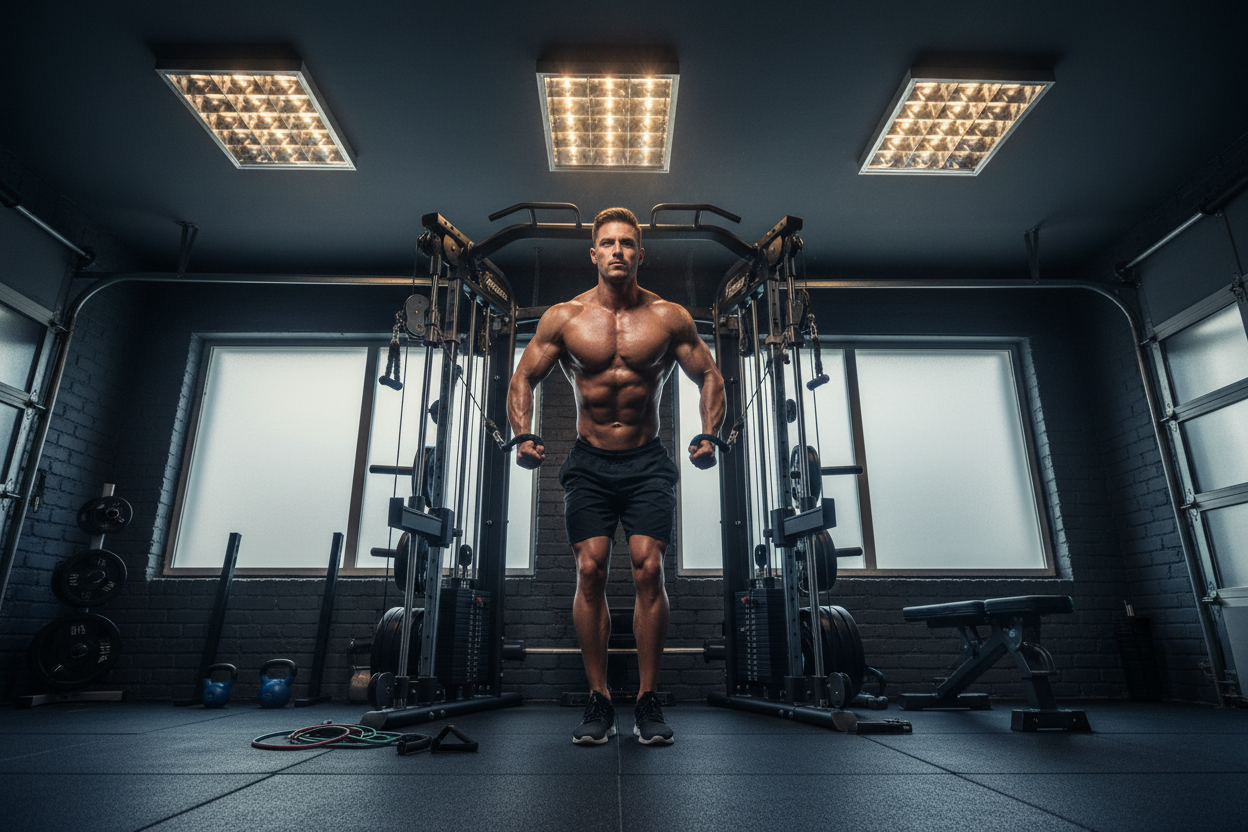
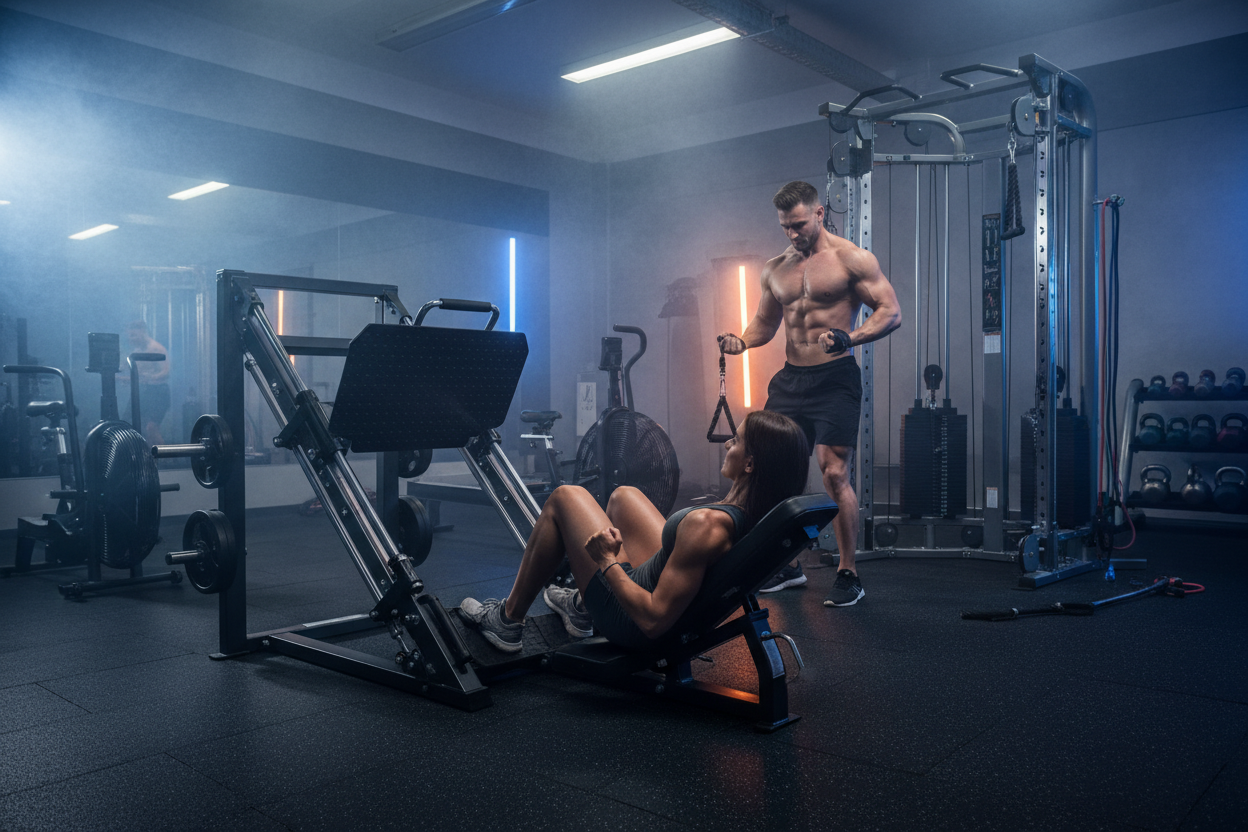
While cardio machines are great for conditioning, if your goal is pure muscle size, you should look at a Functional Trainer (Cable Machine). While not a single "machine" in the cardio sense, cable pulleys allow you to perform squats while doing rows, or lunges while doing presses. This combines resistance training for both halves of the body effectively.
My Personal Experience with exercise equipment for legs and arms
I have spent years testing gear, but my relationship with the Air Bike is personal. On paper, it looks harmless—just a bike with big handles. But the first time I attempted a "Death by Calories" protocol, the reality set in fast.
There is a specific, gritty feeling you get with these machines that you don't get on a treadmill. About 30 seconds into a sprint, the resistance ramps up so aggressively that it feels like you are pedaling through wet cement. The most distinct memory I have isn't the muscle burn—it's the "Assault Bike Cough."
Because you are gasping for air while the fan blows dust and dry air directly into your face, your throat gets incredibly dry. I learned the hard way that you need to keep your water bottle within arm's reach, not across the room. Also, if you don't tighten the seat post knob with serious force, you will feel a terrifying wobble right when you hit max RPM. Trust me, check that knob every single time.
Conclusion
Investing in exercise equipment for legs and arms is an investment in efficiency. Whether you choose the brutal intensity of an air bike or the rhythmic flow of a rower, the goal is the same: total body integration. Stop isolating your body parts like they don't belong to the same system. Pick the machine that fits your space and intensity level, and get to work.
Frequently Asked Questions
Is an exercise machine for legs and arms better for weight loss?
Generally, yes. Because you are engaging more muscle mass simultaneously, the metabolic demand is higher than stationary cycling or walking. This leads to a higher calorie burn per minute and a greater "afterburn" effect (EPOC) post-workout.
Can I build muscle with leg and arm exercise equipment?
You can build muscular endurance and tone, but most dual-action cardio machines (like ellipticals or rowers) are not designed for significant hypertrophy (muscle size). For substantial muscle growth, you would need a resistance-based setup like a cable functional trainer or free weights.
What is the best low-impact leg and arm machine for bad knees?
The Recumbent Cross Trainer is the superior choice for bad knees. It places the user in a seated, reclined position which removes body weight from the knee joint while still allowing for a full range of motion in both the upper and lower body.