Best Non Toxic Gym Flooring: A Health-First Buyer's Guide
If you have ever unrolled a cheap gym mat in a poorly ventilated basement, you know the smell. It is that harsh, headache-inducing chemical odor that lingers for weeks. When you are breathing heavily through a grueling set of squats or burpees, the last thing you want to inhale is a cloud of volatile organic compounds (VOCs). That is why finding the best non toxic gym flooring has become a top priority for home gym owners who care as much about their respiratory health as their one-rep max.
In this guide, we will break down exactly what makes gym flooring safe, how to identify materials that will not off-gas harmful chemicals into your home, and how to choose the right foundation for your training space.
Key Takeaways
- Check the source: Virgin rubber and high-quality recycled rubber are significantly safer than repurposed industrial tires.
- Look for low-VOC certifications: FloorScore or Greenguard certifications guarantee minimal chemical off-gassing.
- Avoid horse stall mats indoors: While cheap, they are notorious for high VOC emissions and heavy off-gassing in enclosed spaces.
- Ventilation matters: Even non-toxic options require a brief period of airing out upon installation.
Understanding Gym Flooring Materials
Not all rubber is created equal. The manufacturing process dictates how much a product will smell and what chemicals it releases into your home.
The Danger of High VOCs
Volatile Organic Compounds (VOCs) are chemicals that easily evaporate at room temperature. In cheap rubber flooring, these can include benzene and formaldehyde. Prolonged exposure in a closed room can cause headaches, dizziness, and respiratory irritation. This makes investing in low voc rubber gym flooring essential, especially for basement or spare bedroom gyms where airflow is restricted.
Virgin Rubber vs. Recycled Rubber
Virgin rubber is manufactured from tree sap (natural latex) or synthetic polymers without prior use. It is inherently low-odor and non-toxic. Recycled rubber, often made from crumb rubber derived from old car tires, is eco-friendly and highly durable but can vary wildly in toxicity. If you opt for recycled materials, ensure they are bound with polyurethane rather than cheaper, chemical-heavy adhesives.
Space Planning for Health and Performance
Your gym location dictates the type of flooring you can safely install.
Basement and Spare Room Gyms
Indoor spaces with limited windows require the highest standard of non toxic rubber gym flooring. Look for interlocking tiles made of virgin rubber or high-density EVA foam (if you are not dropping heavy barbells). You want a product that is FloorScore certified to ensure indoor air quality remains high.
Garage Gyms
Garages offer better ventilation, meaning you have a bit more flexibility. However, extreme temperature fluctuations can cause cheaper rubber to expand, contract, and release trapped odors. A vulcanized rubber roll is often the best choice here, as the heat-treating process locks in the structure and minimizes off-gassing.
From Our Gym: Honest Take
When we first built out our testing facility, we made the classic beginner mistake: we bought cheap horse stall mats from a local agricultural supply store to save a few bucks. The off-gassing was brutal. For three weeks, walking into the gym felt like walking into a tire factory, and a few of our testers actually reported mild nausea during heavy conditioning sessions.
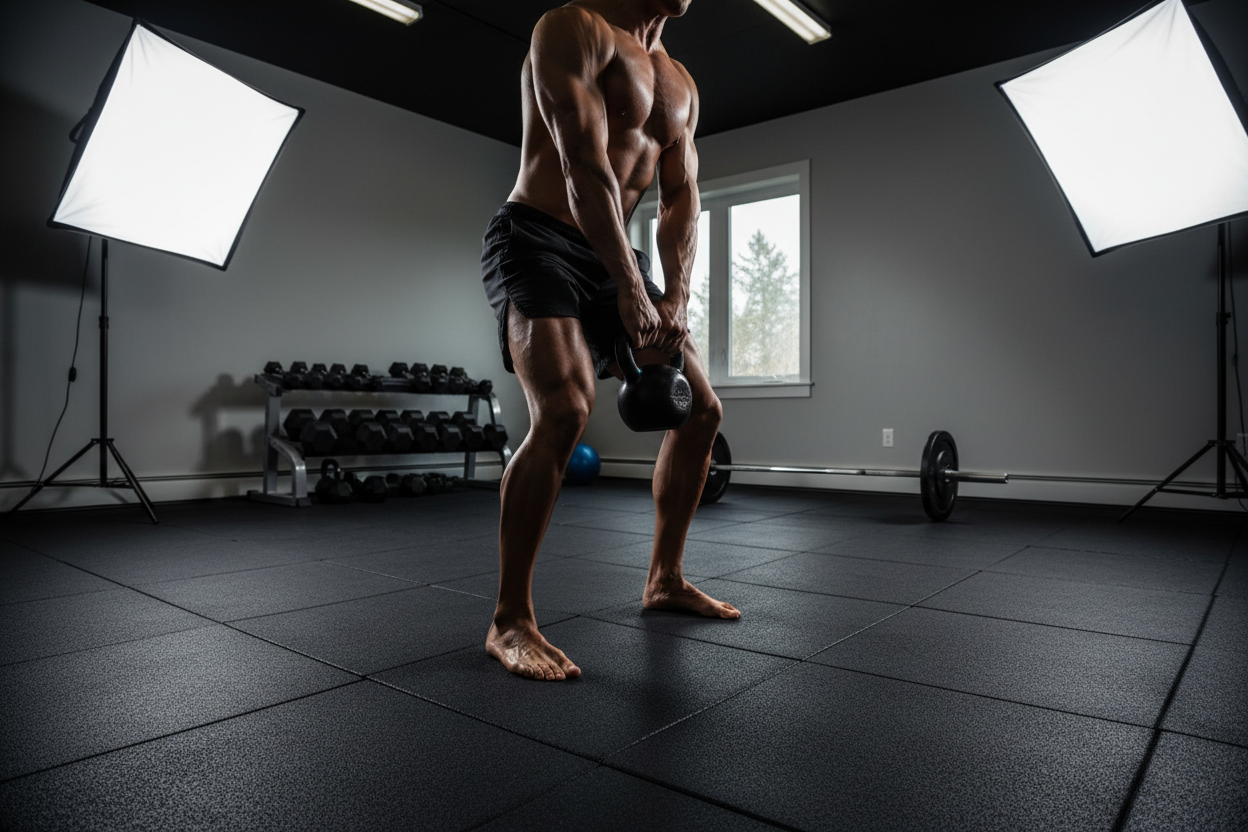
We eventually ripped them out and installed premium, low-VOC vulcanized rubber tiles. The difference was night and day. There was a faint rubber scent for about 48 hours, but it completely dissipated after leaving a fan running over the weekend. The surface grips perfectly during heavy lifts, and they absorb the shock of 400-pound deadlifts without flinching. The only caveat? They cost about twice as much as the stall mats. But for a space inside your home where you are breathing hard daily, the health benefits and peace of mind are absolutely worth the investment.
Frequently Asked Questions
Is rubber gym flooring toxic?
It depends on the manufacturing process. Cheap, unregulated recycled rubber can release harmful VOCs. However, purpose-built gym flooring that is vulcanized or made from virgin rubber is perfectly safe and non-toxic for indoor use.
Are horse stall mats safe for indoor home gyms?
We generally do not recommend them for enclosed indoor spaces like basements or spare bedrooms. They are designed for well-ventilated barns and often off-gas strong, potentially harmful odors for months. If you have a drafty garage, they might work, but purpose-built gym mats are much safer.
How do I get rid of the rubber smell in my new gym?
Even the best non toxic gym flooring will have a mild scent upon unboxing. To clear it quickly, mop the floor with a mild soap and water solution, open all windows, and run a high-velocity fan across the surface for 48 to 72 hours.