Assisted Pull Up Machine Weight Explained: Stop Guessing
Most home gym owners know the frustration of hitting a plateau with bodyweight movements. If you're trying to build a wider, thicker back, mastering your assisted pull up machine weight is one of the fastest ways to break through that barrier. But unlike standard cable machines or lat pulldowns, the math on an assisted tower works backward, leaving many lifters guessing at the weight stack.
Staring at the selector pin shouldn't be the hardest part of your workout. This guide will help you decode the numbers, select the perfect resistance for your goals, and seamlessly integrate this powerhouse machine into your home gym routine.
Key Takeaways
- The weight you select on the stack is the amount of assistance provided, not the weight you are actually lifting.
- Beginners should start by setting the machine to provide assistance equal to 70-80% of their total body weight.
- Gradually decreasing the assistance forces progressive overload and builds the foundational strength needed for unassisted pull-ups.
- Tracking your specific weight increments is crucial for consistent programming and avoiding training plateaus.
Understanding the Counterintuitive Math
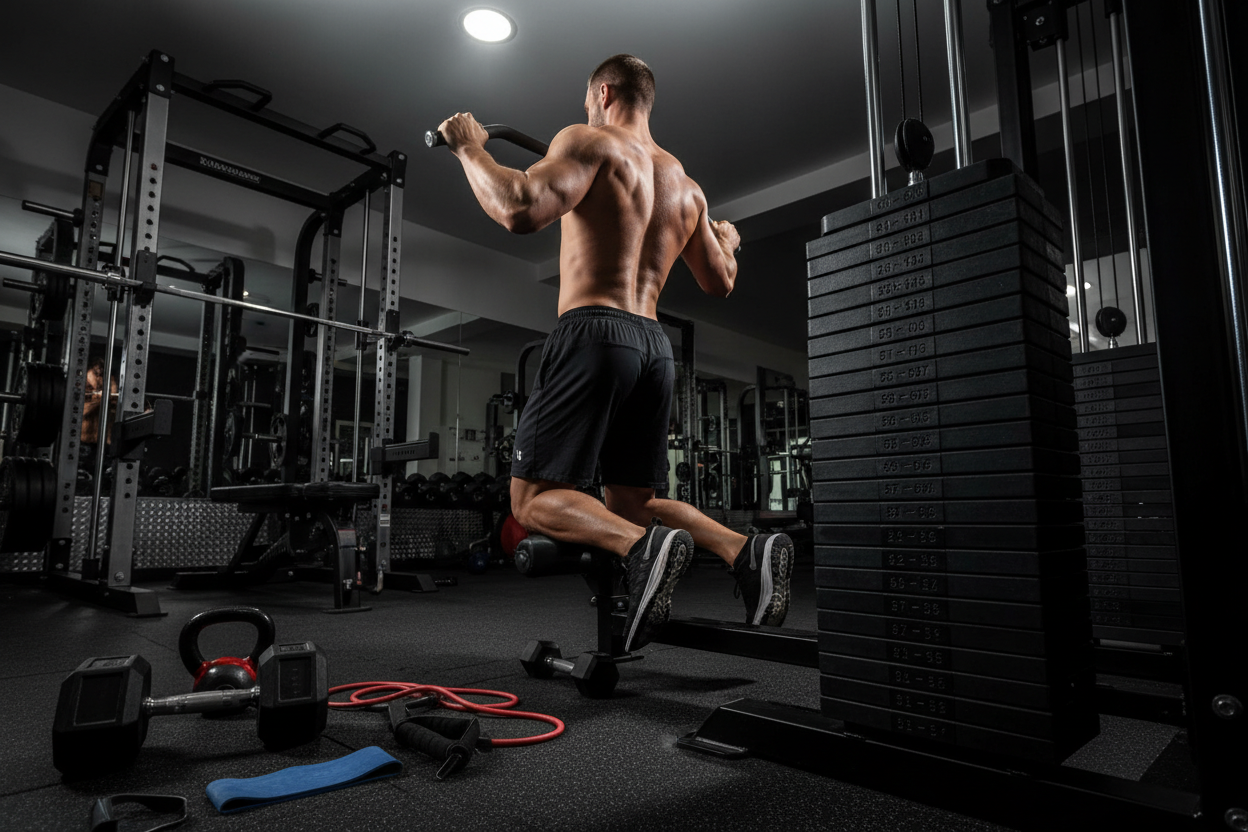
The most common hurdle for new users is understanding the physics of the machine. When you sit or kneel on the pad, the weight stack acts as a counterweight to your body. If you weigh 200 pounds and set the pin to 120 pounds, the machine is lifting 120 pounds of your body weight for you. You are effectively pulling the remaining 80 pounds.
Finding Your Starting Point
When beginners ask what weight to use on assisted pull up machine setups, the golden rule is to leave your ego at the door. Start with a weight that allows you to perform 8 to 10 clean, controlled repetitions. For most, this means setting the pin to offset about two-thirds of their body weight. As you get stronger, your goal is to systematically lower that number.
Programming Your Pull-Up Progression
Building a massive back requires strategy. You can't just hop on the machine, pick a random pin, and expect to grow wings. You need to treat this machine with the same programming respect as a barbell squat or deadlift.
Navigating the Weight Stack
Pay close attention to your assisted pull up machine weight increments. Many commercial-grade stacks jump by 10 or 15 pounds. While a 10-pound jump might not feel significant on a leg press, decreasing your assistance by 10 pounds on a pull-up is a massive leap in relative intensity. If your home gym machine allows it, use micro-plates to bridge these gaps and keep your progression smooth.
Grip Variations and Muscle Targeting
Your grip dictates the primary muscles engaged. A wide, pronated grip targets the lats, while a closer, supinated grip (palms facing you) heavily recruits the biceps. Because the biceps assist so much in the supinated position, adjusting your assisted chin-up machine weight might be necessary. You will likely find that your pull-up machine weight requires more assistance than your chin-up weight.
Space Planning for the Home Gym
If you are considering adding an assisted tower to your garage or basement gym, vertical clearance is your biggest enemy. These machines typically require a minimum ceiling height of 84 to 90 inches. Additionally, because the user moves vertically, you need to account for your own head clearance at the top of the movement. Measure twice before you invest.
From Our Gym: Honest Take
We recently installed a commercial-grade selectorized tower in our 400-square-foot garage gym, and it completely changed our back day programming. The knurling on the multi-grip handles was phenomenal, allowing for a rock-solid grip even during sweaty, high-rep sets. However, dialing in the assisted pull-ups weight was initially frustrating. One thing I noticed immediately: the 15-pound weight increments on our specific model made progressing from 60 pounds of assistance down to 45 pounds feel like hitting a brick wall. I actually had to drape a 5-pound micro-plate over the selector pin using a carabiner to bridge the gap. If you're buying one for your home space, definitely look for a machine with 5 or 10-pound jumps. Otherwise, the smooth glide of the guide rods and the heavy-duty knee pad made it worth every penny.
Frequently Asked Questions
How do I calculate the actual weight I'm lifting?
Simply subtract the weight you've selected on the machine's stack from your total body weight. If you weigh 180 lbs and select 100 lbs on the stack, you are lifting 80 lbs.
Is it better to use a heavier or lighter assistance weight?
It depends on your current phase of training. A heavier assistance weight (lifting less of your own body weight) is excellent for high-rep hypertrophy work and mastering the mind-muscle connection. A lighter assistance weight is better for building the raw strength needed for unassisted pull-ups.
How often should I lower the assistance weight?
Aim to decrease your assisted pull-up weight whenever you can comfortably perform 3 sets of 10-12 reps with perfect form. Drop the assistance by the smallest increment possible and start building your rep count back up.